Prateek Tanmay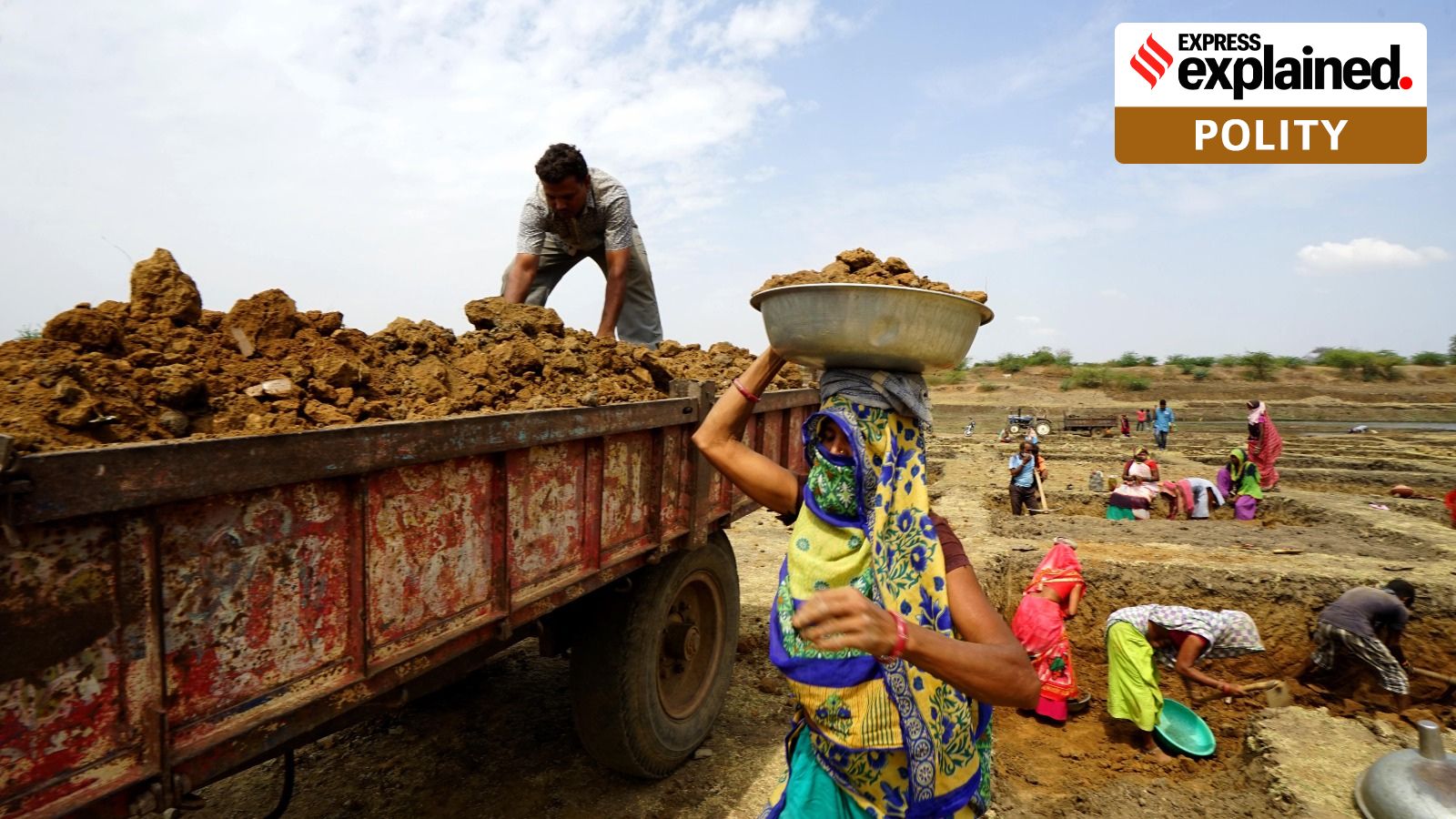
The Viksit Bharat-Guarantee for Rozgar and Ajeevika Mission (Gramin) Act, 2025, is set to come into force from July 1, replacing the two-decade-old Mahatma Gandhi National Rural Employment Guarantee Act (MGNREGA). Ahead of the nationwide rollout, the Union government has released a draft of the rules that will govern the implementation of the new rural jobs programme.
The VB-G RAM G Act increases the number of guaranteed wage employment days, shifts a significant portion of the funding burden onto states, and turns the resource allocation process into a top-down process.
The rules create a new provision (not mentioned directly in the Act) allowing those with verified MGNREGS job cards to avail work under the new scheme. They call for using the Sixteenth Finance Commission’s formula to determine the normative allocation by the Centre to states. And another new provision also allows the Union government to keep aside a portion of the normative allocation based on certain parameters.
Here’s a look at the key features of the new rules and their implications for workers, the programme and state exchequers.
First, how does the VB-G RAM G Act differ from MGNREGA?
The VB-G RAM G Act, which Parliament enacted in December last year, will replace the MGNREGA scheme that provided employment to over five crore rural families in the last financial year (2025-26).
It increases the number of working days from 100 to 125 and provides for a 60-day pause in the scheme during the peak agricultural sowing and harvesting seasons to ensure the availability of farm labour.
Unlike MGNREGS, where the Centre paid 100% of the wage bill, VB-G RAM G shifts 40% of the funding burden onto states. The exceptions to this are the northeastern and Himalayan states as well as Union Territories (UTs) with a legislature, where the Union government will bear 90% of the funding burden. As for UTs without a legislature, the Centre will bear the complete funding burden.
Story continues below this ad
It also flips the MGNREGS model of Central allocations based on state labour budgets, with the Centre now determining the devolutions.
What are the new rules?
The Ministry of Rural Development on May 23 released eight draft rules that cover the VB-G RAM G scheme’s provisions regarding wage payment, unemployment allowances, allocations to states and implementation monitoring. These are the rules:
- National Level Steering Committee Rules
- Grievance Redressal Rules
- Administrative Expenses Rules
- Transitional Provisions under VB-G RAM G Rules
- Objective Parameters for Normative Allocation Rules
- Central Gramin Rozgar Guarantee Council Rules
- Manner of Payment of Wages and Unemployment Allowance Rules
- Manner and Procedure of Expenditure incurred by the State in excess of the Normative Allocation and Expenses of the Scheme for the UTs without Legislature Rules, 2026
The ministry has sought objections and suggestions from the public within a month, after which it will notify the rules.
How do the new rules affect existing MGNREGS workers?
Among the new rules, the Transitional Provisions are the most significant for existing MGNREGS workers. Their MGNREGS job cards, once renewed and verified through e-KYC, will remain valid for seeking employment under the VB-G RAM G Act. This arrangement will continue until state governments issue Gramin Rozgar Guarantee Cards under the new law.
Story continues below this ad
The rules also specify that all wage and unemployment allowance payments will be made through Direct Benefit Transfer into bank or post office accounts. The Union government, however, is yet to declare the wage rate under the VB-G RAM G scheme.
What is the significance of the new rules for the states?
The Union government has allocated Rs 95,692.31 crore for the VB-G RAM G scheme for this financial year (2026-27).
For states, the rules that are the most crucial are those related to fund allocation and excess expenditure.
Story continues below this ad
According to the draft Objective Parameters for Normative Allocation Rules, 2026: “The Central Government shall, for each financial year, determine the normative allocation of the funds, for every State, based on the objective parameters specified in these rules.”
According to the rules, the Centre will use the Sixteenth Finance Commission’s horizontal devolution recommendations to determine the normative allocation to states.
Using the Sixteenth Finance Commission formula, some states may receive lower VB-G RAM G allocations than they did under MGNREGS in 2025–26. These include Tamil Nadu, Andhra Pradesh, Rajasthan and Maharashtra. On the other hand, the shares of Uttar Pradesh, Gujarat, Madhya Pradesh, Assam, Haryana, Punjab and Bihar will likely increase.
Crucially, the draft rules have a provision regarding keeping aside a portion of the normative allocation, which will be distributed among states based on certain parameters — timely payment of wages; compliance with social audit requirements; the percentage of completion of work in a financial year; and other performance-related indicators as may be specified by the Centre.
Story continues below this ad
This provision will take effect from the next financial year.
Another significant rule, as already set out in the Act, says that states will have to bear any additional expenditure over the normative allocation. This means that if a state sees higher demand and its expenditure exceeds its normative allocation, then it will have to bear that additional expenditure.