Prateek Tanmay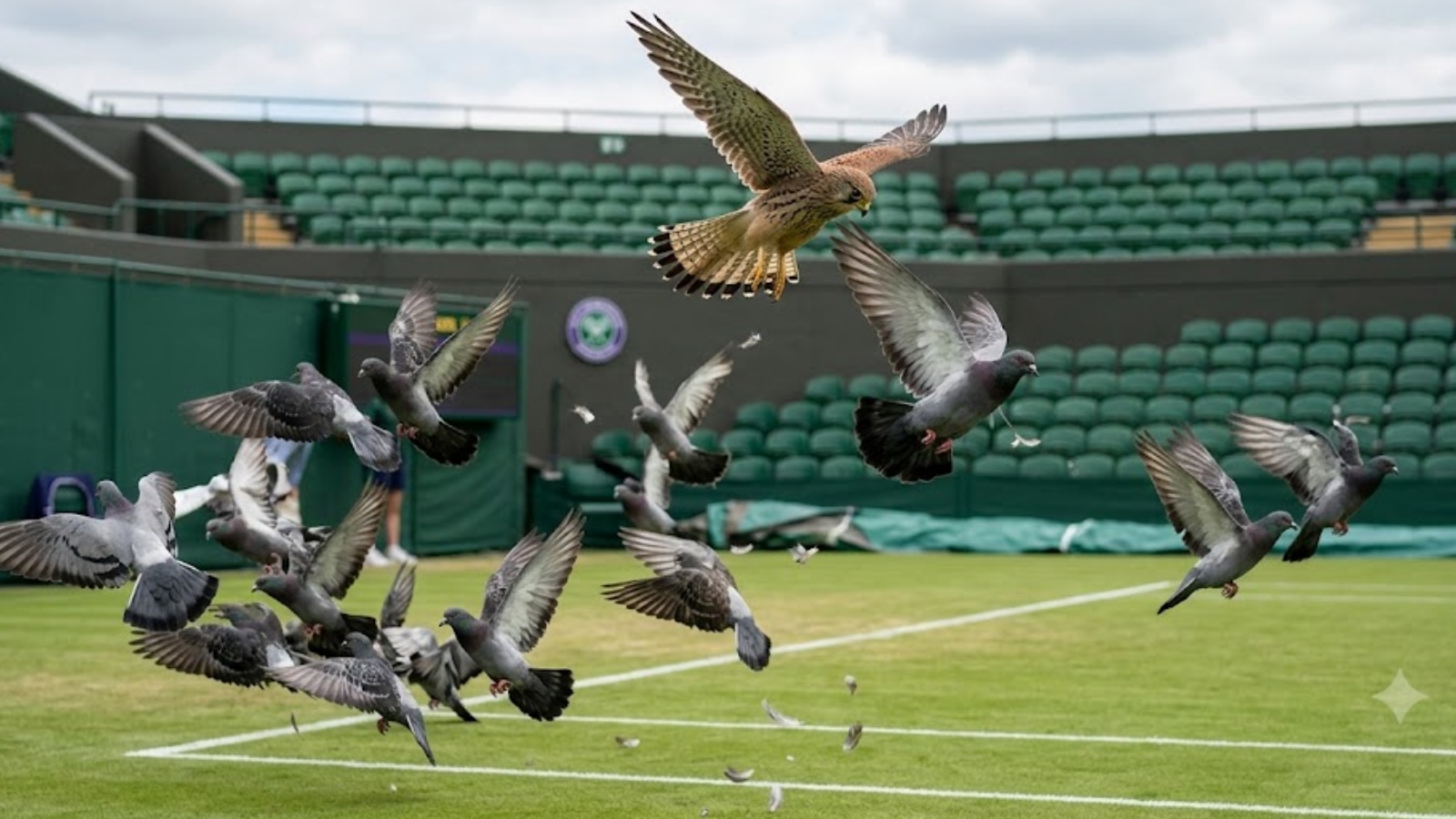
4 min readNew DelhiJul 14, 2026 08:00 PM IST
Every year, as the world’s best tennis players arrive at Wimbledon, another seasoned professional quietly reports for duty before dawn. It doesn’t carry a racket or wear the tournament’s famous all-white dress code. Instead, Rufus, a Harris’s hawk, takes to the skies above the All England Club, patrolling the grounds to scare away pigeons and other birds that could damage the pristine grass courts or disrupt play. Its presence is so effective that it has become as much a Wimbledon tradition as strawberries and cream.
But why does one of the world’s most prestigious sporting events rely on a bird of prey every year? Wimbledon’s use of birds of prey dates back to the late 1990s, when tournament organisers began using hawks to tackle persistent pigeon problems that were damaging the grass courts and interrupting matches. Today, despite all the technology involved in staging a modern Grand Slam, Wimbledon continues to rely on this ancient practice of falconry to protect its iconic playing surface.

Environmentalist Jasmit S. Arora says Rufus is much more than a mascot or an unusual tournament tradition; it’s an example of how wildlife can successfully adapt to human-dominated landscapes while helping people solve ecological challenges.
Rufus showcases remarkable adaptability
According to Arora, from an ornithological perspective, Rufus’ story is significant because it demonstrates the extraordinary behavioural flexibility of birds of prey.
“The observation of a captive-raised Harris’s hawk autonomously adopting a dense urban complex as its territory is highly significant. It demonstrates remarkable behavioural plasticity, proving that raptors can successfully habituate to high-traffic human environments while retaining their core natural instincts,” he explains.
Arora notes that Rufus’s independent patrols around the All England Club and even simple behaviours, such as bathing in rooftop puddles after rainfall, reveal an impressive level of environmental awareness. “Its self-initiated patrols and opportunistic behaviours highlight advanced spatial awareness and environmental adaptation. This gives researchers valuable real-world insights into how birds of prey coexist with humans in urban landscapes.”
Why are cities becoming home to birds of prey
While hawks are traditionally associated with forests and open countryside, Arora says modern cities increasingly offer ideal habitats.
Story continues below this ad
Rapid urbanisation and habitat loss are forcing many raptors to seek alternative territories. At the same time, human infrastructure unintentionally creates favourable conditions.
“Large buildings mimic natural cliffs that many raptors use for nesting, while cities support abundant prey such as feral pigeons. Compared to rural habitats, urban areas often provide a far more predictable and concentrated food supply.”
Climate change is also beginning to influence this shift. “Urban heat islands create milder microclimates that may extend hunting seasons and alter prey availability throughout the year. These conditions reward adaptable predators capable of modifying their natural behaviour.”
A natural solution to urban pest control
Rufus’s role at Wimbledon also highlights the growing use of birds of prey for sustainable pest management. Rather than relying on chemicals, traps or other deterrents, trained hawks naturally discourage nuisance birds simply through their presence.
Arora says this approach is both effective and environmentally responsible. “This case validates the efficacy of leveraging natural predatory presence for non-lethal, behaviourally driven urban pest management. It provides a sustainable, welfare-positive model for reducing human-wildlife conflict.”
Story continues below this ad
Because pigeons instinctively avoid areas patrolled by predators, hawks like Rufus can protect valuable spaces without harming wildlife or disrupting the ecosystem.
Why raptors matter in modern cities
According to Arora, birds of prey play a crucial role in maintaining healthy urban ecosystems. “By naturally controlling overabundant species such as pigeons and rodents, raptors help prevent disease spread and ecological imbalance without the need for toxic chemicals or lethal culling.”
Their presence, he says, should be viewed as a sign of environmental health rather than a threat. “Recognising raptors as natural, non-lethal partners in urban pest management encourages greater appreciation for wildlife coexistence and the ecological balance that keeps our cities sustainable.”
Explore more captivating stories about pets and animals here, and make us your daily stop for the latest from the animal kingdom.