Prateek Tanmay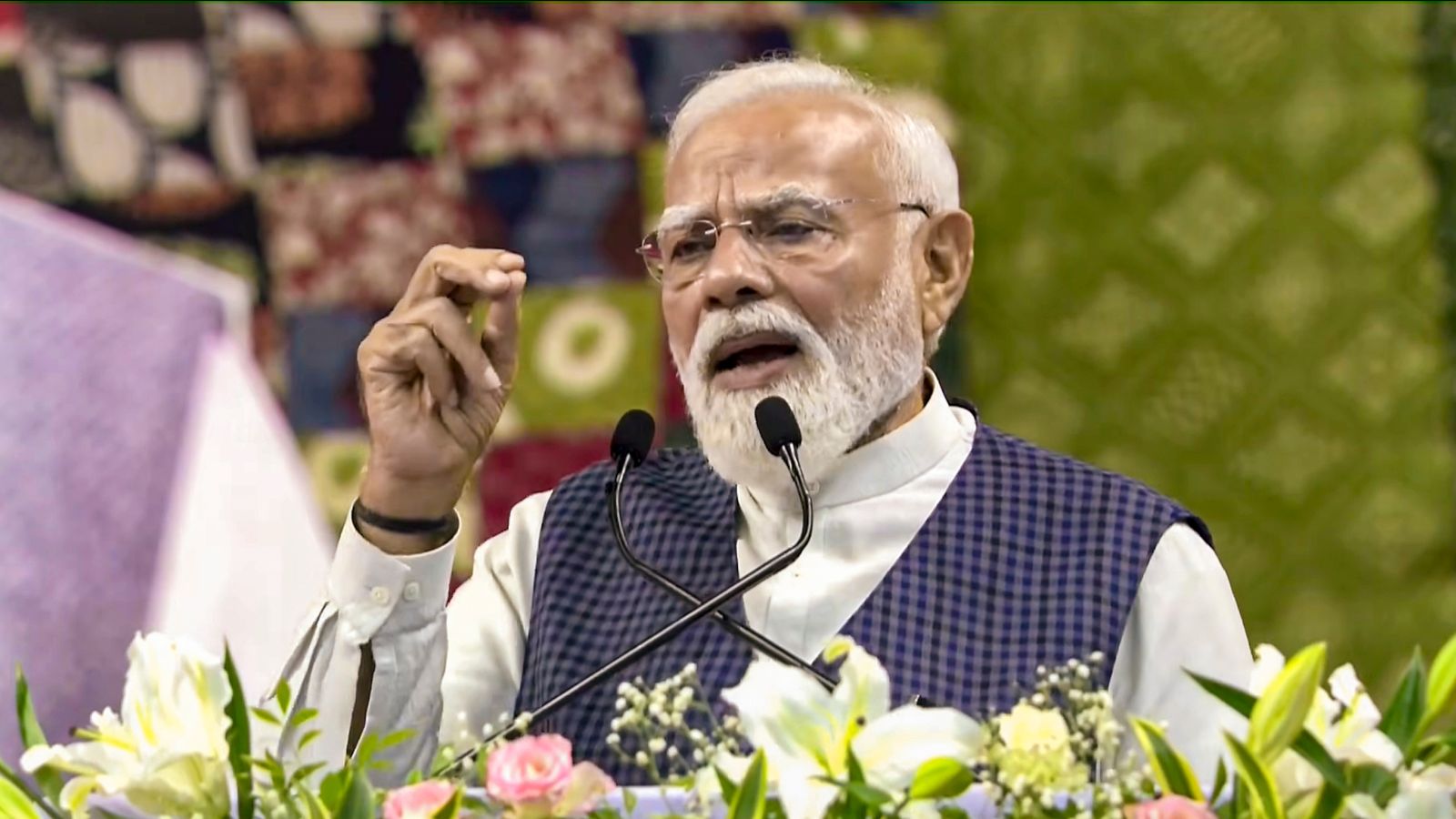
4 min readJun 17, 2026 06:20 AM IST
First published on: Jun 17, 2026 at 06:20 AM IST
History seldom moves in a straight line. Every generation confronts its own challenges and must find answers suited to its time. When India gained Independence in 1947, its leadership needed to establish democratic institutions, integrate a vast and diverse population, build an administrative framework, develop scientific capabilities, and chart a path toward economic growth despite severe resource constraints. By 2014, however, the challenge was making existing institutions more responsive, efficient, and capable of delivering meaningful outcomes to a population of 1.4 billion in an interconnected world. In many respects, Prime Minister Narendra Modi’s contribution has been to align governance with the aspirations of a rapidly changing India.
Over the past decade, India has witnessed governance initiatives on a scale rarely seen anywhere in the world. More than 56 crore Jan Dhan accounts have been opened. Notably, more than half of these accounts belong to women, expanding economic opportunity and strengthening individual empowerment. Access to sanitation, housing, electricity, healthcare, and clean cooking fuel has expanded significantly.

Under PM Modi’s lead, India has evolved from being a major consumer of digital technologies to becoming a global innovator in digital public infrastructure. Aadhaar-enabled services, UPI, CoWIN, and other digital initiatives have demonstrated how technology can be leveraged for inclusion, transparency, and empowerment. Investments in roads, railways, airports, ports, logistics corridors, and digital connectivity have expanded at an unprecedented pace. Infrastructure is seen as not just a developmental goal but a strategic foundation for growth, investment, competitiveness, and national integration.
The impact of these changes is perhaps most evident in India’s growing international stature, in which PM Modi’s leadership has played a significant role. Having had the privilege of representing India in key diplomatic capitals, including Washington, I have witnessed firsthand the shift in how India is perceived around the world. India today is seen as a trusted economic partner, a leader in digital innovation, a voice for the Global South, and an important contributor to conversations on climate action, healthcare, supply-chain resilience, emerging technologies, and strategic stability. India’s successful G20 presidency, its advocacy on behalf of developing nations, and its growing influence in shaping future technologies have strengthened its position.
India has long faced the challenge of cross-border terrorism, and successive governments have had to balance restraint, preparedness, and response. Under PM Modi, there has been a shift towards a more assertive approach that combines defence preparedness, stronger border infrastructure, intelligence-led operations, diplomatic mobilisation, and a clear message that terrorism and dialogue cannot proceed together. The 2016 Surgical Strikes across the LoC after the Uri terror attack marked an important moment in India’s security policy. India demonstrated its willingness to undertake calibrated counter-terror operations against launchpads across the border. The 2019 Balakot air strike after the Pulwama attack reinforced this message, signalling that India’s response to terrorism would not be limited by older assumptions or geographical constraints. Operation Sindoor reflected India’s continued resolve against terrorism and its capacity to respond decisively when national security is challenged. I had the privilege of being part of the parliamentary delegation that engaged policymakers, lawmakers, strategic experts, and opinion leaders across the Americas in the aftermath of the attack. What stood out was the growing understanding of India’s position that terrorism cannot be justified, compartmentalised, or treated as an instrument of state policy.
As PM Modi crosses a historic milestone, the significance lies not merely in the length of his tenure but in the scale of transformation he has sought to achieve. The vision of Viksit Bharat 2047 reflects an ambition that extends beyond economic growth alone. It embodies the aspiration to build a developed, inclusive, innovative, globally influential India by the centenary of Independence. In a vibrant democracy, history will continue to debate policies and outcomes, and rightly so. Yet one conclusion is already difficult to ignore: The Modi era has expanded the scale and scope of governance. It has sought to make the state more responsive, technology more accessible, development more inclusive, and India more confident in its place in the world.
The writer is Lieutenant Governor of Delhi and a former diplomat