Prateek Tanmay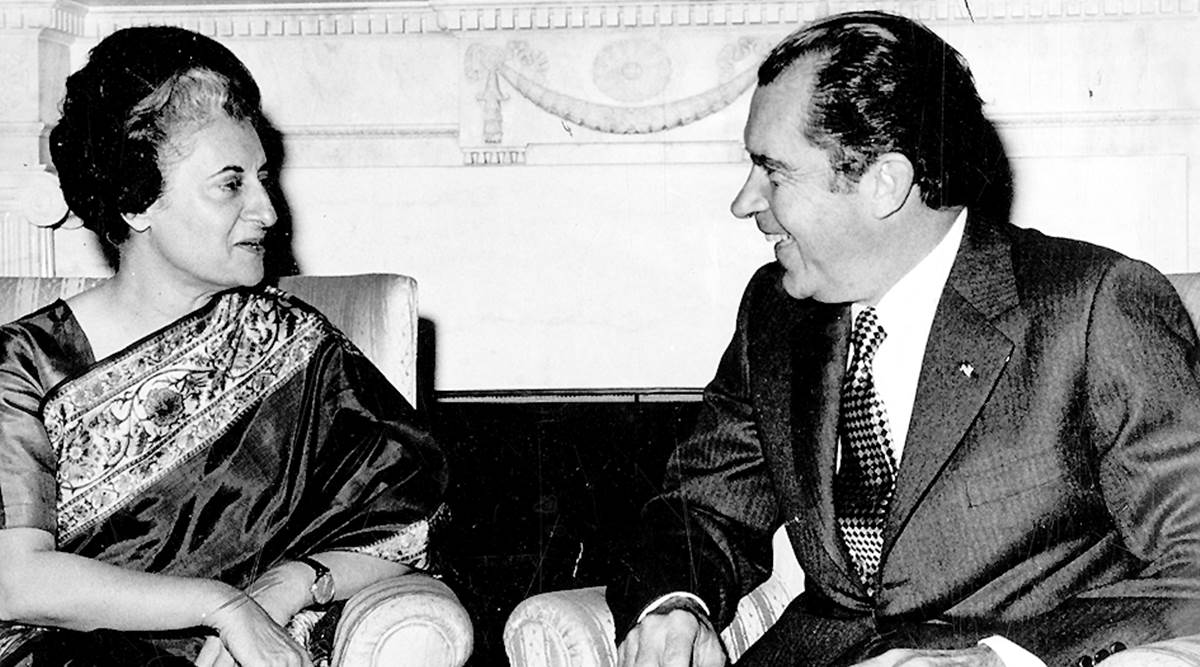
4 min readJul 14, 2026 05:51 PM IST
First published on: Jul 14, 2026 at 05:51 PM IST
When David Low died in 1963 in England, obituary writers lamented that the world had lost its best cartoonist, some wondering whether there would be anyone remotely like him any time soon. Low was arguably cartooning’s first global star. His fame went beyond the UK, US and Europe to British colonies, across the English-reading Commonwealth nations. There was a vast cartoon readership that missed Low. They didn’t have to wait for long for a worthy successor. In just about a year after Low’s death, Patrick Oliphant emerged in the US.
Like Low, a New Zealander who stormed Fleet Street, Oliphant was a migrant from neighbouring Australia. The 29-year-old left home on a Friday in 1964 and arrived in the US to start work in The Denver Post the next Monday. He was picked from a long list of 50 American applicants. American newspaper editors were looking beyond the national borders for the best in the business. This is what the British editors did when the art practice peaked there. At least two young Indian cartoonists found work in London in the 1950s, Abu Abraham and Rajinder Puri.

Post World War 2, the global capital of cartooning shifted across the Atlantic from London to Washington, even as the media space was being increasingly invaded by television. From 1 per cent in the late 1940s, 90 per cent American homes had a TV set by 1960. Newsrooms knew the best way to compete with the moving image was visually and a stinging visual was even better. Oliphant fitted the bill.
Oliphant cartooned the Cold War as mercilessly as Low did the World War. The task was tougher because unlike Low’s targets — foreign leaders like Hitler, Mussolini, Stalin and Franco — Oliphant had to pick on duly elected American presidents, from Lyndon Johnson and Richard Nixon to the two Bushes and Barack Obama. Looking back, one shudders to think that he was a fault-finding migrant in the host country — he became a naturalised American citizen only in 1979. This is unthinkable in these Trumpian times. If you are a cartoon watcher, you won’t rate the world’s most seasoned democracy at 250 kindly.
The Washington Post lost its Pulitzer-winning cartoonist Ann Telnaes last year. Back then, in the last century, even the wiliest of US presidents would grin and bear a widely syndicated celebrity cartoonist with a Pulitzer under his belt. Oliphant had won his in 1967 for the iconic Vietnam war cartoon depicting Ho Chi Minh carrying a dead Viet Cong soldier wondering, “They won’t get us to the Conference table… will they?”
In another three years Oliphant got the perfect presidential target to unleash his savage cartooning. Richard Nixon came to power and the rest was cartooning history, not just in the US, but the world over. Nixon won worldwide attention as the most notorious American president with the Watergate scam of 1973 and 1974. Enough for Abu Abraham to honour his exit in this paper with a stunningly deadpan drawing of the White House with a plaque that read: “Richard Milhous Nixon (1969-1974) lied here”.
It was a perfect minimalist foil to a richly detailed Oliphant cartoon done a year back when Pablo Picasso died. At the breakfast table with the first lady, the President glances at the artist’s obit in the morning paper and is visibly relieved, “Thank God he wasn’t a cartoonist”. The entire frame was a cubist rendering that pushed every element in it, including the human forms, to extreme distortion. The caricatured couple was readily recognisable, flat and fractured, as Picasso would have drawn them at his cubist best.
A lesser cartoonist couldn’t have conceived it and a lesser artist couldn’t have executed it.
The writer is chief political cartoonist at The Indian Express. ep.unny@expressindia.com