Prateek Tanmay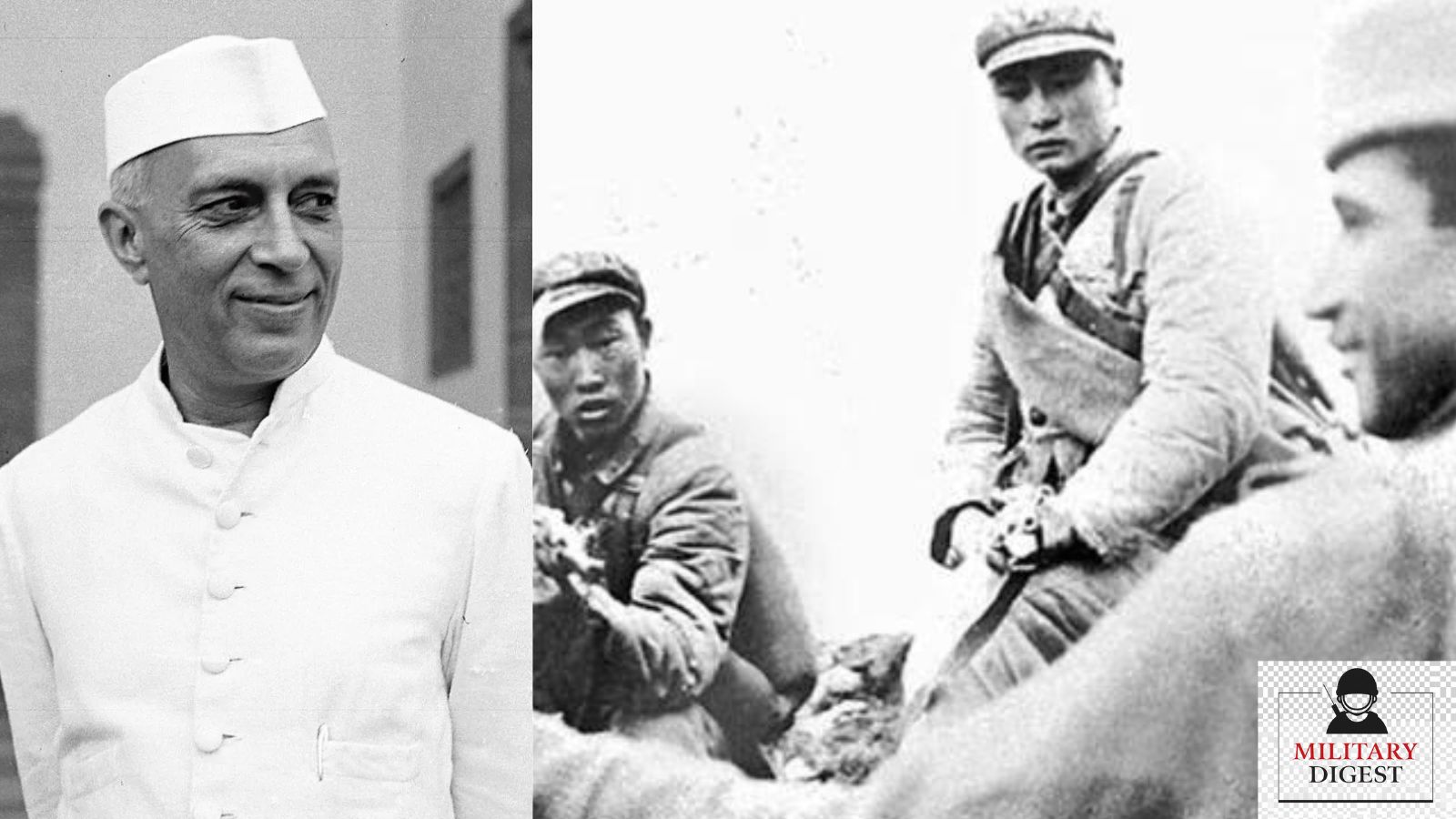
“Hindi-Chini bhai-bhai” (Indians and Chinese are brothers) was the definitive buzzword in India during the early 1950s. A marked cordiality hung over diplomatic circles, and Prime Minister Jawaharlal Nehru was keen to extend this geopolitical bonhomie into military relations as well.
Not many today are aware that China actually took the initial steps toward establishing formal military ties with India, becoming the first of the two nations to station a Military Attaché in New Delhi. India officially recognised the People’s Republic of China on April 1, 1950, and soon after, a Chinese military officer was dispatched to the Indian capital.
While India intended to respond in kind, the reciprocal appointment in Beijing quickly became quagmired in bureaucratic debates over whether the Indian Military Attaché should hold the rank of Colonel or Brigadier. Ultimately, it was Nehru himself who stepped in to settle the issue.
The signing of the 1954 Panchsheel Agreement (Five Principles of Peaceful Coexistence) further symbolised mutual respect for territorial integrity and non-aggression, fostering a brief period in which border issues remained secondary to broader Asian solidarity. While deeper military alliances or joint combat exercises were absent, these early ties reflected an era of optimism and diplomatic restraint, contrasting sharply with the severe border tensions that escalated later in the decade.
The Beijing appointment: Choosing a mind over a rank
Declassified documents from the Nehru Archives show that on August 11, 1953, PM Nehru addressed the bureaucratic standstill while responding to the Minister of Defence Organisation (MDO), as the ministry was known at the time. In a prior note addressed to the Secretary-General of the Ministry of External Affairs (MEA) and the Foreign Secretary on July 16, 1953, Nehru had observed that since China had already stationed a Military Attaché in New Delhi, India must urgently establish reciprocity.
Nehru suggested that the Chinese Ambassador be formally informed of India’s desire for reciprocity, highlighting the urgent need for an Indian officer in Beijing to manage matters related to India’s responsibilities under the Korean armistice arrangements.
Regarding the internal dispute over the officer’s rank, Nehru wrote in his August 11 note that the debate between sending a Colonel or a Brigadier did not impress him.
Story continues below this ad
“The comparison with the USA or other countries is also not very relevant. The work of our Military Attachés elsewhere is of a varied kind, including purchase of stores, etc. In China, we require a particular type of officer. He will not have to make any purchases or the like. But he will have to be exceedingly wide awake, intelligent, receptive, capable of getting on with people and understanding them, even though the environment may be completely different,” Nehru observed.
Nehru argued that the question of finance did not arise and the specific rank was a secondary factor. “We should certainly send a Brigadier, provided he is the right person to be sent and not merely because he is a Brigadier. I am anxious that the choice should be a good choice, and the normal considerations in choosing a man to act as Military Attaché do not wholly apply in the case of China, where one has to deal with an entirely new situation and a new social structure,” he noted.
He reiterated that military knowledge alone would not suffice. The ideal candidate needed to be mentally alert and possess a deep understanding of the massive political and social changes sweeping through China.
“It must be remembered that a person who does not fit in China will do India more harm than good, and therefore the need is to be particularly careful,” Nehru cautioned. “It is easy to get on well with the Chinese if we approach them in the right way. If not, then we do not get on at all with them.
Story continues below this ad
Enter Brigadier R K Kochhar
Rejecting standard service performance reviews as insufficient for this specific role, Nehru requested to personally interview a shortlist of both Colonels and Brigadiers. Following evaluations, the defence ministry recommended Brigadier R K Kochhar as India’s first Military Attaché to China.
On August 24, 1953, Nehru wrote to Mahavir Tyagi, the Minister of MDO: “I have seen and talked to Brigadier R.K. Kochhar, who has been suggested for the post of our Military Attaché in Peking. I agree to his appointment.”
Brigadier R K Kochhar’s career profile
1933: Commanded a Field Company in Burma (Corps of Engineers)
1942: Commanded the 3 Engineer Battalion in World War II
1950–1953: Director of Movements and Quartering
1953: Appointed India’s First Military Attaché to Beijing
1956–1958: General Officer Commanding (GOC), Assam (Major General)
1958–1961: GOC, Madras, Mysore, and Kerala Area
1961: Quartermaster General, Indian Army
Breaking western monopoly on military exercises
Nehru was equally determined to include Chinese military representatives in India’s domestic defence activities. While attending an Army exercise in Ludhiana on April 25, 1953, Nehru discovered that the only foreign dignitaries invited were the Military Attachés from the United Kingdom and the United States.
Story continues below this ad
In an archival note from the field, Nehru expressed his strong disapproval of this selective protocol: “I enquired why these two have been specially selected, and others had not been invited. I was told that this was the custom and that it was believed that Government policy was behind it. I was not aware of any such policy, and I dislike this kind of differentiation between the UK and the USA on the one hand and other countries on the other.”
Nehru directed that there should be no structural differentiation between Commonwealth and non-Commonwealth nations, asserting that the only standard to follow was one of political and diplomatic reciprocity.
“Apart from the UK and the USA, I understand that these countries [with Military Attachés in Delhi] are France, China, Pakistan, Burma, and Siam… I am quite clear that we should treat all of these on the same level as the UK and the USA, applying the rule of reciprocity. In regard to China, I should like to take some step towards this.”
Nehru instructed the ministry to brief the Chinese Ambassador regarding the Ludhiana exercises, explaining that while India would have gladly welcomed the Chinese Military Attaché, he was omitted solely because a reciprocal arrangement had not yet been institutionalised in Beijing.
Story continues below this ad
He added that if the Chinese government proved agreeable, the two nations could exchange such facilities moving forward. Nehru even floated the idea of sending a small, friendly military mission consisting of two or three Indian officers to China to foster early institutional goodwill.
From bonhomie to battlefield
Despite Nehru’s early diplomatic moves to cultivate military familiarity and trust, the geopolitical landscape shifted rapidly later in the decade.
Not long after these initial exchanges, China secretly commenced its strategic road-building exercises through Aksai Chin and began regular military incursions into Ladakh. The foundational goodwill vanished completely, and far from achieving military cooperation, the Indian and Chinese armies found themselves locked in a series of tense confrontations that ultimately culminated in the full-scale border war of 1962.