Prateek Tanmay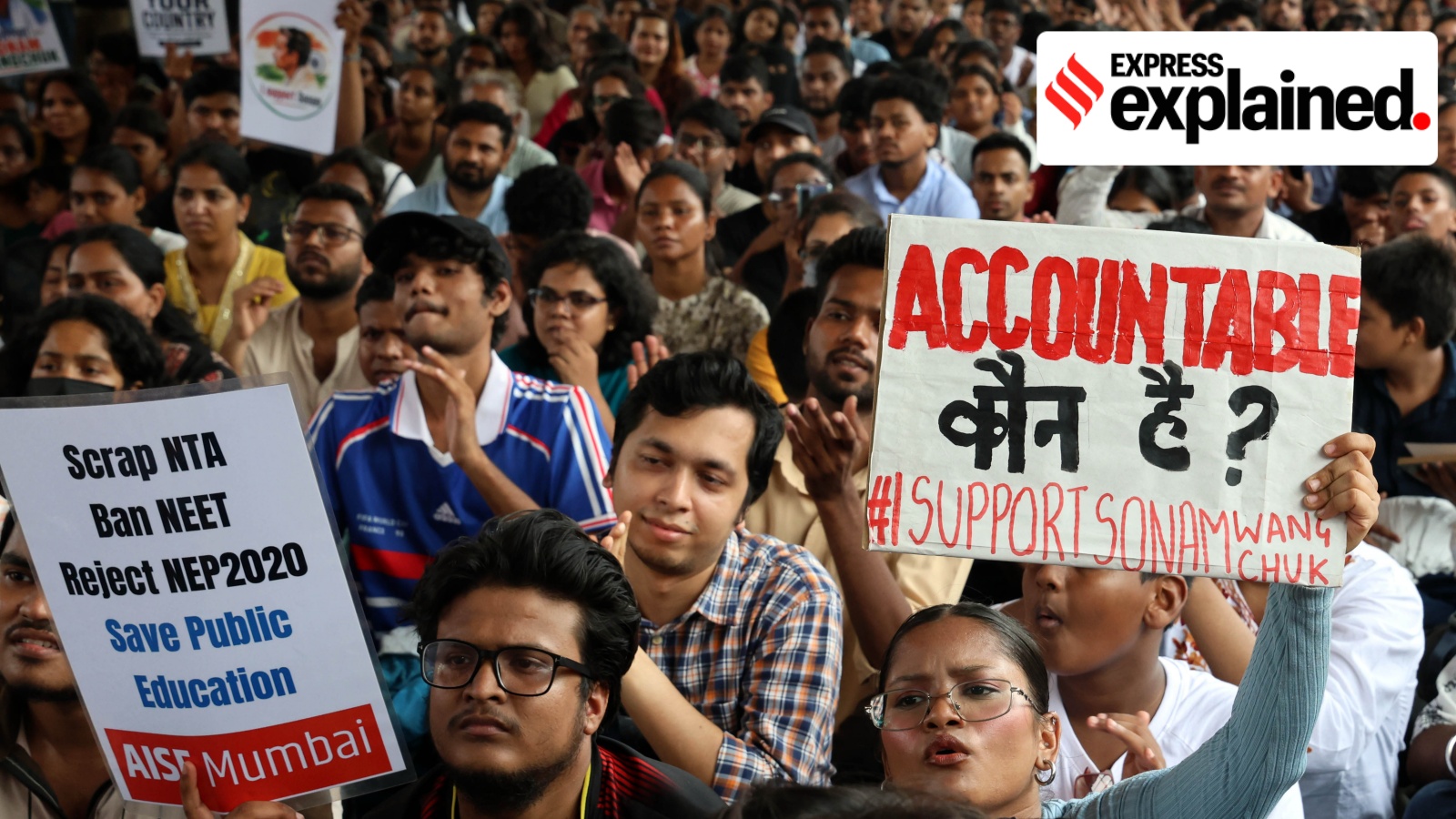
6 min readMumbaiUpdated: Jul 19, 2026 05:08 PM IST
Mumbai-based activists and citizens have been gathering at the Azad Maidan since last week in solidarity with the Cockroach Janta Party (CJP) protest being held at Jantar Mantar, New Delhi, over the NEET-UG 2026 entrance examination paper leak.
On Saturday (July 18), the Mumbai Police filed two FIRs against some of the protestors, citing the Public Meetings, Agitations and Processions Rules, 2025, which prohibit protests at the maidan on weekends.

The FIRs have been filed at the Marine Drive and Azad Maidan police stations. The former names student leaders of NCP (SP) for protesting outside Mantralaya or the state secretariat, while the latter concerns protests held by activist-writer Sudhir Dhawale (also an accused in the Elgaar Parishad case) and others outside Azad Maidan. The police said that they were booked under sections related to disobedience of an order promulgated by a public servant and unlawful assembly.
How did Azad Maidan become a designated protest site in Mumbai?
In 1997, the Nariman Point Churchgate Citizens’ Association and other resident associations in South Mumbai approached the Bombay High Court, claiming that protests held in the area caused them disturbance.
They complained of constant ‘noise pollution’ due to sloganeering along the arterial routes leading up to Kala Ghoda and Churchgate, where several morchas (rallies) would gather to present their demands to the government.
The petition claimed that this affected residents, college students, and office workers who commuted to Nariman Point every day. At that time, the court issued an interim order stating that all protests and morchas would terminate at Azad Maidan, a ground close to the Chhatrapati Shivaji Maharaj Terminus and the headquarters of the Brihanmumbai Municipal Corporation (BMC).
Since then, based on the interim order, protests held in South Mumbai have been held within the designated space at Azad Maidan. The organisers of the protests, too, require permission from the Mumbai police. Protesters would earlier demonstrate right up to Vidhan Sabha or Mantralaya, but this is no longer permitted.
Story continues below this ad
The Mumbai police also continually extend a public order under Section 144 of the Criminal Procedure Code (replaced with Section 163 of the Bhartiya Nagarik Suraksha Sanhita, 2023), prohibiting large gatherings by citing “disturbance of public tranquillity”.
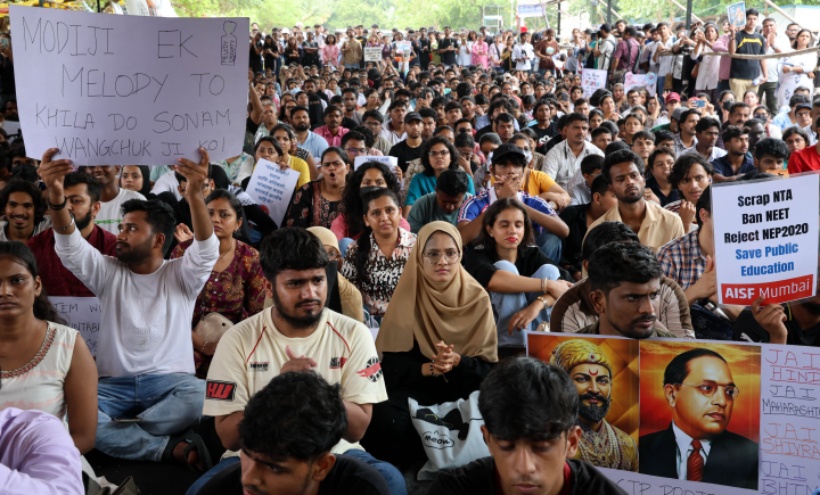 A CJP protest at Azad Maidan, Mumbai. (Express photo by Gandesh Shirsekar)
During the proceedings in relation to the 1997 petition, the state said in 2011 that a committee had been set up, comprising the additional chief secretary (home), the police commissioner, and the BMC commissioner, which would investigate the issue and develop a policy.
In 2016, the court was informed that the committee had not met even once; as a result, the court directed the government to formulate a policy soon. The petitioners had sought that facilities should be provided at the ground for protests, so that traffic and security are regulated, ‘in such a way that others are not inconvenienced’.
In 2020, the High Court was again informed that the state has undertaken steps to frame rules and regulations on public meetings. The court again took up the case for hearing in March 2025 and directed that the rules be established soon, stating that 28 years had passed since the petition was filed.
Story continues below this ad
The state had then informed the court that the Public Meetings, Agitations and Processions Rules, 2025, would be notified, earmarking Azad Maidan as the designated area for conducting dharnas, agitations, pickets, meetings, processions, hunger strikes, or any other forms of protest.
What do the Public Meetings, Agitations and Processions Rules, 2025, say?
The key guidelines of the notified Rules state that all protests should be held only between 9 am and 6 pm, with prior police permission. The protests cannot be held on weekends and public holidays. A maximum of 5,000 persons can be present at a time, and permission can be denied on days including festivals, Independence Day, Republic Day, during Legislative Assembly sessions, government functions or VIP movement.
It prohibits protestors from carrying objectionable placards, banners, and from making any abusive or provocative speeches. It directs that using any inflammatory language that could incite or promote enmity between different groups on grounds of religion, race, birth, caste and language or any act that disturbs public peace and tranquillity, should be avoided.
It also bars protesters from burning government documents, effigies, books, or sitting on hunger strikes. Sloganeering or marching towards or from the designated protest area is also not allowed. Loudspeakers or public address systems can only be used with permission, limited to certain decibel levels.
Story continues below this ad
When these rules were notified, some political leaders criticised them. NCP spokesperson Anish Gawande described them as “unconstitutional and undemocratic” in a social media post. He wrote, “This is the biggest attack on free speech in Mumbai. Now, protests allowed only at Azad Maidan on weekdays after permission. No more than 5,000 people. Until 6pm. What is going on?”
After the rules were notified, one of the major protests held at Azad Maidan was for Maratha reservation, led by activist Manoj Jarange Patil. While hearing a plea for permission, the HC cited the Supreme Court judgment in the Amit Sahni vs Commissioner of Police case, in connection with the anti-CAA protests at Shaheen Bagh in Delhi. The SC had then stated that occupying public ways can cause inconvenience to commuters and was unacceptable.
Eventually, when permission was granted, more than 5,000 protestors gathered at the Maratha protests, with many residing outside the maidan.