Prateek Tanmay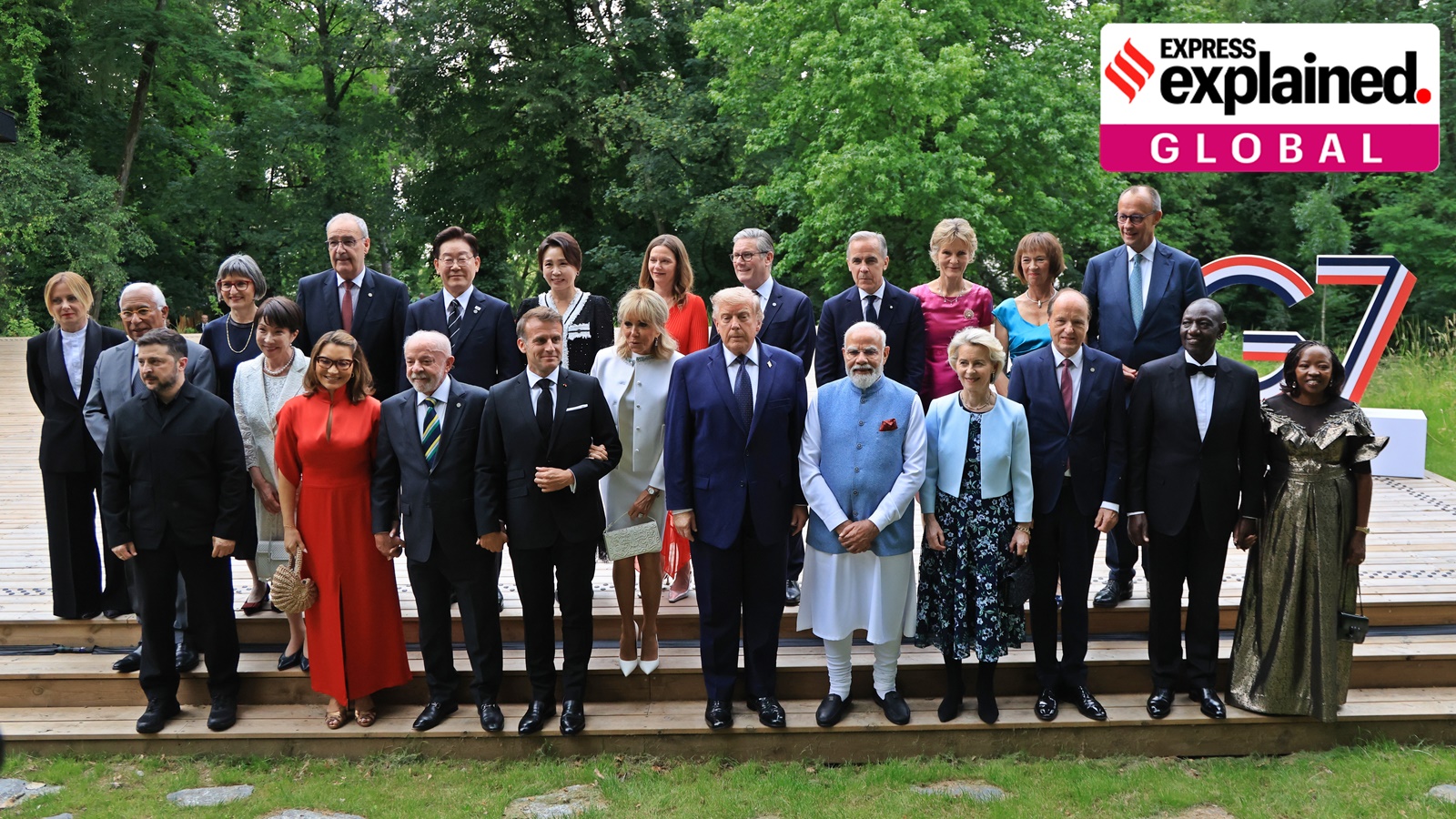
From June 15 to 17, world leaders came together in France for the G7 (Group of Seven) meeting amid rising geopolitical tensions and economic instability. The meeting focused on the Russia-Ukraine war, the tensions in West Asia, artificial intelligence (AI) and global trade disruptions.
The G7, an informal forum of leading industrialised nations, comprises Canada, France, Germany, Italy, Japan, the UK and the US.
Ukrainian President Volodymyr Zelenskyy’s presence at the 52nd edition of the summit drew global attention, amid renewed efforts to bring a resolution to the Russia-Ukraine war, now in its fifth year.
India also participated in the event, with Prime Minister Narendra Modi flagging concerns over the safety of Indian seafarers in the Strait of Hormuz, after attacks on commercial ships by the US Navy killed three Indians.
Following three days of discussions, the G7 leaders released statements on major topics such as human trafficking, geopolitical issues and rebuilding international partnerships.
Here’s a look at what G7 brings for the world, what it means for India, and the developments to watch going forward.
1. Russia-Ukraine: A step towards de-escalation?
Story continues below this ad
Addressing the Ukraine-Russia conflict, the G7 leaders reaffirmed their commitment to Ukraine, saying they “stand united in our unwavering support for Ukraine in defending its freedom, sovereignty, and territorial integrity”, according to the statement.
They agreed to provide air defence aid to Ukraine and signaled their intentions to increase sanctions on Russian oil and gas sectors. Modi also met Zelenskyy, and said that India “stands with peace, placing humanity over everything else”.
2. Strait of Hormuz passage
Amid the war between the US and Iran, Iran had begun charging “tolls” for safe passage through the Strait of Hormuz, creating international concerns over freedom of navigation.
Following the announcement of a deal between the two countries, the leaders of the G7 welcomed this development and reaffirmed “the right of transit passage without restriction or tolls” as the foundation of international trade and have asked for robust resolutions to bring back peace in the region.
Story continues below this ad
Iran’s nuclear programme was one of the central issues underlying the conflict between the US and Iran. G7 leaders emphasised the importance of progress under the US-Iran MoU and called for negotiations that ensure Iran does not acquire a nuclear weapon.
3. The migration challenge
The G7 leaders have renewed their commitment towards “preventing, countering and dismantling organized criminal networks that profit from the smuggling of migrants, the trafficking in persons and other related crimes, as well as to disrupting the business models of organized criminal enterprises”
Migration has emerged as a sensitive issue across several countries.
Since the second term of US President Donald Trump, there have been concerns over the deportation practices and regulations imposed by the new US government. Immigration and Customs Enforcement (ICE), an investigative arm of the Department of Homeland Security, which is responsible for investigating domestic and international activities coming from the illegal movement of people and goods, has been under scrutiny and questions from around the world on many different occasions.
Story continues below this ad
South Asia has seen a similar situation recently too. In May, Bangladeshi Foreign Minister Khalilur Rahman stated that Dhaka would take “appropriate measures” if there were any further “push-in” incidents after BJP’s historic win in West Bengal. The “push-in” incidents he referred to are the undocumented migrants from Bangladesh being sent back by the BSF through the India-Bangladesh border. MEA spokesperson Randhir Jaiswal said in response that the core issue is the repatriation of illegal Bangladeshi nationals in India.
The statement from the G7 for the issue of migration globally also read: “We note the obligations on States to accept return of their own nationals and to enhance processes to ensure timely, safe, lawful and dignified return of those with no legal right to stay in our territories.” It highlights the importance of countries to cooperate with each other to identify undocumented migrants, verify nationally and carry out repatriation in a lawful manner while respecting human dignity.
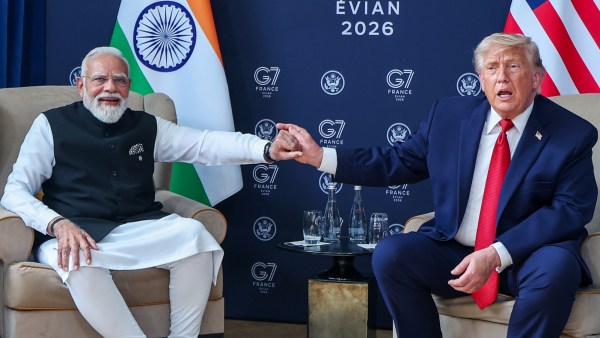 Prime Minister Narendra Modi and US President Donald Trump hold a bilateral meeting on the sidelines of the G7 Summit 2026, in Evian on Wednesday. ANI
4. What India brought to the table
Modi, in his long-awaited meeting with Trump, flagged the safety of Indian seafarers in the Gulf. He also spoke about the importance of having a “free” Strait of Hormuz.
Story continues below this ad
Trump called Modi a “tough negotiator” when asked about the final trade deal announcement.
Addressing world leaders, Modi talked about the challenges and opportunities that AI poses. At the global platform, he also expressed his suggestions for AI usage that balances safety, speed, and efficiency.
An announcement of a free trade agreement between India and EU has also been made, which is supposed to be completed by the end of 2026. European Commission President Leyen said on X that the two countries will step up security and defence cooperation.
5. What to look out for
In the coming months, attention is likely to focus on two key developments: the progress of negotiations between the US and Iran, and the impact of additional support and sanctions on the Russia-Ukraine conflict.
Story continues below this ad
For India, these developments are important. Stability in the Strait of Hormuz remains crucial for energy security and maritime trade, while regional discussions on migration and repatriation will affect India’s large diaspora around the world and its engagement with its neighbours, especially Bangladesh.
The meeting between Trump and Modi at G7 shows an effort to rebuild trust between the two countries. However, India will still face the challenge of balancing closer engagement with the West while preserving its strategic autonomy and longstanding relationships, especially with Russia.