Prateek Tanmay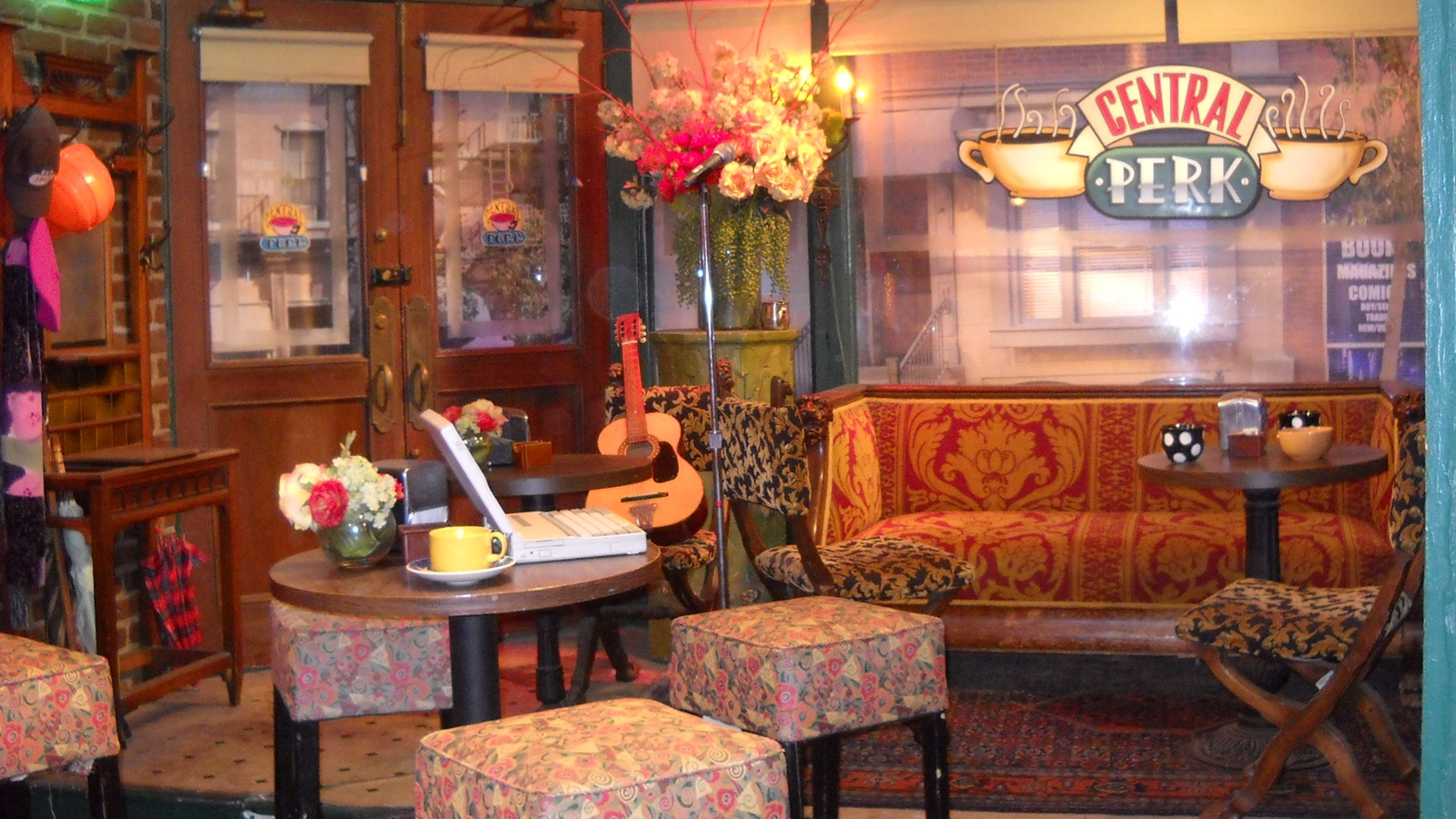
I completed my undergraduate education in Delhi, and once classes ended during the first year, two of my closest friends and I spent an inordinate amount of time hanging out in the college library. You would think we topped the class and won valedictorian with our dedication, but our librarian knew the truth. One of us rehearsed her script for the upcoming theatre society presentation, the other watched videos for UPSC preparation, and I went through the entire Sarah J Maas bibliography the library had to offer. We stayed holed up in the mildly air-conditioned hall till they kicked us out, saving thousands on our electricity bill that sweltering summer. I didn’t realise it back then, but that library had turned into a fun third space for us.
That’s probably why I relate with Krishna Chagti, a student of IIM Sirmaur, in Himachal Pradesh, who goes to a cafe a few steps off campus almost every day, sometimes for hours at a time. Nobody works in the cafe. It’s in the open, and there’s food. But what draws him to it is the change of surroundings. “The other option is sitting on my bed, which does something to your head after a while. Same job, totally different state,” he tells indianexpress.com.

Third spaces existed long before we gave them a name
Markets, tea houses, cafes, libraries, parks, religious courtyards, barbershops, and neighbourhood squares have always allowed people to meet outside the formal roles of home and work.
Nargiza Noimann Zander, a clinical psychologist and neuroscience researcher, explains that sociologist Ray Oldenburg later described these environments as third places.
But if you think about it deeply, the idea is not new to us. FRIENDS has done it, with the Central Perk cafe, and the characters in How I Met Your Mother spent a lion’s share of their free time lounging in MacLaren’s Pub. Closer home, kitty parties and Kolkata’s rock adda culture held a mirror to the West.
Paricher Tavaria grew up abroad, and outside of home, college, or work, she would find herself hanging out at the Galleria Ice Rink at the Hyatt Regency, Dubai. “It was where we could have fun, relax, meet people from different cultures and backgrounds, and form friendships that lasted a lifetime. That space did more than give me a place to hang out—it shaped who I am today,” recalls the Fashion Communication Educator at Pearl Academy, Mumbai.
Post Covid, her students introduced her to The Family Table in Bandra, Mumbai. Not only is it a great place to find solace during the monsoon and watch the world go by, Tavaria believes such spaces “remind us to put the phone down and slow down”.
Story continues below this ad
Created through repetition, not just design
You might wonder if a third space is just another cafe or bookstore. But Zander illustrates that a third space is valuable because of its neutrality.
“No one is hosting, no one is being evaluated, and no one has to justify why they are there. People can arrive alone, stay briefly, return regularly, and gradually become familiar to others,” she says, explaining that a third space is therefore created through repetition, not simply through design.
“These interactions may appear minor, but they help people feel visible and connected to the world around them. A city can be crowded and still be psychologically lonely, and third spaces help turn physical proximity into social belonging,” Zander elaborates.
With an X user recently complaining about laptops being banned from cafes like Subko in Bangalore and Altry in Gurgaon, modern-day third spaces embrace a shift towards welcoming, neutral environments that separate one’s home and workplace.
Muskan Shah, a FLAME University alumna, and Moitrayee Das, who teaches psychology at the institution, spoke about up-and-coming third spaces in a 2025 report published by NE NOW NEWS.
Story continues below this ad
“Waari Book House and Mauji Cafe in Pune have come up with pay-by-the-hour plans, offering free snacks and coffee,” they said, adding that Kolkata regularly hosts events like book swaps and open-mic events. According to them, Studio Saar in Udaipur also offers a learning and culture-oriented third space.
However, Shah highlights that these spaces largely remain available for only for certain sections of society. “They are scarce in smaller towns and frequently inaccessible for rural and lower-income sections of society,” she added.
“The class and geography gap leads to members of different groups not being able to afford frequent spending at these spaces, or not feeling welcomed in spaces like boutique cafes or studios,” she writes in her article.
Chagti echoes that sentiment, saying that no matter the accessibility, whether they are “roadside joints or fine dining spots”, these are all obvious spaces where you are supposed to eat and go. “There’s no sign as such, but you just feel you shouldn’t be sitting there, so you don’t go back.” He says that the ban is the visible part, and “the less loud problem is how few places there are for someone to just be for a few hours”.
Story continues below this ad
Shah also writes that commercialisation acts as a significant threat to these spaces losing their soul, along with a safety threat to women and gender minorities, who stand at risk of “facing harassment in public and private spaces”.
And while online third spaces like Discord and Reddit communities act as some form of respite, Shah and Reddy believe they end up taking away “the sense of serendipity and the essence of face-to-face interactions”.
Masuma Zainab, a psychologist and community owner of Connect Cove, Kolkata, says this is especially valuable for people who live alone, work remotely, have recently moved to a new city or are going through a difficult period. “They may not yet have close relationships, but a familiar public place can provide a gentle form of social stability,” she says.
 In How I Met Your Mother, pub McLaren’s acted as a third space. (Instagram/@HIMYMfandomwiki)
Remote workers and introverts unite
Shreya Badola became a solo consultant after nearly 16 years of working in offices and has been feeling the lack of a third space more than ever.
Story continues below this ad
As an introvert, the PR professional was never big on networking and would look forward to getting home immediately after work. Something she realised only recently is that at times, she prefers “proximity-without-obligation over solitude”.
“I see this every day while walking my dog. I recognise many of the dogs and their humans in my neighbourhood. Sometimes I’ll stop and ask a dog’s name; other times I’ll simply smile at a wonderfully goofy dog and keep walking. And sometimes people do the same with me and my dog,” Badola tells indianexpress.com.
While they may never exchange names, those tiny moments of recognition make the neighbourhood feel a little more like home for her.
Zainab says that there is a distinct difference between being surrounded by people and being socially connected. A café full of people working silently on laptops may be physically occupied but socially empty. “The answer is not necessarily to ban laptops everywhere, but to create a balance, perhaps through communal tables, laptop-free zones or certain hours designed for conversation and shared activity,” she points out.
Story continues below this ad
Badola hasn’t found an equivalent third space in India yet, but she is actively looking for one.
This is where Zainab’s Connect Cove comes in. On the surface, it comes across as just another community bar in Kolkata, but the philosophy behind the place is to create an environment where people can “openly talk about stress, emotional challenges, and everyday life without the fear of being judged”. Zainab, who founded Connect Cove, believes the greatest form of support isn’t advice—it’s simply having a safe space where you feel heard, accepted, and understood.
“What has changed is that we have built a life around independence, and independence, taken far enough, curdles into isolation,” the psychologist points out.
She says that our public squares and community hangouts did not vanish overnight. They eroded quietly, and we let them—because convenience always feels urgent, connection never does.
Story continues below this ad
Are third spaces a solution to India’s loneliness problem?
Following the Covid crisis, an Ipsos Global Survey in 2021 reported that four in 10 urban Indians felt lonelier due to the pandemic and that 4 in 10 urban Indians felt lonely and friendless at most times. Even though five years have passed since then, not much has changed.
According to a report published by digital entertainment platform JB.com in June 2026, a global study examined emotional well-being and social isolation across 36 countries, and ranked India as the second-loneliest country in the world. The study also found that despite strong family structures and larger households, many people in India continue to experience feelings of loneliness and emotional disconnection.
Dr Rimpa Sarkar, a clinical psychologist and founder of Sentier Wellness, elucidates that loneliness is becoming one of the biggest mental health challenges of our time, especially among young adults. While today’s generation is more digitally connected than ever before, she believes the problem lies in the fact that many people are experiencing fewer deep, meaningful relationships.
“From a psychological perspective, chronic loneliness is not just an emotional experience. It is associated with increased stress, anxiety, depression, sleep disturbances, lower self-esteem, and even poorer physical health,” she says. And to avoid these pitfalls, young people need to become intentional about building real relationships.
Story continues below this ad
“This means investing time in face-to-face interactions, nurturing a few close friendships rather than chasing large social circles, participating in communities with shared interests, and learning to have honest conversations about emotions,” she shares.
Humans are not social just by preference
Zainab says that today, we are more digitally connected than any generation before us, and yet we are living through what researchers are now calling a loneliness epidemic. As a psychologist, she sees the cost of this daily. Humans are not social just by preference; we are social by design.
Connection is not a luxury we indulge in, but a biological requirement. “When we form real bonds with people, our brains release oxytocin, a chemical that regulates stress and is central to psychological well-being,” says Zainab.
In order to bring third spaces back, Zainab believes the correction has to be deliberate. “Join the run club you keep meaning to join. Go to the meetup even when your instinct is to stay in. Speak to the person next to you at the café instead of retreating into your phone,” she says. None of this is dramatic, but all of it is necessary.
Experts reiterate that our well-being was never meant to be a solitary project, but a collective effort—reminding us that healing often begins with conversation, empathy, and the courage to show up for one another.
DISCLAIMER: This article is based on information from the public domain and/or the experts we spoke to.