Prateek Tanmay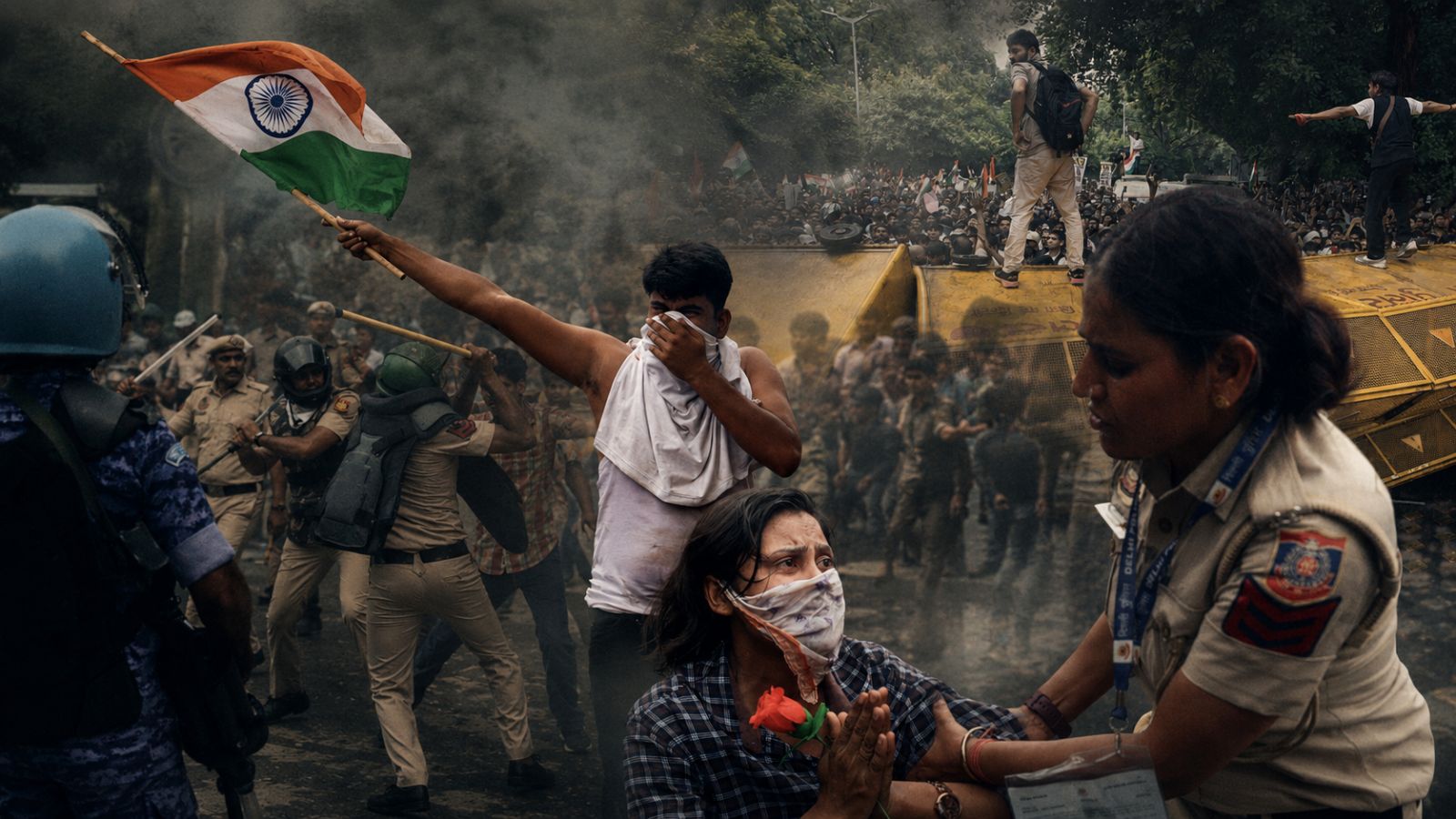
What began as an Instagram satire page didn’t just spill onto Delhi’s streets on Monday. It collided with something much older than the internet itself: India’s long tradition of ordinary people taking to the streets when they feel unheard.
For months, the Cockroach Janta Party (CJP) existed largely in the language of the internet — memes, satire, inside jokes and viral posts. It was easy to dismiss it as another social media phenomenon, destined to trend one day and disappear the next. But somewhere between the hashtags and the highways leading into Delhi, the movement changed shape. It stopped belonging only to timelines and started belonging to people.

And yet, as the movement grew beyond the people who started it, the conversation around it refused to.
“I support the protest, but not CJP.”
“I support the students, but not Kunal Kamra.”
“I support the issue, but not the people leading it.”
The protest was no longer asking just one question of the establishment. It was asking one of us too: when did supporting a cause start requiring a disclaimer? When did every act of solidarity become an endorsement of every individual associated with it?
Perhaps that is because social media has trained us to consume movements through personalities. We instinctively look for the face of a protest before we look at the people inside it. We debate the politics of those leading it before asking what brought thousands of strangers onto the same streets.
But once a movement reaches the streets, it is no longer sustained by algorithms or influencers. It is sustained by people — each carrying their own reason to show up. And that is a story worth looking at beyond the agenda, beyond the labels and beyond the personalities.
Story continues below this ad
Delhi roads and a story beyond headlines
When Swapnil Joglekar, reporting for The Indian Express, spent the day on Delhi’s streets, the story he found wasn’t one dominated by internet personalities or political talking points. It was told through conversations — with students, parents, professionals and strangers — who had travelled for reasons far more personal than the discourse unfolding online.
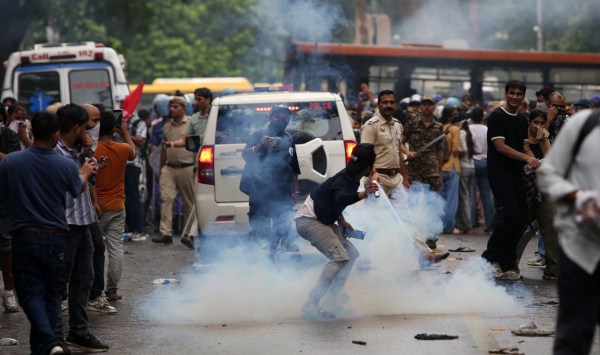 Visuals from the CJP protest against NEET paper leak in New Delhi (Express Photo by Gajendra Yadav)
As Swapnil walked back from the Delhi protests after a day of encountering large, passionate crowds, internet shutdown and tear gas shells, a boy walking beside him struck up a conversation. During their long walk to find the nearest functional metro station, Subhan told him that he attended the protest for his friend.
“Uska NEET me bohot bura hua tha. Wo ni aa saka to main aaya (My friend was affected by the alleged NEET paper leak. While he couldn’t attend today’s protest, I did on his behalf),” he said.
Subhan is in Class 12 and from Delhi’s Shahdara. Earlier in the day, Swapnil met a group of IT professionals from Jodhpur who would discuss the protest in their lunch breaks and had decided to reach Delhi for the march. A group of elderly women from Haryana were here for the “future of their children”.
Story continues below this ad
During an earlier visit to Jantar Mantar, the journalist encountered a father who had travelled from Rajasthan, along with his daughter and son.
“The government considers students as ‘cockroaches’, but so many of them will come here, along with senior cockroaches like us, that Delhi’s roads won’t be able to manage it,” he had prophesied ahead of the Parliament march. The video report we shot shows his daughter beaming at her father’s enthusiasm.
When TV channels either render invisible what’s happening in the country’s capital or label those in attendance as perverse, anti-social elements, one can only shudder at the criminal act of misinformation being carried out and the long-term harm it may inflict on the psyche of a generation that believes whatever’s transmitted on their TV screens as gospel truth.
No one takes to the streets at the sign of the first inconvenience. No one chants slogans calling for change along with complete strangers after their first disappointment. No one starts pacifying the crowd like an elder sibling after tear gas shells land in the middle of a protesting public.
Story continues below this ad
To look away from this reality – that these people are frustrated, that they are angry and that they have found an outlet, finally – is to fiddle with the country’s future.
Swapnil reported for hours from the streets of Delhi. Not one person he met mentioned Abhijit Dipke or even Sonam Wangchuk, much less Kunal Kamra or Arundhati Roy. The protesters on the road outside Niti Aayog Bhawan were “against corruption”, holding their ground as rows of barricades blocked their way to Jantar Mantar on a humid July afternoon. They marched outside Le Meridien Hotel on the way to Parliament demanding change. And they travelled all the way from Mansarovar Park in Shahdara because their friend was affected by the NEET paper leak.
One may disagree with Dipke, Wangchuk, Kamra and Roy over their politics and motivations. But even if one does, it cannot diminish the earnestness of the thousands who skipped classes, applied for leave and booked tickets to be there. To believe that all those on Delhi’s streets had been brainwashed or label them “anti-national” is to infantilise the intellect of the common people and ridicule their problems.
India is angry. Ask Delhi’s roads.
Why does solidarity come with a disclaimer?
The average Indian has become remarkably good at doubting a protest before understanding it.
When people gather against the establishment, our first instinct is rarely to ask why. Instead, we ask who. Who is organising it? Who is funding it? Which celebrity showed up? Which political party might benefit? Which slogan was raised? Which placard went viral?
Story continues below this ad
Somewhere between the faces and the hashtags, the cause itself gets buried.
No Arundhati Roy, no Kunal Kamra, no Shabana Azmi is answerable for an education system riddled with paper leaks or a generation’s anxiety about jobs and opportunity. One may agree or disagree with their politics, speeches or methods. But reducing an entire protest to the public figures associated with it is to ignore the thousands who arrive carrying concerns that existed long before those names entered the conversation.
And yes, when thousands of people gather, causes inevitably overlap. Someone will raise a slogan for Palestine. Another will speak for farmers. Someone else will bring up unemployment, reservations or civil liberties. That is not an aberration of modern protests; it is the history of protests. Public demonstrations have always been spaces where grievances converge, where people recognise a rare platform and use it to amplify the struggles they believe have gone unheard.
That convergence should not become an excuse to dismiss the protest altogether.
Story continues below this ad
If anything, the scenes from Delhi should provoke the opposite of hesitation. They should compel us to look more closely, to ask why so many people felt the need to leave their homes, travel across states and stand behind barricades despite the uncertainty. Whether one ultimately agrees with the demands or not, that willingness to question authority is not a weakness of democracy. It is one of its defining features.
@SwapnilJogleka1 reports from the ground on CJP protest. He says its not just Gen Z who have turned up at the protest site, but also children and elder persons.
Here’s LIVE updates:
Watch video: pic.twitter.com/RkpQxy4HUu
— The Indian Express (@IndianExpress) July 20, 2026
Rebellion not an act of blind defiance
Perhaps that is why Bhagat Singh wrote in his jail diary that progress depended on questioning dogma, criticising even revered figures and challenging established authority. For him, rebellion was not an act of blind defiance but of reason. A society that stops questioning does not become more stable; it merely becomes more obedient.
Democracy is not weakened because people gather on the streets. It is weakened when citizens begin to feel they must apologise before they question, qualify before they dissent and hesitate before they stand beside a cause.
The question, then, isn’t whether every person at a protest deserves your endorsement. It is whether our fear of being associated with the ‘wrong’ people has become greater than our willingness to engage with the ‘right’ questions.
India is angry. Delhi’s roads told us that. The only question now is whether we will keep debating who was walking on them — or finally ask why so many felt compelled to.