Prateek Tanmay
4 min readNew DelhiJul 21, 2026 03:35 PM IST
The Punjab and Haryana High Court has refused anticipatory bail to a man accused of offering a bribe to an official in a bid to obtain unfair assistance in the IIT-JEE (Advanced) 2026 examination, while observing that corruption-related offences undermine public trust and require a cautious approach at the pre-arrest stage.
Justice Sumeet Goel was hearing a plea filed by Paramjeet, seeking anticipatory bail in a case where an official assigned duties in connection with the IIT-JEE (Advanced) examination alleged that two men tried to offer him a bribe seeking unfair advantage for a candidate.

“Economic offences and offences related to corruption erode public trust and, therefore, the Court(s) are required to exercise caution while extending the concession of anticipatory bail. Given the nature of the offence, this Court is not inclined to grant pre-arrest bail at this stage as it would impede the investigation,” the July 17 order read.
The prosecution claimed that Paramjeet and another accused visited a hotel on May 15, 2026, where the complainant, Sumit Kumar, who was a venue commanding officer at OM Institute of Technology and Management, stayed while performing duties in connection with the IIT-JEE 2026 examination.
During the meeting, Paramjeet allegedly requested the complainant to extend illegal assistance to a particular candidate appearing for the examination. It was also alleged that he and his co-accused tried to offer the complainant two bundles of Rs 500 currency notes as illegal gratification.
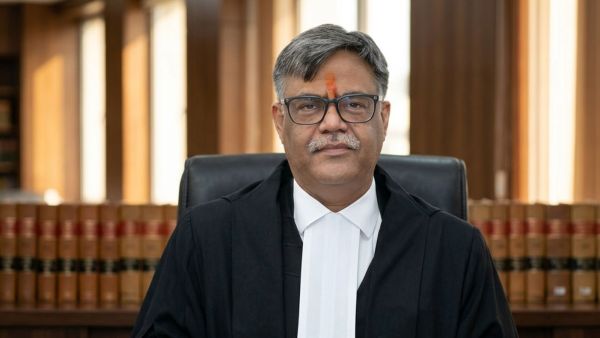 Justice Sumeet Goel held that the initial investigation indicated a reasonable basis for the accusations.
‘Delay in lodging FIR’
Senior Advocate Ankur Mittal, representing Paramjeet, argued that there was an unexplained two-day delay in lodging the FIR. It was also submitted that his client was not named in the FIR and the allegations levelled were vague since neither the roll number nor the candidate’s name was mentioned in the FIR.
It was further argued that IIT-JEE (Advanced) is a computer-based examination conducted online by the Joint Admission Board, 2026. He added that the Public Examination (Prevention of Unfair Means) Act, 2024 is applicable only in those cases where the exam is conducted by a public examination authority, but the joint admission board constituted by the IITs is not a public examination authority.
Story continues below this ad
The petitioner, aged 35, has clean antecedents and undertakes to cooperate with the investigation, it was submitted.
Opposing the grant of anticipatory bail, Senior Deputy Advocate General Priyanka Sadar Thakur said the offence allegedly committed by him is serious in nature and there is a possibility that the man may abscond or tamper with the prosecution witnesses or evidence.
Case supported by CCTV footage: HC
The high court found that the evidence revealed that the man and his co-accused had visited the hotel and actively tried to persuade the complainant to extend illegal assistance to an IIT-JEE candidate. This was supported by the CCTV footage collected from the hotel, which showed his presence at the location.
Finding that granting anticipatory bail at this stage would likely hamper the ongoing investigation, the high court held that the evidence and the initial investigation indicated a reasonable basis for the accusations. “Thus, it is not appropriate to grant anticipatory bail to the petitioner,” the court stated.
Story continues below this ad
After considering the nature and seriousness of the allegations, the specific role assigned, the stage of investigation, and the need for custodial interrogation, the court held that the petitioner did not deserve anticipatory bail.