Prateek Tanmay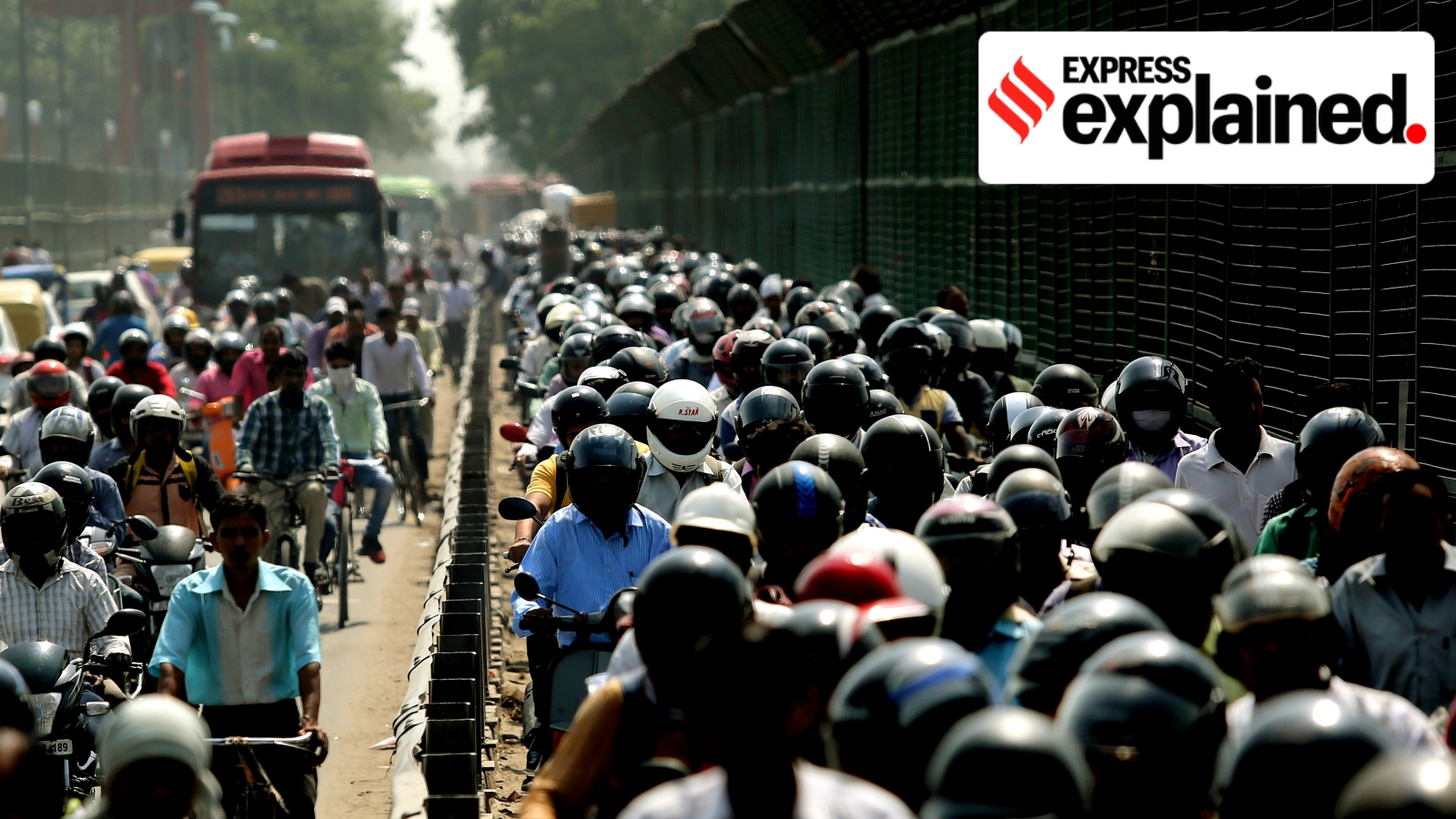
The Supreme Court Friday recognised walking on demarcated footpaths as a fundamental right that shall override the privilege of a motor vehicle. The court also urged the government to introduce a law to bring this right into effect.
A law would be crucial to holding officials and departments accountable for addressing violations of pedestrian rights.
The genesis of the case lies in the death of a 5-year-old boy who was struck by a tanker while walking to school with his father. “Who could have ever imagined that it would be the last walk with his son?” said the bench of Justices P S Narasimha and Atul S Chandurkar.
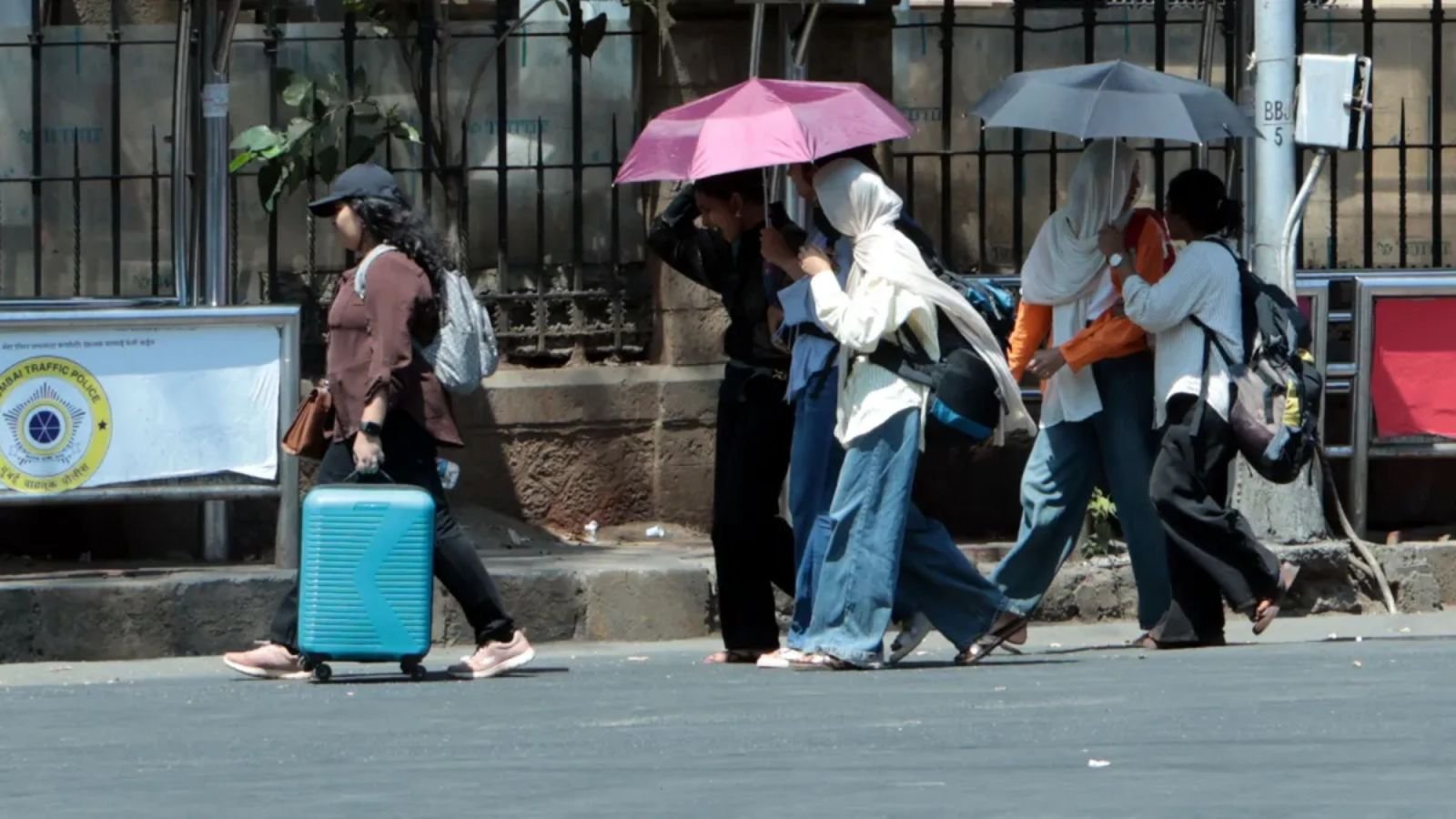
Pedestrians are among the most vulnerable road users in India. On the roads of almost any city in the country, people are often wary of walking even on footpaths. The little space available to pedestrians is frequently encroached upon by two-wheelers or shops.
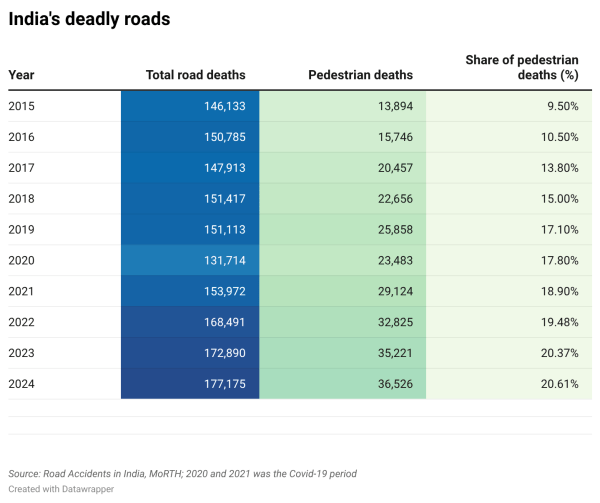
Pedestrian deaths in the country have more than doubled in 10 years and now account for the second highest road death share after two-wheeler fatalities.
An Indian Express analysis shows that while total road fatalities increased by 21.24% between 2015 and 2024, pedestrian deaths surged by nearly 163%, or 2.63 times. The number of pedestrians killed in road accidents rose from 13,894 in 2015 to 36,526 in 2024. Their share in total road fatalities also more than doubled, from 9.5% to 20.61% during the period. Pedestrian fatalities continued to rise even during the Covid-19 pandemic years. (see box).
Movement on wheels and right to walk
In its judgment, the Supreme Court traced the issue back to the most basic human activity — walking. The court highlighted the irony that while walking predates wheeled transport by millennia, road infrastructure today is overwhelmingly designed for motorised vehicles. It further observed that the Motor Vehicles Act has, in many ways, impeded and undermined the rights of pedestrians.
Story continues below this ad
“It could also be elitism to start with, for machines with wheels were only for the rich, but as economies progressed and cheaper motor vehicles were introduced, the entire spectrum of motorised transportation dominated the roads, pushed aside the walkers to the extent that they are treated as a nuisance for the drivers who routinely run over the walkers and their footpaths. This should stop from now on as we declare the fundamental right to walk on demarcated footpaths alongside motorised roads,” said the court.
The court went on to say that the absence of safe and comfortable footpaths to walk on, and even when they exist, their subjugation to motor transport, has been a “civilisational problem”. The top court also broadened the picture of walking by linking it with India’s freedom struggle. where the Act ignited many ideals.
Piyush Tiwari, founder and CEO, SaveLIFE Foundation, said that the court has reversed the hierarchy over motorised vehicles, since pedestrians account for one in five road deaths in India.
“For decades the footpath has been the most expendable line on road building and maintenance plans. By recognising the right to walk as a fundamental right that takes priority over motorised traffic, the Supreme Court has reversed that hierarchy, and rightly so. For municipal bodies and road-owning agencies, a safe, unobstructed footpath is no longer discretionary; it is a constitutional duty wherever a road exists,” said Tiwari.
Who is the Motor Vehicles Act for?
Story continues below this ad
The court came down heavily on the Motor Vehicles Act, 1988, an exhaustive legislation governing the vehicles and rules of the road. The court said that the law is not for protecting the right to walk on footpaths and only lays down infrastructure for vehicles, which is its mainstay.
“The Motor Vehicles Act is built upon “vehicle” as the subject of the legislation, while “human” interests are incidental, which a motor vehicle must avoid violating — that’s all, and no further,” said the court.
In 2017, the Ministry of Road Transport and Highways (MoRTH) notified the Motor Vehicles (Driving) Regulations, which says that drivers should take special precautions to ensure safety of vulnerable road users such as pedestrians, cyclists, children etc.
However, the court said that these regulations are just guiding principles and they neither recognise the fundamental right to walk on demarcated footpaths nor prioritise the right to footpath over a motorised road.
Story continues below this ad
“This Court has long been struggling to squeeze in pedestrian rights in the nooks and crannies of the Motor Vehicles Act and the attempt is still continuing with monitoring the implementation of its directions issued since 2012,” said the Supreme Court.
What happened in the 5-year-old’s case?
The Supreme court struck down the order of the high court which had reduced the compensation awarded to the victim’s father by Motor Accident Claims Tribunal (MACT). On May 30, 2016, MACT had granted a compensation of Rs. 7.82 lakh with interest rate of 6% per annum from the date of the petition till realisation. This order was appealed by both the boy’s father and insurance company in the high court, which reduced the compensation to 4.70 lakh.
The Supreme Court said that the High court committed an error in reducing the compensation granted by the MACT. The court recalculated the compensation to 11.44 lakh and said that it should be paid within two months.
On the rights of pedestrians, the court said that the violation of the right to walk on demarcated footpaths will entitle the citizens to invoke constitutional and legal remedies apart from the remedies available in Motor vehicles act, 1988.