Prateek Tanmay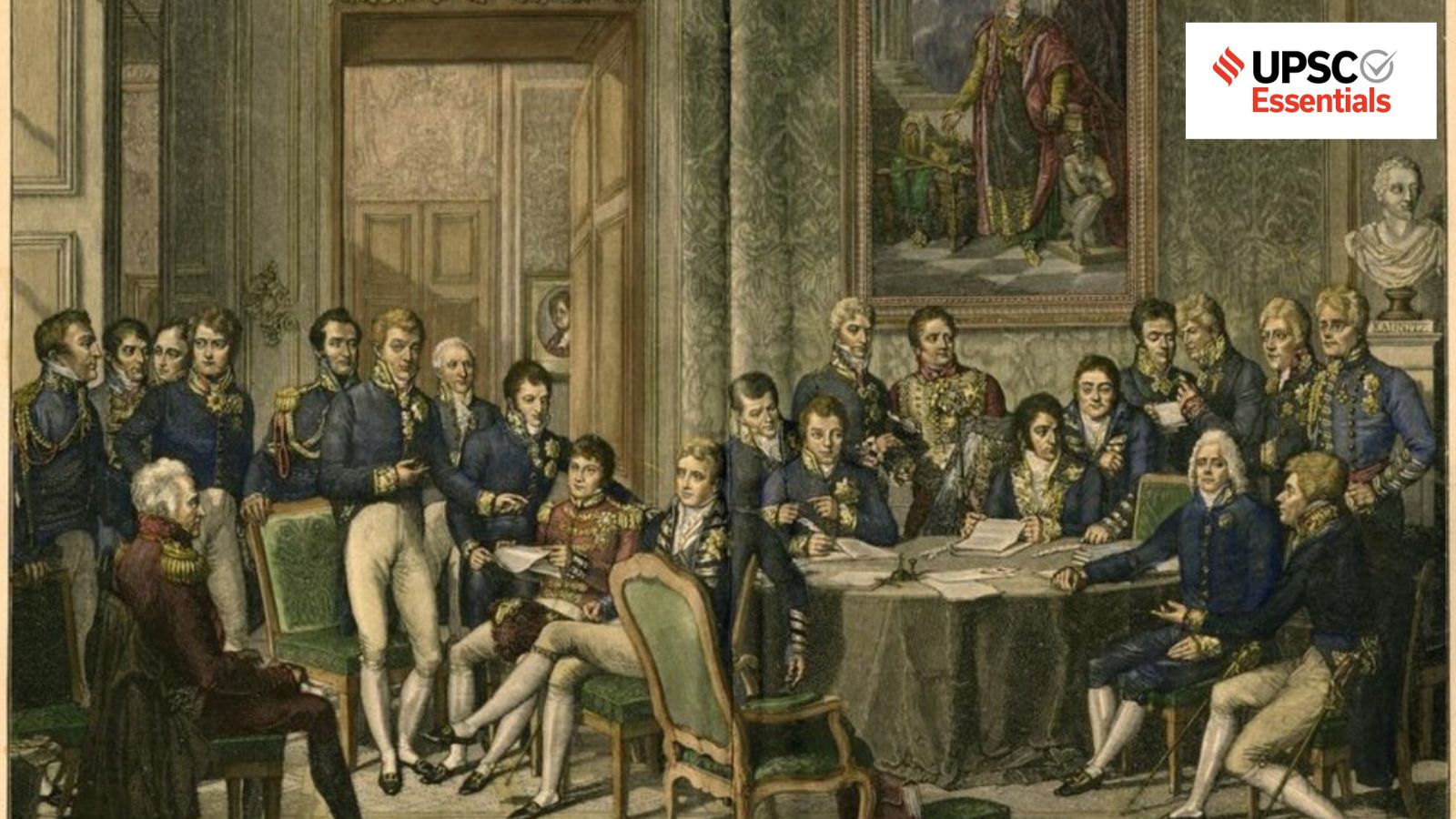
As the US-Iran ceasefire appears to have collapsed amid renewed fighting, it remains unclear whether the latest mediation effort by countries, including Pakistan, Qatar and Oman, could help prevent further escalation.
The renewed hostilities come despite months of diplomatic engagement. In June, the US and Iran signed a 14-clause Memorandum of Understanding (MoU) to begin 60 days of negotiations for a final deal. While the US President Donald Trump signed the MoU at the Palace of Versailles in France, Geneva earlier hosted the US-Iran negotiations in February this year.
The choice of locations underscores Europe’s continued role in high-stakes diplomacy. Geneva, for instance, has served as Europe’s diplomatic centre for over a century. But why has Europe remained a preferred destination for peace talks? How has its role evolved with the changing nature of conflicts, and how is it perceived by both conflicting parties and international mediators?
European mediation as a response to exhaustion
European mediation did not begin as an expression of values. Rather, it was a response to exhaustion. The Napoleonic Wars (1792-1815) had affected the continent for over two decades. By the time European powers gathered at the Congress of Vienna (1814-15), the destabilising consequences of unconstrained great power competition had been recognised.
The Congress of Vienna was not simply a peace settlement. It was the first systematic attempt in modern history to institutionalise diplomacy as a mechanism for managing conflict rather than merely concluding it. The Concert of Europe (1815-1914) that emerged from the Congress was, at its core, a balance-of-power architecture, which sought stability through managing rivalries among great powers.
The great powers, namely Austria, Prussia, Russia, Britain, and later France, agreed to manage their rivalry collectively. They decided to meet periodically, consult before acting, and treat disputes as problems with negotiated solutions. The underlying logic was not trust but calculation: each power recognised that unilateral pursuit of maximum advantage destabilised a system that ultimately served their long-term interests.
Story continues below this ad
In A World Restored (1957), Henry Kissinger argued that Vienna’s real achievement was the construction of a legitimate international order, one in which major powers agreed not on values or political systems but on the rules of engagement. Similarly, in The transformation of European politics, 1763-1848 (1994), Paul W Schroeder describes the system as political equilibrium, sustained not by trust between states but by mutual restraint, where each power accepted costs it would not otherwise have borne in exchange for systemic stability.
When Europe’s mediation architecture began to reveal its limits
Crucially, this architecture was value-neutral by design. The Congress of Berlin in 1878 illustrates this. Under the mediation of German Chancellor Otto von Bismarck, the congress gathered great powers to address the crisis in the Balkans and revise Russia’s post-war settlement with the Ottoman Empire. Bismarck was selected as the mediator precisely because Germany had no direct stake in Balkan affairs.
Notably, the Concert of Europe offered a table, a diplomatic framework, and the collective authority to enforce settlement. Even the Crimean War, the first major conflict between great powers since Napoleon, was contained and resolved within this framework. The Congress of Paris in 1856 formally brought the Ottoman Empire into the Concert’s architecture. A war between great powers had been localised, negotiated, and closed without systemic collapse.
But the concert’s strength was also its limit. It was designed for a specific type of conflict: primarily interstate, fought between recognised sovereign actors with governments capable of negotiating and honouring agreements.
Story continues below this ad
It barely offered any framework for managing the conflicts that largely dominated the late nineteenth and early twentieth centuries – nationalist independence movements, colonial contestations, and rebellions within states – that did not fit the model of two governments seeking a negotiated peace. As these conflicts became the dominant form of political violence in the twentieth century, Europe’s original mediation architecture began to reveal its limitations.
Diplomacy beyond balance of power
Alongside the Concert of Europe’s great-power machinery, a quieter, smaller but equally durable mediation tradition was developing. It was built not on the balance of power but on perceived neutrality of mediators. Countries like Switzerland, Norway, Austria, and Finland build their diplomatic identities as trusted third parties. Their effectiveness rested on a key principle: a mediator’s credibility depends significantly on the absence of a strategic self-interest in the dispute it seeks to resolve.
Switzerland’s case is the most historically sustained. Its neutrality, recognised by the great powers at Vienna in 1815, was not a passive status but an active diplomatic instrument. As a neutral country, Switzerland offered its services – “good offices” – to nations in conflict during WWI and WWII. Its good offices included carrying out 36 protecting power mandates during WWI. Protecting power mandates involve managing communication channels between or among opposing sides.
As legal scholar Dietrich Schindler documented in a journal article, Neutrality and Morality: Developments in Switzerland and in the International Community (1998), Switzerland’s neutrality lent credibility to its good offices precisely because it carried no explicit strategic agenda of its own. Geneva became the world’s diplomatic address not because Switzerland was powerful but because it was reliably uncommitted, offering a process without prescription it offered a space where adversaries could talk without conceding anything beyond their willingness to sit at the same table.
Story continues below this ad
Mediation by small states
Norway institutionalised a version of this model in the late twentieth century, and the Oslo Accords of 1993 remain its clearest illustration. By the early 1990s, US-led negotiations between Israel and the Palestine Liberation Organisation (PLO) had reached a structural deadlock. Norway succeeded where the US could not, and the reason was structural rather than diplomatic.
As Jan Egeland, Norway’s State Secretary during the negotiations, later explained, Norway’s effectiveness came from three things:
1. A smaller bureaucratic machine that could move quickly and discreetly.
2. A foreign policy free from great power obligations.
3. No economic or political stake in the outcome.
The first secret meeting between Israeli academics and PLO officials took place in January 1993 at a rural manor outside Oslo. By September, a Declaration of Principles on Interim Self-Government Arrangements, commonly referred to as the “Oslo Accord”, had been signed on the White House lawn.
Story continues below this ad
When neutrality was no longer enough
Although Oslo represented a breakthrough, Norwegian scholar Hilde Henriksen Waage identifies a tension that would prove consequential: Norway’s lack of leverage, the very quality that enabled the initial breakthrough, also meant it had no capacity to enforce the agreement once it was signed. The parties returned to the US for implementation, and Washington’s strategic priorities gradually reshaped what Oslo had produced.
The lesson is one that European mediation would encounter repeatedly: procedural neutrality enables agreement, but cannot always guarantee its durability. At some point, a mediator needs leverage vis-à-vis normative authority to hold an agreement in place. The small states offered leverage to a limited extent but rarely offered the normative authority needed to enforce the agreements.
In addition, the conflicts these mediators were navigating were also changing. By the mid-twentieth century, domestic and ideological conflicts involving non-state actors were displacing the largely symmetric interstate wars the Concert of Europe had been designed to manage. Mediating between parties who did not recognise each other’s legitimacy required more than a neutral table. It required actors who could shape the normative terms of the negotiation itself. Europe was about to discover that it could play that role, and that doing so would carry costs it had not anticipated.
Post read questions
1. Why is the Congress of Vienna regarded as the foundation of modern European diplomacy? Explain the principle of balance of power as practised under the Concert of Europe.
Story continues below this ad
2. The Concert of Europe institutionalised diplomacy as an instrument of conflict management. Discuss its achievements and limitations.
3. Neutrality can facilitate negotiations but cannot guarantee durable peace. Examine with reference to Norway’s mediation in the Oslo Accords.
4. The effectiveness of a mediator depends not only on impartiality but also on leverage. Critically examine in the context of international conflict resolution.
5. Distinguish between balance-of-power diplomacy and neutral third-party mediation. Which model is better suited to contemporary conflicts?
Story continues below this ad
(Sanket Kumar Prajapati is a Doctoral candidate at the Centre for European Studies, Jawaharlal Nehru University, New Delhi. The second part of the article will examine Europe’s evolving mediation role during and after the Cold War.)
Share your thoughts and ideas on UPSC Special articles with ashiya.parveen@indianexpress.com.
Click Here to read the UPSC Essentials magazine for June 2026. Subscribe to our UPSC newsletter and stay updated with the news cues from the past week.
Stay updated with the latest UPSC articles by joining our Telegram channel – IndianExpress UPSC Hub, and follow us on Instagram and X.