West Asia dust storm wipes out Delhi’s monsoon air gains, AQI nears ‘very poor’ | Delhi News


4 min readNew DelhiUpdated: Jul 13, 2026 10:35 AM IST

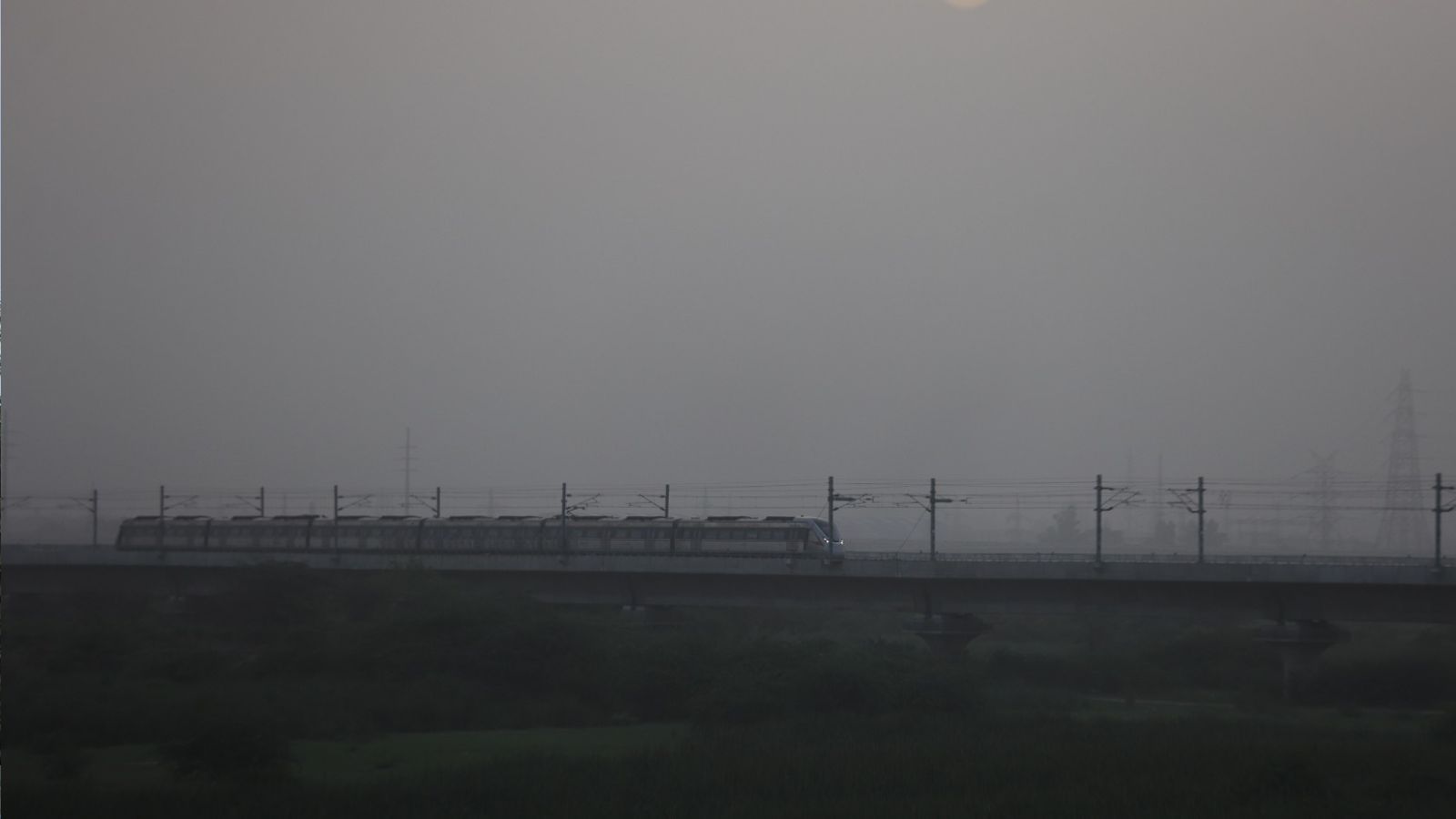
Barely days after successive monsoon showers gave Delhi its cleanest air in nearly three years, the national capital has seen its pollution levels spiking — owing to a dust storm from West Asia.

On Monday morning, the air quality deteriorated rapidly, inching towards the ‘Very Poor’ category.

On Sunday, Delhi’s daily average Air Quality Index (AQI) climbed to 261 (‘Poor’) — the first ‘Poor’ air day of this month. At 9 am on Monday, the city’s AQI touched 294.

Across the National Capital Region, Greater Noida recorded an AQI of 352 (‘Very Poor’), while Gurgaon stood at 271 and Noida at 261.

From ‘Good’ to ‘Poor’ in three days

The sharp deterioration comes less than a week after Delhi recorded its first ‘Good’ air day of the year.

On July 9, the city’s daily average AQI had dropped to 48, the lowest recorded this year and the cleanest air Delhi had witnessed since September 10, 2023. Back-to-back spells of monsoon rain had washed pollutants out of the atmosphere, keeping air quality in the ‘Good’ and ‘Satisfactory’ categories for several days.

The latest spike has effectively wiped out those gains, with the AQI jumping more than 200 points within three days.

Story continues below this ad

Dust storm from West Asia behind spike

According to the Commission for Air Quality Management (CAQM), the sudden deterioration is being driven by a large-scale transboundary dust event rather than local pollution sources.

“The decline in air quality is attributed to long-range transboundary mineral dust transport, with a storm originating near Afghanistan, Iran and Pakistan moving towards north western India including Delhi, resulting in elevated atmospheric PM10 concentrations,” the commission said after a meeting of the Graded Response Action Plan (GRAP) Sub-Committee on Sunday.

The commission added that strong winds over the Indo-Gangetic Plain were carrying mineral dust into Delhi-NCR, leading to a sharp increase in Particulate Matter (PM) 10 levels across monitoring stations.

Dr Shashi Kant, senior scientist at the India Meteorological Department (IMD), said satellite imagery indicates that the dust-laiden wind is arising from South Pakistan and adjoining areas, resulting in transboundary dust transport into India.
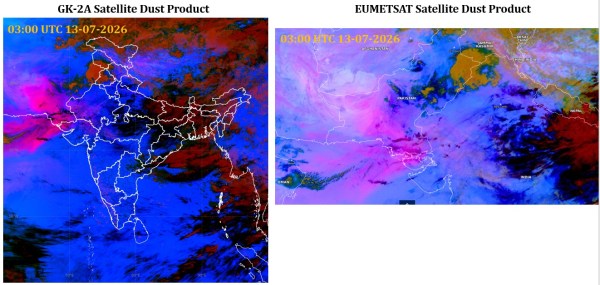
DElhi AQI

Story continues below this ad

No GRAP Stage-I despite AQI crossing 200

Despite the daily average AQI breaching the 200-mark, the CAQM decided against invoking Stage I of GRAP.

“Delhi’s air quality is in the ‘Poor’ category as of today and likely to remain in this range. AQI is expected to improve in a couple of days as the transboundary dust spell subsides,” the commission said.

It further noted that since the present deterioration was primarily due to transboundary dust transport, GRAP Stage I was not being invoked. However, the Delhi Pollution Control Committee (DPCC) and State Pollution Control Boards in NCR have been directed to intensify dust-control measures on the ground.

“The Sub-Committee shall be keeping a close watch on the air quality scenario and review the situation from time to time for further appropriate decisions, depending upon the air quality and forecast made by IMD/IITM,” the statement added.

Story continues below this ad

PM 10 emerges as dominant pollutant

The current pollution episode is markedly different from the winter smog that is typically driven by locally generated emissions and secondary particulate formation.

Data from the Central Pollution Control Board’s monitoring network shows PM 10 has emerged as the dominant pollutant across most stations as coarse mineral dust suspended by strong winds replaced the rain-cleansed atmosphere.

Sophiya Mathew

Sophiya Mathew is a Correspondent at The Indian Express, based in New Delhi. She joined the Delhi bureau in 2024, and has specialization in Integrated Multimedia Journalism from the Asian College of Journalism (ACJ), Chennai.

Professional Background

Core Beats: Her reporting is primarily focused on the Environment and Education.

Specialization: She has gained recognition for her ground-level reporting on the Yamuna floodplains and the socio-economic challenges faced by those living on its banks. She also focuses on the disparities in Delhi’s education system, ranging from elite private schools to government institutions and refugee education.

Recent Notable Articles (December 2025)

Her recent work has been heavily centered on Delhi’s severe winter pollution crisis and the government’s regulatory responses:

1. The Air Pollution Crisis

“A tale of two cities: Delhi govt schools choke in bad air, private classrooms set up air filters” (Dec 20, 2025): A high-impact feature contrasting the “Clean Air Bubbles” in elite schools with the reality of government school students who are exposed to an equivalent of 17 cigarettes a day due to outdoor exposure.

“Delhi sees season’s worst air day, second worst December AQI in nearly a decade” (Dec 15, 2025): An analytical report on the meteorological patterns trapping pollutants in the NCR.

“Delhi bans non-BS VI vehicles from outside: Why curbing vehicular pollution is key” (Dec 17, 2025): Explaining the science behind targeting specific vehicle vintages to lower particulate matter.

2. Enforcement & Regulations

“No fuel at pumps in Delhi without valid PUC certificate from December 18” (Dec 17, 2025): Breaking the news on the environment ministry’s strict “No PUC, No Fuel” policy.

3. Education Policy

“Law to regulate school fee in Delhi risks becoming procedural, say parents” (Dec 13, 2025): Investigating the loopholes in the new Delhi School Education (Transparency in Fixation and Regulation of Fees) Bill, 2025.

“Monsoon Session: Private school fee regulation Bill cleared after four-hour debate” (Aug 9, 2025): Covering the legislative passage of the controversial fee hike regulation.

Signature Style

Sophiya is known for her observational depth. Her reporting often includes vivid details from school corridors, hospital waitlists, or the banks of the Yamuna to illustrate how policy failures affect the city’s most vulnerable residents. She is a frequent expert guest on the 3 Things podcast, where she explains the complexities of Delhi’s environmental laws.

X (Twitter): @SophiyaMathew1 … Read More

Stay updated with the latest – Click here to follow us on Instagram


Source link

  • Related Posts

    Supreme Court to hear PILs on Ram Temple Trust Financial Irregularities

    The petition claims that the SIT lacks the necessary forensic and investigative resources for a complex financial probe. (File photo) Ayodhya Ram Temple Donation Row Hearing Live Updates: The Supreme…

    Lucknow youth on his way back from gym attacked with bricks, 4 booked | Lucknow News

    2 min readLucknowJul 13, 2026 11:11 AM IST A 25-year-old man was allegedly assaulted with bricks by a group of assailants while returning home from a gym in Lucknow’s Hussainganj…

    Leave a Reply

    Your email address will not be published. Required fields are marked *

    You Missed

    Supreme Court to hear PILs on Ram Temple Trust Financial Irregularities

    Supreme Court to hear PILs on Ram Temple Trust Financial Irregularities

    Lucknow youth on his way back from gym attacked with bricks, 4 booked | Lucknow News

    Lucknow youth on his way back from gym attacked with bricks, 4 booked | Lucknow News

    West Asia dust storm wipes out Delhi’s monsoon air gains, AQI nears ‘very poor’ | Delhi News

    West Asia dust storm wipes out Delhi’s monsoon air gains, AQI nears ‘very poor’ | Delhi News

    The reality behind viral video of priest performing puja inside train

    The reality behind viral video of priest performing puja inside train

    Should you follow Jai’s routine?

    England will beat Argentina in World Cup semifinal, says Joe Cole

    England will beat Argentina in World Cup semifinal, says Joe Cole