Prateek Tanmay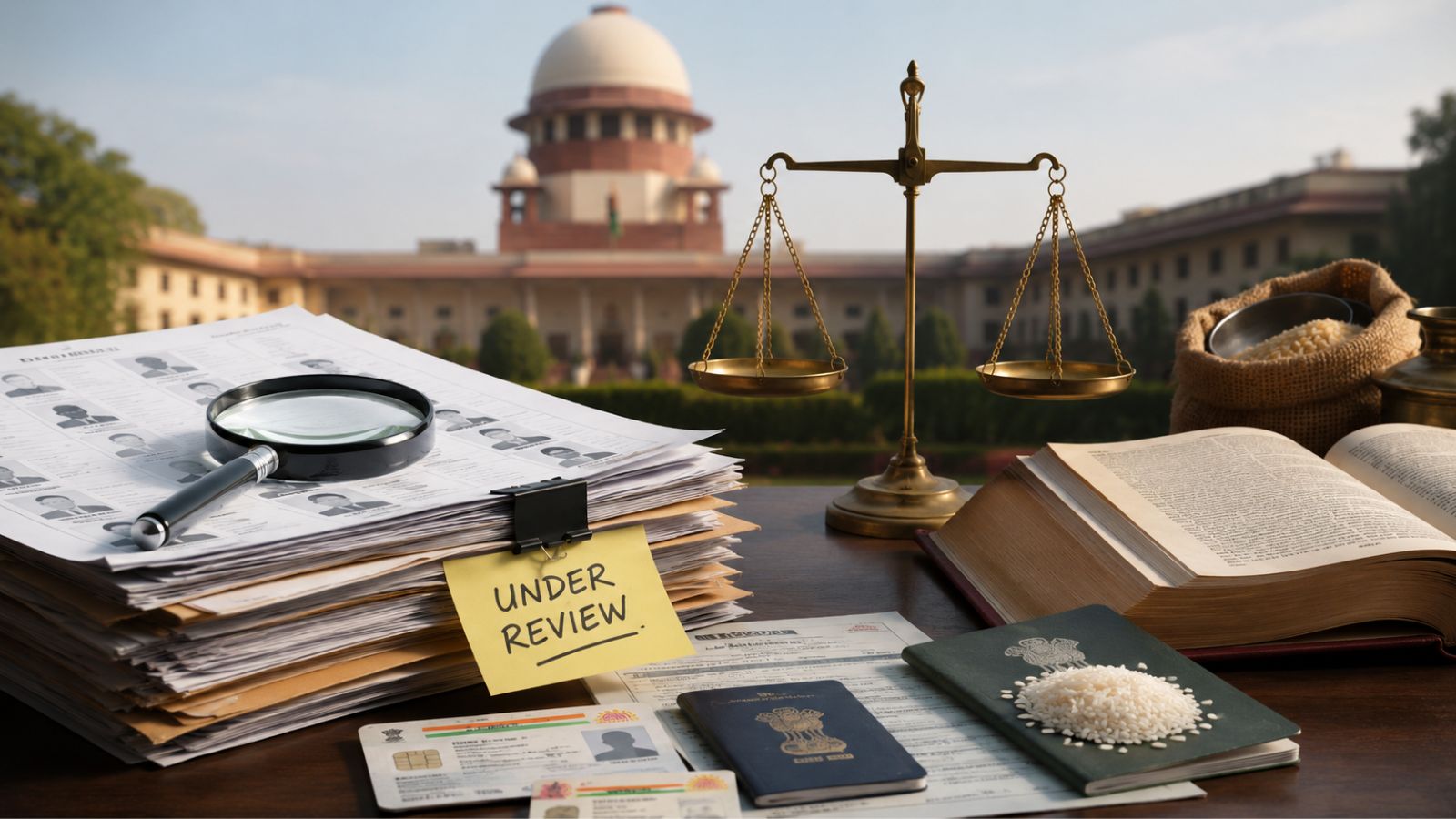
4 min readNew DelhiUpdated: Jul 17, 2026 10:21 PM IST
Reiterating that the Election Commission of India (ECI) is not the final authority to determine citizenship, the Supreme Court in oral remarks on Friday said that deletion from the electoral roll following the Special Intensive Revision (SIR) would not result in automatic loss of citizenship status. The status will continue for other purposes until final adjudication by the concerned authority.
A three-judge bench presided by Chief Justice of India Surya Kant pointed out that it had already made this clear in its judgment upholding the Bihar SIR.

The comments came as the bench, also comprising Justices Joymala Bagchi and V Mohana, was hearing a plea seeking its intervention to streamline the hearings before the tribunals set up to hear appeals against exclusions from the voters list.
Senior Advocate Gopal Sankaranarayanan, appearing for petitioner Prasenjit Bose, said that only about 38,000 appeals have been disposed of so far by the 19 Appellate Tribunals and that about 33.5 lakh are pending. He said that of the 38,000 which were disposed of, 70 per cent were allowed, and their names were restored.
“There is one more issue. It’s about the consequences of the deletions being sustained… Now the 30 per cent which were not allowed, they will challenge in writs or whatever. But the consequence of a deletion is that between May 17 and now, three notifications have come, maybe others will come, saying if you have been deleted from the SIR list, you lose out on PDS which you were getting earlier, they are excluding you from Annapurna Yojana…,” he said.
Justice Bagchi said the point was flagged before the bench a few days ago as well. “We are conscious of this. And we indicated that in our judgment in Bihar SIR. We made clear that there is a corresponding duty on the ECI, as soon as it takes a decision, that a citizenship is not in their estimation, correctly assessed and he (stands) deleted from the voters list but the status continues… the ECI has a corresponding duty to refer it to the ministry or the concerned central government department for an adjudication under the citizenship Act. Unless that is done, for other purposes, the status must go on.”
Sankaranarayanan said, “I think to be fair, I don’t think either they disclosed or we apprehended at all that all these other welfare schemes which are available to people who reside here would also be withdrawn. I don’t think that was apprehended by your lordships because then I presume your lordships could add one sentence saying, while it’s being adjudicated, please don’t take other civil rights which are available to citizens.”
Story continues below this ad
On this, Justice Bagchi said, “Our judgment is clear – ECI is not a constitutional authority with regard to status under Art 9, 10, 11 and 12.” Sankaranarayanan said, “but the problem today is it is being used as that”.
Justice Bagchi said, “There are two things, one – whether there is confusion in the law, two – whether the law is correctly implemented. In the first, we do not see any confusion. Our judgment is clear. ECI has control and superintendence over the electoral roll and the powers…and can decide not to include someone over doubts that he is not citizen of the country. That does not result in loss of status of citizenship per se.”
Sankaranarayanan said, “What I’m saying is that of the 34 lakh appeals…if only 38,000 have been disposed of, there are 33.5 lakh that are still pending. Now, those 33.5 lakh have all these things being withdrawn from them, while their appeals are pending, where at least the track record shows 70% of the appeals have been allowed. So, in the interregnum, the consequence of the appeal not being heard….”
The senior counsel said, “You have taken away the vote. Municipal elections are in October. That deprivation will continue until the appeals are heard. So, we are only suggesting mechanism should try and ensure some transparency and accountability and to assist those 19 Tribunals…”.
Story continues below this ad
Pointing to the removal of those deleted from the Annapurna Yojana, the plea said, “The consequences of wrongful deletion extend beyond electoral participation and directly affect access to welfare benefits.”
The court said it will hear it along with other West Bengal SIR matters.