Prateek Tanmay
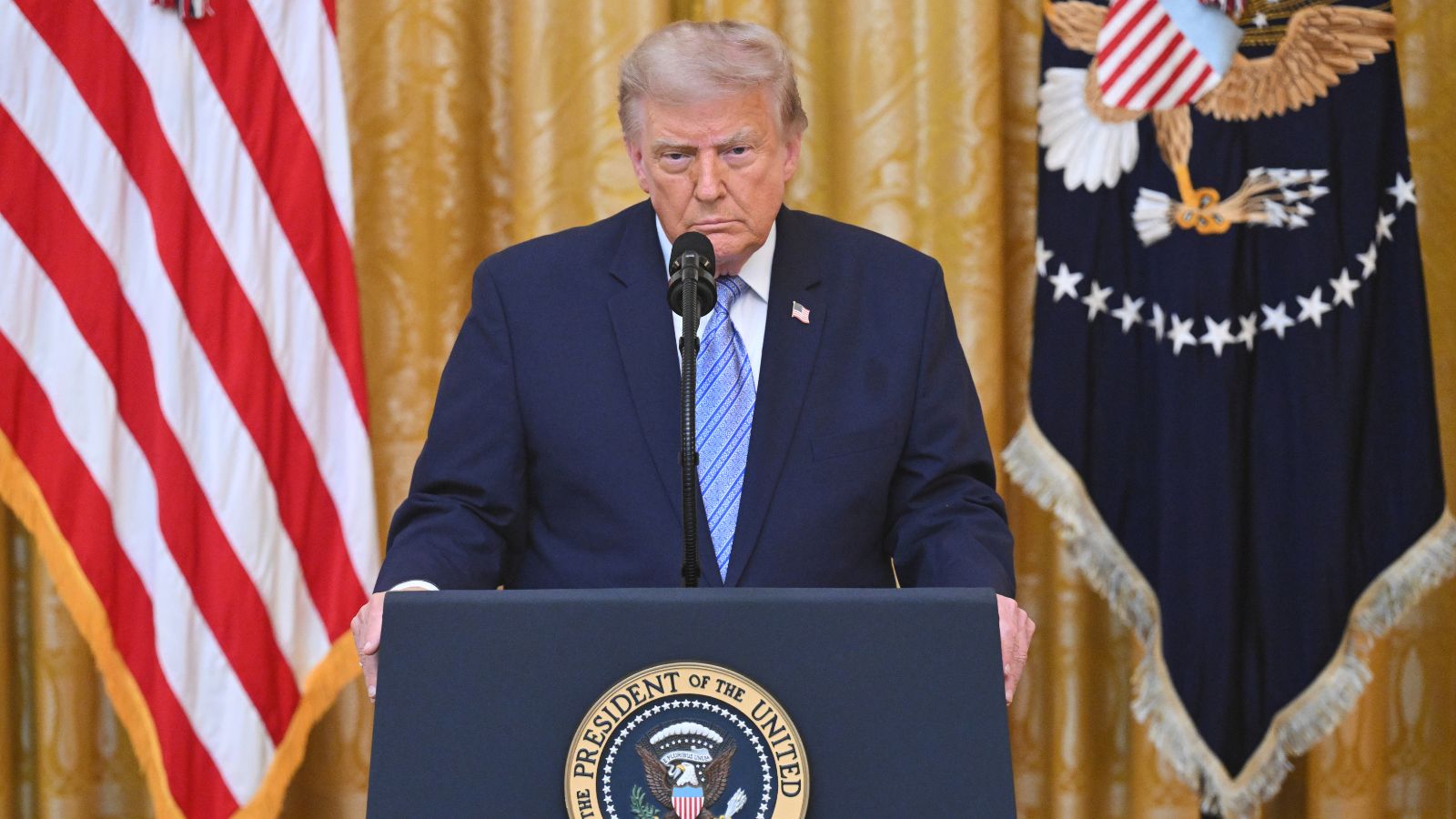 President Donald Trump speaks in the East Room of the White House, Thursday, July 16, 2026, in Washington. (Photo: AP)
 In a primetime address Thursday night, US President Trump argued that the US election system is dangerously exposed to hacking and manipulation, saying it falls “catastrophically short” of the security Americans deserve . He tied the claim to long-disputed allegations about his 2020 loss to Joe Biden, arguing that without major changes, November’s midterms are vulnerable to being “rigged and stolen.”
He also renewed his call for Congress to pass the Save America Act, framing it as a common-sense fix, even though the bill would not affect this year’s midterms.

How does he describe the system’s flaws
Trump described the current voting and mail-in system as “not defensible,” claiming hundreds of millions of American voter files have ended up in foreign governments’ hands and that vote-counting machines remain exposed to hacking and manipulation.
.@POTUS: Put together, these disclosures reveal an election system so broken and vulnerable that NO ONE can possibly defend it.
— Hundreds of millions of U.S. voter files are in the hands of foreign governments.
— Our machines and ballot-counting systems are exposed to hacking… pic.twitter.com/Lj418EpSfk
— Rapid Response 47 (@RapidResponse47) July 17, 2026
He asserted that hundreds of thousands of non-citizens and deceased people remain active on voter rolls, while the country continues to hold elections without voter ID or proof-of-citizenship requirements and with tens of millions of mail ballots in circulation. He said evidence of fraud has been “buried” and called for sweeping restrictions on mail-in voting.
Who is he blaming
Trump pointed to what he called the “Deep State,” accusing intelligence officials of suppressing evidence of Chinese interference in the 2020 election and hiding it from both him and the public. He claimed intelligence agencies learned in 2020 that voter registration files had been compromised but sat on the information.
.@POTUS: Newly declassified documents show that over a period of years starting during the 2020 election cycle, the People’s Republic of China carried out what is believed to be the largest compromise of election data in history — resulting in China’s illicit acquisition of 220… pic.twitter.com/S6qudP0QoP
— Rapid Response 47 (@RapidResponse47) July 17, 2026
However, the officials he’s criticizing led agencies he himself appointed, and there’s no record of him objecting when those same agencies briefed him in January 2021 that no foreign country had altered vote totals or fabricated ballots.
When and how did the disclosures happen
Timed to coincide with the speech, the White House launched a new website Thursday publishing declassified intelligence documents that Trump says expose major “areas of concern” in election infrastructure.
Story continues below this ad
One document a National Intelligence Council memorandum dated January 15, 2020 and newly approved for release this July assessed that adversaries including Russia, China, Iran, and North Korea had the technical capability to access election-related systems, while cautioning that assessors did not know whether any of them had concrete plans to manipulate results.
.@POTUS: To reveal just how vulnerable our elections continue to be, we are releasing the results of a stunning investigation by @DHSgov — which conducted a review of state voter rolls and public records and identified approximately 278,000 non-citizens who are registered to vote… pic.twitter.com/MOaF80HARD
— Rapid Response 47 (@RapidResponse47) July 17, 2026
Because the trove was released just before the speech, independent verification of Trump’s characterization of the documents wasn’t possible in real time a timing that critics say may be deliberate, since it lets sweeping claims land before anyone can check them.
Trump also renewed his opposition to mail-in voting, calling for it to be effectively banned, and argued current safeguards make cheating too easy. He spent the opening minutes of the address running through a list of administration accomplishments, including lower drug prices, before pivoting to election security; he did not address the ongoing conflict with Iran or the US military’s expanded strikes that day.
The speech drew a mixed response from broadcasters: ABC and NBC opted to stream it rather than air it live on their main networks, CBS ran a special report instead of a live broadcast, and CNN said it would cover the remarks as a news event rather than carry them unedited.