Prateek Tanmay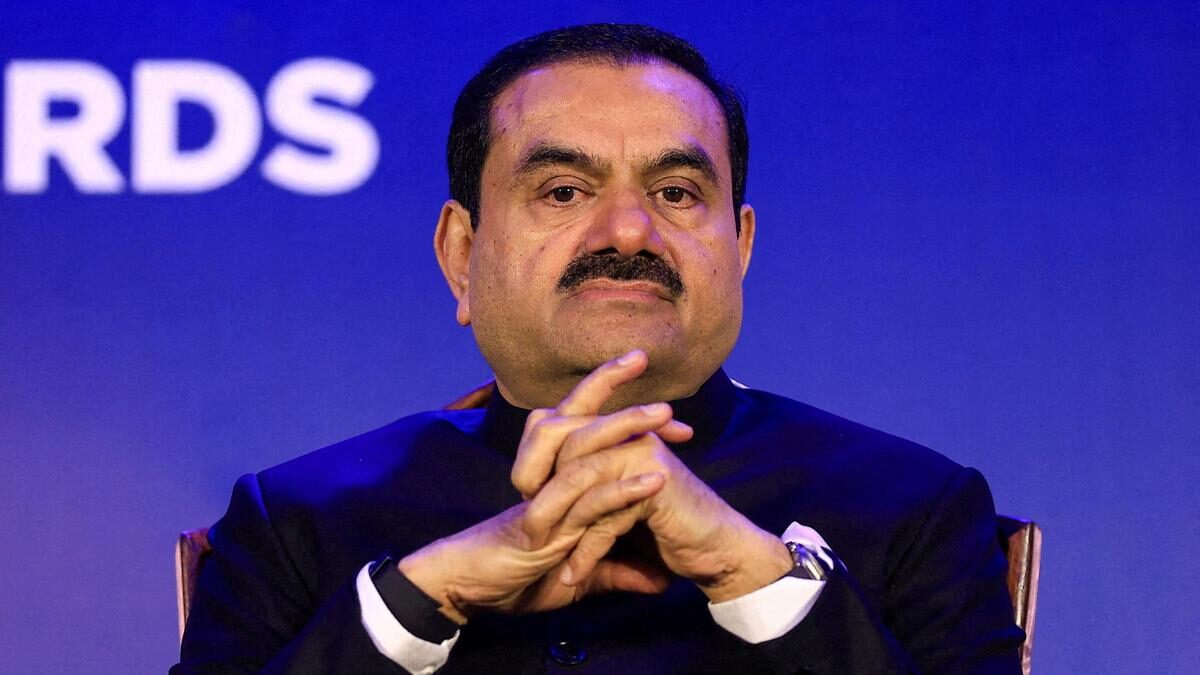
The Hindu
U.S. Justice Department drops all charges against Gautam Adani; case closed permanently
U.S. Justice Department drops all charges against Gautam Adani; case closed permanently The case turned in Adani’s favour after prosecutors found no clear U.S. linkages and insufficient evidence to sustain the allegations, according to people familiar with the…
U.S. Justice Department drops all charges against Gautam Adani; case closed permanently
The case turned in Adani’s favour after prosecutors found no clear U.S. linkages and insufficient evidence to sustain the allegations, according to people familiar with the matter
Updated – May 19, 2026 01:32 am IST – New Delhi/New York
Court filings showed Gautam Adani agreed to pay $6 million and Sagar Adani $12 million, without admitting or denying wrongdoing. File.
| Photo Credit: Reuters
The U.S. Department of Justice has permanently dropped all criminal charges against Indian tycoon Gautam Adani and his nephew Sagar, bringing the high-profile securities and wire fraud case in New York to a complete close after prosecutors concluded they could not sustain the allegations.
With this, multiple U.S. regulatory and legal investigations involving the group have all closed in the last couple of days.
Gautam Adani indictment: In-depth coverage
Last week, the U.S. Securities and Exchange Commission settled civil allegations against the two men tied to disclosures made to investors in connection with solar energy projects in India. Court filings showed Gautam Adani agreed to pay $6 million and Sagar Adani $12 million, without admitting or denying wrongdoing.
Thereafter, the U.S. Treasury Department’s Office of Foreign Assets Control (OFAC) settled allegations of the Adani Group violating U.S. sanctions on Iran in LPG imports. This followed the Indian conglomerate agreeing to pay $275 million while extending “extensive cooperation” with the investigation and making “proactive” disclosures.
Now, the U.S. prosecutors at the Eastern District of New York dropped all charges against Gautam Adani and his nephew, Sagar Adani.
In a filing before the court, the U.S. Department of Justice requested the dismissal of the indictment against the Adanis with prejudice.
Related Stories
-
Why Gautam Adani was indicted in the U.S. over alleged $250mn bribery scheme?
-
Allegations and scandals against the Adani Group: A timeline
-
Adanis knew of U.S. probe when they sold ‘bribe-linked assets’ to TotalEnergies, say prosecutors
-
A ‘bribery scheme’ to bag lucrative solar power contracts
“The Department of Justice has reviewed this case and has decided, in its prosecutorial discretion, not to devote further resources to these criminal charges against individual defendants,” it said.
Thereafter, the court ordered that the indictment against Adani and others “be dismissed with prejudice”.
The closure marks a dramatic turn in a case that had threatened to disrupt the Adani Group’s global expansion plans. The SEC and DOJ cases, filed in late 2024, alleged the Adanis orchestrated a $265 million bribery scheme involving Indian officials to secure solar power contracts and concealed the arrangement from U.S. investors and lenders while raising capital.
The dismissal was “with prejudice”, preventing the case from being reopened.
Such dismissals are uncommon in U.S. criminal proceedings and typically reflect a determination that pursuing the case is no longer warranted after extensive review.
The case turned in Adani’s favour after prosecutors found no clear U.S. linkages and insufficient evidence to sustain the allegations, according to people familiar with the matter.
The anticipated decision follows months of aggressive engagement between U.S. prosecutors and a formidable legal team assembled by the Adanis.
Five American legal counsel from Sullivan & Cromwell, alongside Nixon Peabody, Hecker Fink, Norton Rose Fulbright and Bracewell, made a series of submissions and presentations to U.S. authorities as part of the review process. The review failed to produce findings capable of sustaining charges against Gautam and Sagar Adani, prompting the DoJ to move towards dismissal.
In submissions disclosed publicly on April 7, 2026, before the United States District Court for the Eastern District of New York, Adani’s lawyers mounted a forceful challenge to the U.S. SEC’s fraud-related proceedings, calling them an “impermissibly extraterritorial application” of U.S. securities laws. The defence argued the case involved “Indian Defendants, an Indian issuer”, securities not traded on U.S. exchanges and alleged conduct occurring “exclusively in India”.
The filings stated the SEC “lacked necessary jurisdiction”, failed to establish actionable misstatements and could not tie either defendant to the bond offering. The lawyers asserted the SEC had “recast” unviable anti-bribery allegations into securities fraud claims. The submissions noted there were “no investor losses”, all bond obligations were honoured and Gautam Adani “did not authorise the issuance of the bonds”.
The case had faced mounting scrutiny from legal experts over whether prosecutors had stretched securities laws to pursue conduct centred overseas.
Gautam Adani, Sagar Adani and Vneet Jaain were charged only under securities and wire fraud statutes (counts 2, 3 and 4). They were not named in the more serious Foreign Corrupt Practices Act bribery charge or obstruction-related count (counts 1 and 5), which prosecutors brought against other defendants in the wider case.
The Adani Group has consistently rejected the allegations as meritless, defending its governance and compliance standards while pledging to contest the proceedings through legal channels.
That distinction, along with no U.S. linkages, increasingly moulded criticism of the government’s legal approach. Former SEC commissioner Laura Unger argued that authorities had effectively attempted to predicate a securities fraud case on allegations of bribery that had neither been adjudicated nor formally pursued in India.
Published – May 18, 2026 10:38 pm IST
Related Topics
Source & Attribution
This article was generated from an imported news source and rewritten for clarity and readability. View original source
[anap_related_posts]

 Prateek Tanmay