Prateek Tanmay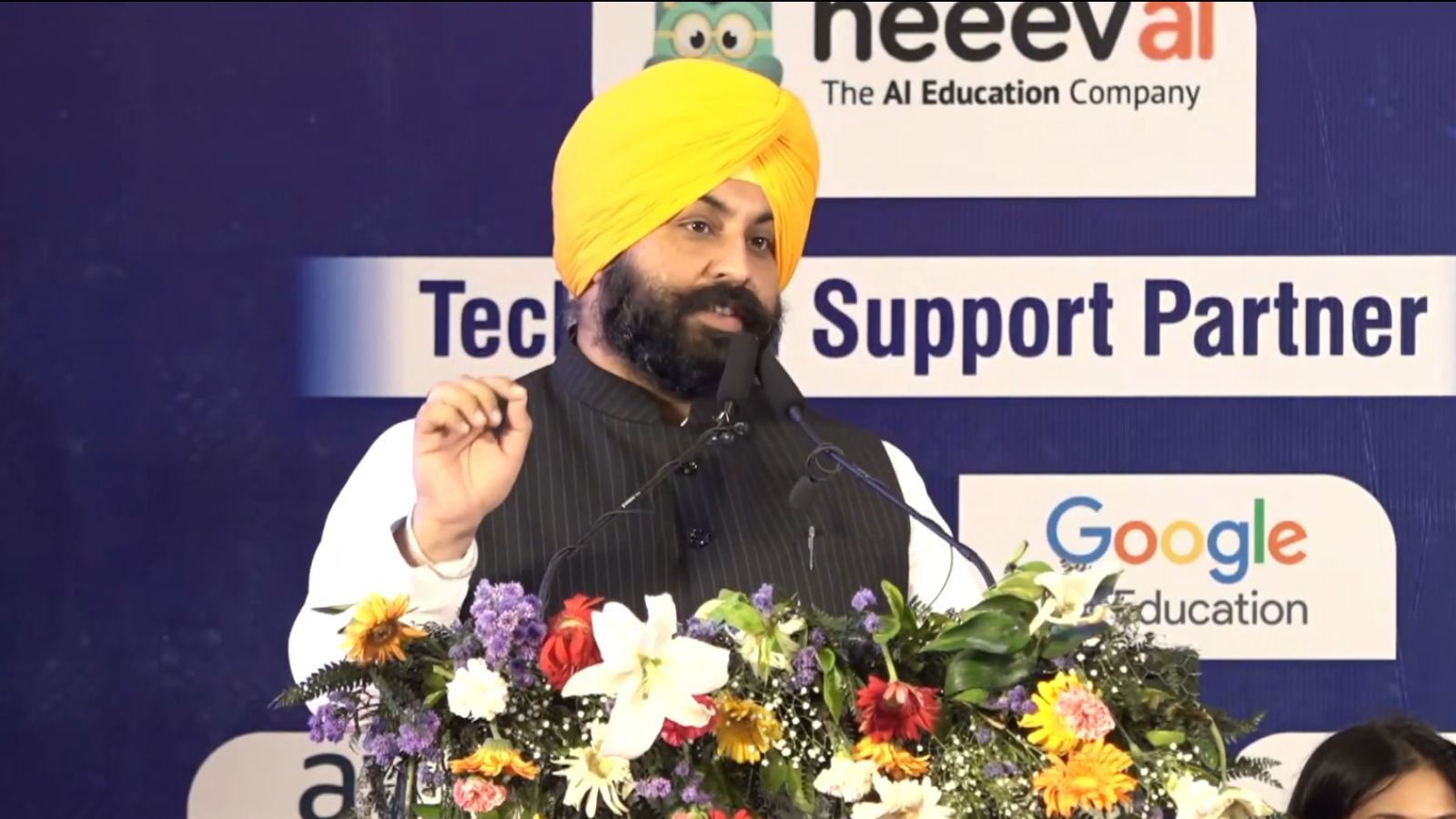
6 min readJul 26, 2026 03:24 PM IST
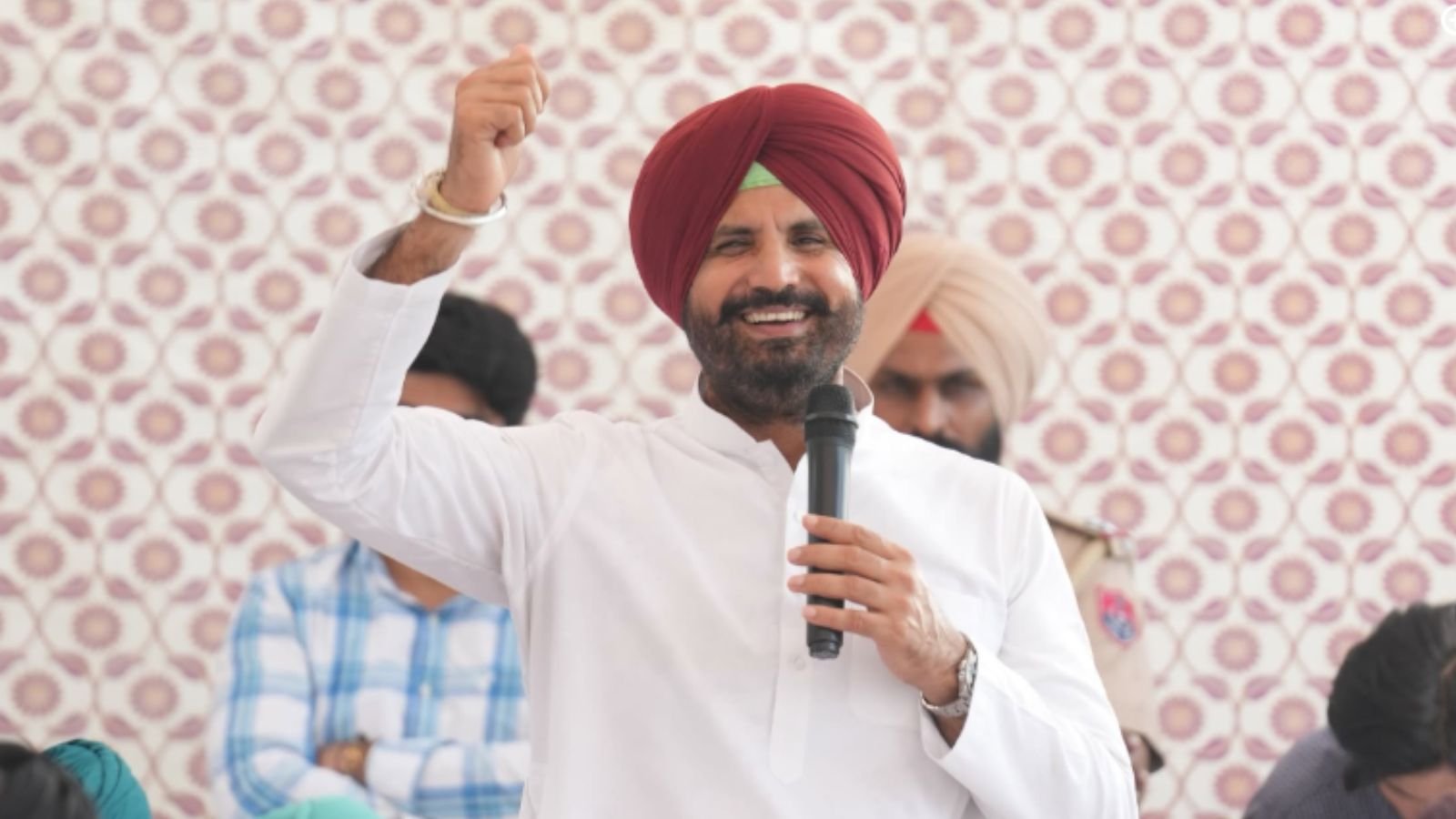
Written by Harjot Singh Bains

Last week, Punjab did something no other state in India has done before. We made Artificial Intelligence a core subject for every child from Class 1 to Class 12 in every government school affiliated with the Punjab School Education Board. Not as an optional add-on. Not as a vocational elective for a select few. But as a mainstream subject, taught alongside Mathematics and Science to every child in every village and every city.
This was not an easy decision. But it was the right one, and it was long overdue.
A question every state will soon have to answer
I remember visiting schools across Punjab and seeing children being taught “computer education” that meant little more than Microsoft Word, PowerPoint and Paint, virtually the same syllabus we had a decade ago. Meanwhile, the world had already moved ahead.
The International Monetary Fund has warned that nearly 40 per cent of jobs worldwide will be affected by AI in the coming years. China began mandating AI education in schools in 2025 and is now rolling it out across grades. Children in South Korea are being introduced to advanced technology concepts from the primary level itself. If India is to become a developed, self-reliant nation by 2047, we cannot afford to let our children fall behind while the rest of the world races ahead.
I witnessed this gap first-hand at India’s AI summit in Delhi earlier this year. We went there hoping to learn from the best. Instead, we found a university showcasing a commercially purchased robot as its own innovation, while even the venue’s Wi-Fi struggled to keep pace. That experience reinforced one lesson: seriousness about AI cannot remain a slogan. It must be built patiently from the ground up, beginning in our schools.
Sikhiya Kranti: Building the foundation
None of what we are announcing today would have been possible without the education reforms Punjab has undertaken over the past four years.
Story continues below this ad
When our government assumed office, Punjab ranked 27th among states in school education in a national assessment conducted in 2020. Today, according to NITI Aayog’s School Education Quality Report, Punjab ranks first in the country.
When Chief Minister Bhagwant Singh Mann entrusted me with the School Education portfolio in 2022, the first step was a comprehensive assessment of government schools. It revealed serious infrastructure gaps. Many school buildings were in poor condition, while nearly 8,000 schools lacked boundary walls. Addressing these deficiencies became an immediate priority.
The government allocated ₹2,500 crore to modernise school infrastructure and prepare schools for the AI era through advanced IT equipment and digital learning resources. Punjab has also become the first state to achieve 100 per cent Wi-Fi connectivity across all government schools.
We established Schools of Eminence that now compete with some of the country’s finest institutions. The impact is visible not only in rankings but also in student outcomes. This year, 882 students from Punjab’s government schools qualified for NEET, almost double the number from two years ago. Punjab’s Aryan Gupta from Ludhiana secured All India Rank 1 in NEET UG 2026, a proud achievement for the state.
Story continues below this ad
Punjab, once dismissed through the stereotype of “Udta Punjab”, is today producing government school students who are succeeding in the country’s most competitive examinations.
This is what sustained reform looks like. It is not built through a single announcement, but through years of consistent investment and implementation.
AI Kranti: The next chapter
Sikhiya Kranti gave Punjab the classrooms, the teachers, the infrastructure and the confidence. Today, we begin the next chapter: AI Kranti.
From Class 1 to Class 5, children will learn to use AI responsibly and become confident digital citizens. From Class 6 onwards, they will begin building with AI. By Classes 8 and 9, they will create their own AI modules and solve real-world problems in their communities, whether by developing an application for a village panchayat or a tool to support a family business.
Story continues below this ad
By Classes 11 and 12, our students will be capable of producing industry-standard AI projects, supported through partnerships with leading technology companies such as Google, Amazon, Canva and Intel.
To make this possible, we are training more than 12,000 computer faculty members as AI teachers. Nearly two lakh teachers across other subjects will also be trained in phases. AI textbooks will reach every school within fifteen days. More than 90 per cent of the curriculum will be practical and hands-on, moving away from rote learning.
The programme will eventually cover more than 25,000 schools and benefit nearly 31.5 lakh students across Punjab. AI will also become part of every student’s academic record and board certification.
Punjab has long been India’s Annadata, feeding the nation through the Green Revolution. Today, we aspire to become India’s Bhavishyadata by helping shape the nation’s future through the AI revolution.
Story continues below this ad
Whether a child studies in a border village in Fazilka, a hill village in Pathankot or a classroom in Mohali, they will now have access to the same foundational AI education as children in some of the world’s leading education systems.
That is our vision of a future-ready Punjab. And I believe many other states will soon follow this path.
Jai Hind.
The writer is Cabinet Minister for School Education, Punjab.