Prateek Tanmay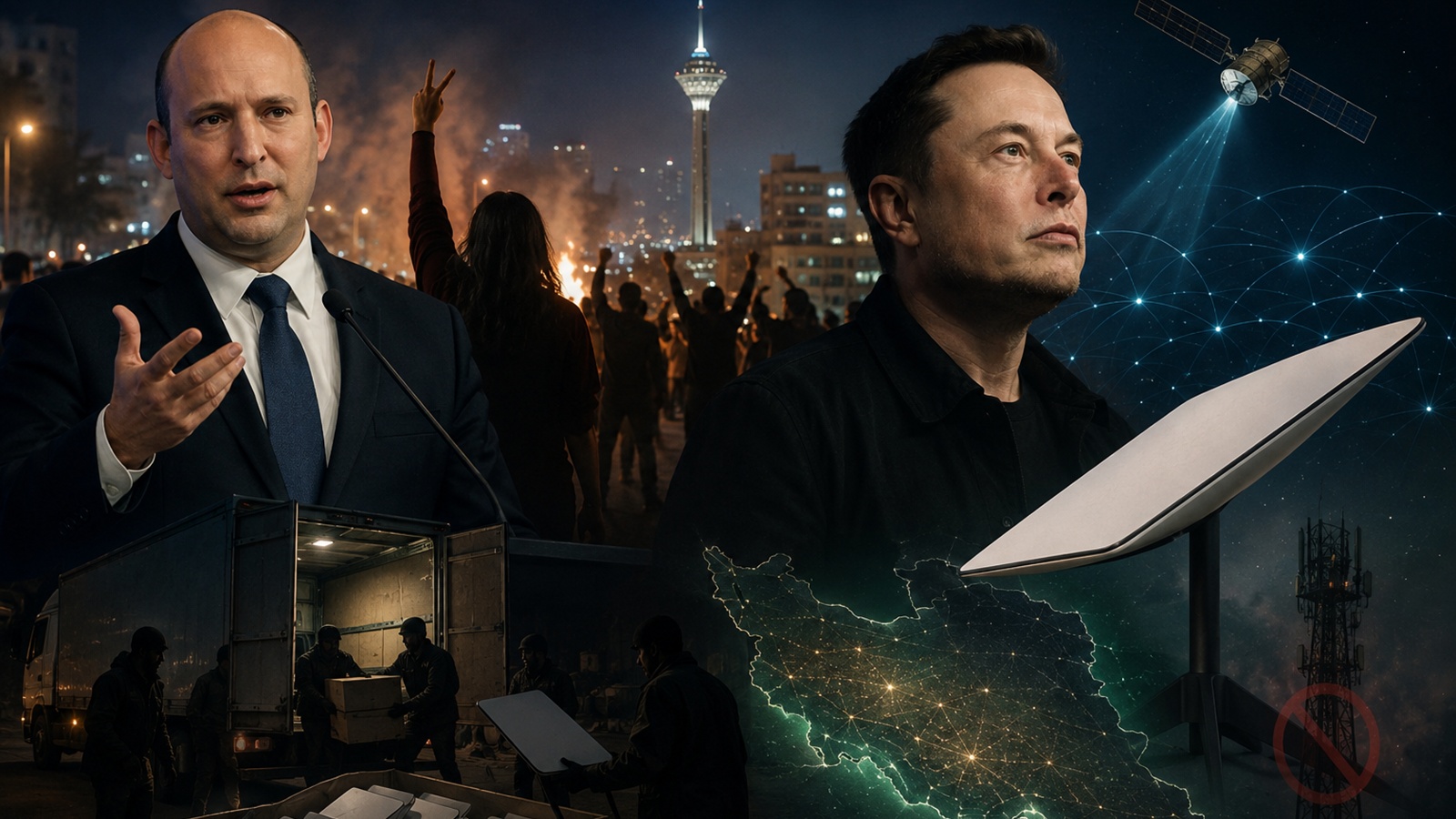
In a revelation made by a former Israeli prime minister on Tuesday, Tel Aviv is alleged to have smuggled trillionaire entrepreneur Elon Musk’s Starlink internet receivers into Iran in order to aid anti-government protesters in Tehran.
Speaking at the JNS International Policy Summit in Jerusalem, Naftali Bennett, who served as prime minister from 2021 to 2022, said that he had initiated a “process of acquiring and smuggling into Iran tens of thousands of Starlink receptors that would allow continuity of the internet and social networks,” Reuters reported.

The role of satellite internet technology
The California-based internet company Starlink provides satellite internet connections. Iran had earlier accused the US and Israel of smuggling Starlink devices into the country to sabotage Tehran’s security.
Iranian administration has not given a licence to Starlink to operate in the country; however, Musk has said previously the service remains active in Tehran.
Political friction and policy criticisms in Israel
Former Israeli PM Bennett said the Starlink devices were intended to coordinate and eventually topple the Iranian government.
Referring to Israeli Prime Minister Benjamin Netanyahu’s administration, Bennett said, “Unfortunately, the current incompetent Israeli government stopped doing that. And when the protest happened, that infrastructure was not there,” Reuters reported.
Nationwide blackouts and civil unrest
There has been a significant internet shutdown in Iran, and the administration blocked connectivity across the country during deadly nationwide protests in January and throughout the US-Israel attack on the country that began on February 28.
Story continues below this ad
A Reuters report had previously stated that during the major internet blackouts, Iranians had used Starlink to remain connected throughout.
Steps toward internet restoration
Iran’s Vice President Mohammad Reza Aref had said in May that internet access has started to be restored in the Islamic Republic after it was cut off in February due to strikes.
“The first step toward free and regulated access to cyberspace has been taken,” Aref wrote in a post on X.