Prateek Tanmay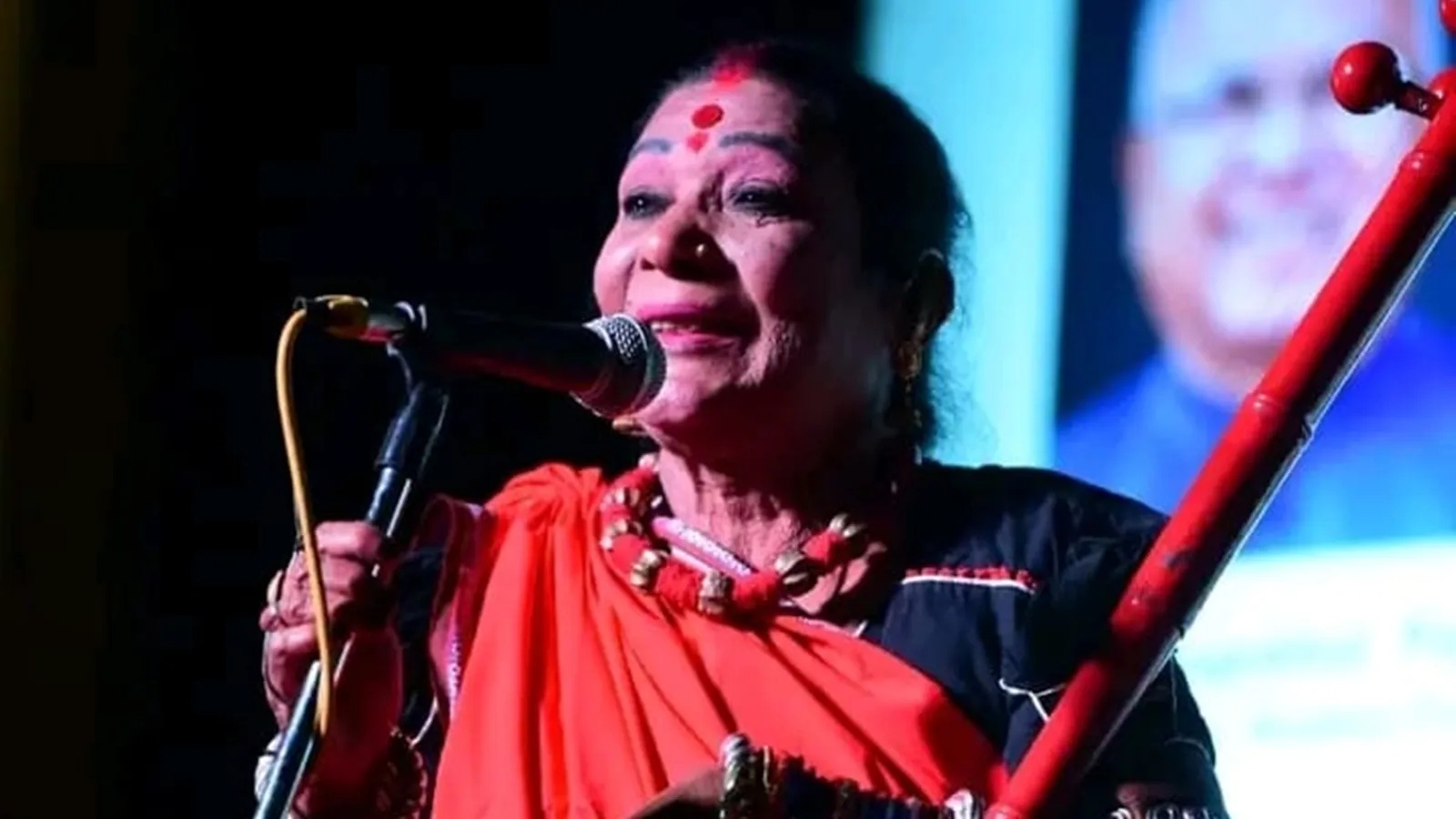
4 min readJul 5, 2026 02:13 PM IST
As a young girl, when Teejan Bai decided to sing her family folk form, Pandavani, she was thrashed by her father.
“No woman had ever dared to sing this style of music,” she recalled. In the Pardhi community, the indigenous nomadic community she came from, music by women outside of one’s home was considered blasphemous. Determined to pursue music despite her parents not allowing her to sing, Teejan ran away from home to a village called Chandrakhuri in Durg district, 25 km from Raipur in Chhattisgarh. It was a decision that cost her any place in her community, but one that would go on to change the trajectory of Pandavani as a folk form. She would go on to become one of its most well-known artistes.

Teejan Bai, the noted Pandavani exponent who broke centuries-old cultural barriers and became the first woman from her Pardhi community to perform the folk form, eventually making it popular globally, passed away at AIIMS Raipur in the early hours of Sunday after a prolonged illness. Teejan leaves behind a legacy that transformed one of Chhattisgarh’s oldest oral traditions into a popular art form that found many takers internationally. Teejan was 70, had been unable to speak for over six months and was communicating with hand gestures.
Pandavani is a traditional performing art form where artists musically narrate and enact stories from the Mahabharata. While it originated in Chhattisgarh, it is also performed in Madhya Pradesh and Odisha.
Born in Ganiyari, near Bhilai in Chhattisgarh, Teejan Bai grew up listening to her mother’s bhajans at home and was fascinated by the Pandavani ballads narrated by her maternal grandfather, Brijlal Pardhi. At the time, the tradition was performed only by men. But when Teejan Bai decided she was going to sing, her family was not comfortable with a woman propping herself up on the stage to sing. Married off at 12, Teejan refused to give up music and left her husband’s home at 13. Ostracised by the Pardhi community for singing a form reserved for men, she spent years living in a small hut away from everyone. In Chandrakhuri, Teejan performed her first show at the age of 13 for Rs 10. Standing in the Kapalik style, where the performer stands, moves freely across the stage and enacts various characters from the Mahabharata epic, her swagger on stage with an ektaara on her shoulder would captivate the audiences instantly.
The people embraced the artiste that a community had rejected. Teejan soon began to receive Invitations to perform, taking her far beyond the boundaries of her village to neighbouring ones. One of her notable performances was at the prestigious Bharat Bhawan in Bhopal on the invitation of Adiwasi Lok Kala Parishad. But one performance changed her life completely. While performing in Madhya Pradesh in the 70s, Teejan was discovered by famed Urdu playwright Habib Tanvir, who was awestruck by her guttural voice and confident performance. He integrated her into his Naya Theatre Group and arranged a showcase for then Prime Minister Indira Gandhi, which catapulted her to national and later international fame. She really enjoyed performing in Paris. “I have been there eight times,” she said to The indian Express in 2014.
Teejan Bai’s talent and her work in the arts eventually earned her the country’s highest honours, including the Padma Shri (1988), Padma Bhushan (2003) and Padma Vibushan (2019) and the Sangeet Natak Akademi Award (1995). While Teejan found much success, none of her children, however, took to Pandavani. But she herself trained about 200 students in it over the course of her career. But what will always remain significant about Teejan Bai is the courage she showed in breaking the barriers she faced, paving the way for other women performers who continue to perform Pandavani globally.