Prateek Tanmay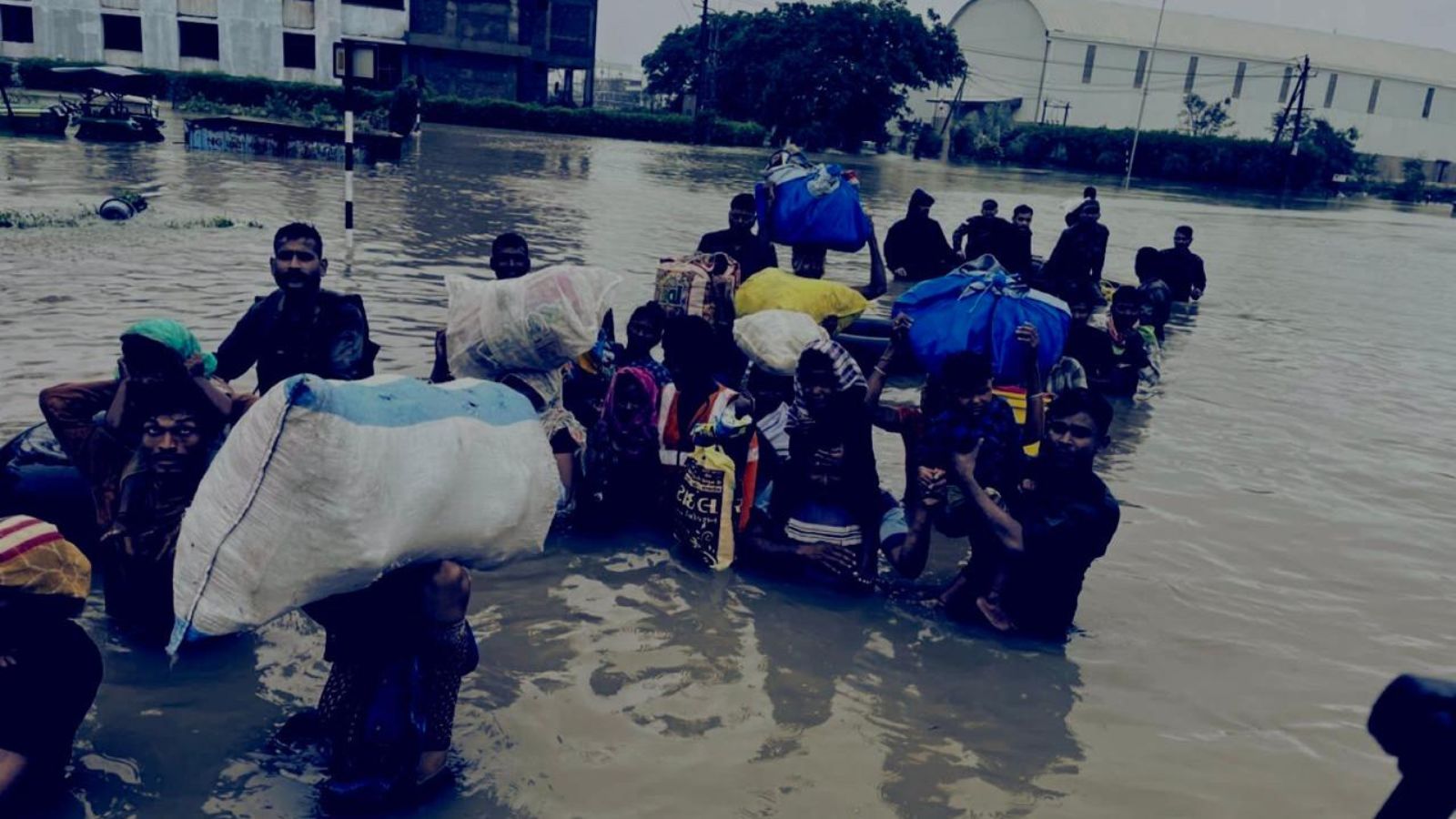
In one of the largest flood relief operations the region has seen, more than 1000 people were rescued in a span of 48 hours from the severely flooded industrial corridor on the Sarkhej-Bavla industrial corridor by Saturday. The Ahmedabad district police rescued over 900 workers and their families trapped in Gallops Industrial Park in Changodar, 20 kms from Ahmedabad, while the Army’s Golden Katar Division rescued 82 trapped for over 40 hours in an Amazon warehouse and adjoining buildings at Rajoda village in Bavla taluka.
The NDRF teams rescued six people from Nesda, 63 from Betawada, and nine from Kalikund. These villages are north of Dholka town.
Speaking on the impact of flooding in industrial areas, Superintendent of Police, Ahmedabad Rural, Om Prakash Jat said, “The Maruti plant has been affected due to the closure of the highway. However, since it was partially opened, operations have resumed there. The plants at Gallops Industrial Park are all closed because of waterlogging.”

Leading the operation at the Gallops park that ended Saturday evening was Deputy Superintendent of Police (DySP) Neelam Goswami. Apart from boats and military trucks, a requisitioned tractor was used in the rescue since it could wade through a few feet of floodwater with dozens of people atop.
Gallops Industrial Park is situated between Sanathal Chowkdi and Bagodara toll plaza on National Highway 47—the main road connecting Central Gujarat to the heart of Saurashtra in Rajkot.
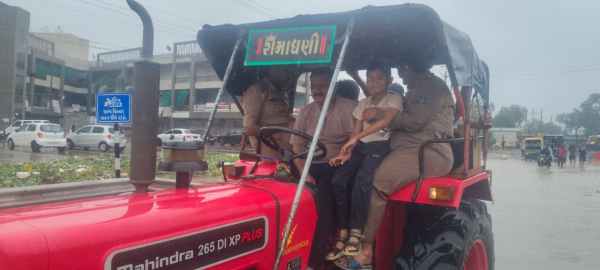 SP Om Prakash Jat said the tractors used in paddy fields had modified tyres that allow them to get better grip on muddy grounds. (Express)
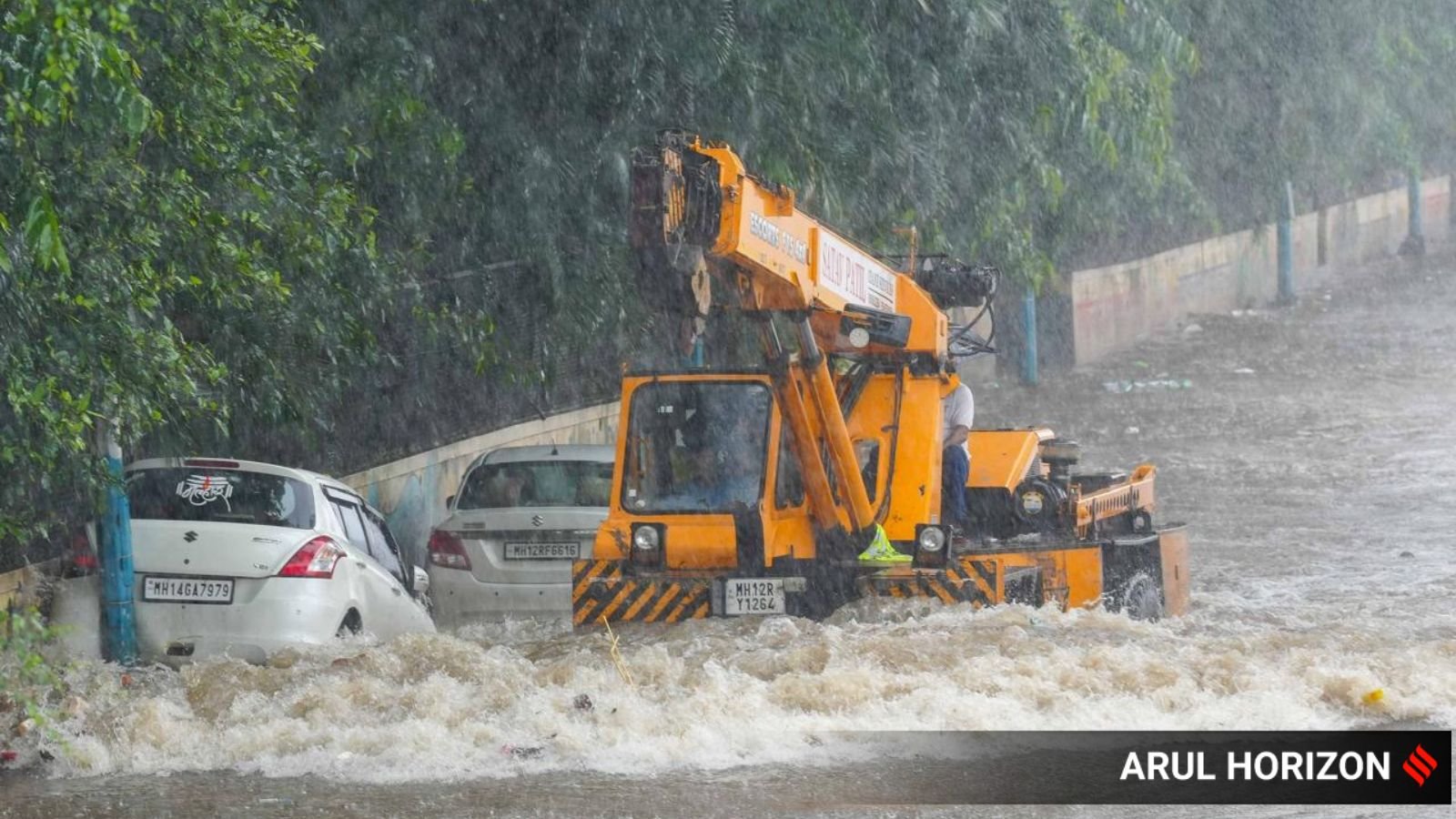
Even on Saturday, the highway was still under at least three feet of water after two days of rain left Rural Ahmedabad flooded and unmotorable, even for heavy vehicles.
Till 6pm, over 800 people had been evacuated from the industrial zone. Another 100 were rescued by 8pm.
About 60 police personnel, and one platoon each of the State Disaster Response Force (SDRF), the Golden Katar Division of the Southern Army Command and the Indian Coast Guard (ICG), were engaged in the rescue and relief operation.
Story continues below this ad
Meanwhile, about 30 km in the south, the outskirts of Dholka town and its neighbouring villages were also under floodwater, which was 6-7 feet in some places. The main mode of transportation here, too, was tractors, 15 of which were requisitioned from paddy farmers.
“We requisitioned 15 tractors from locals. We use them for patrolling, rescuing people, managing traffic and distributing aid — they are an all-purpose vehicle,” said DySP Prakash Prajapati. “Air filters of tractors are in the front. We turn them upwards so that water doesn’t get into them in the middle of an operation.”
SP Om Prakash Jat said the tractors used in paddy fields had modified tyres that allow them to get better grip on muddy soil.
However, their owners declined to accompany rescue officials due to the danger of getting stranded. In response, the police sent their officials with each vehicle to assure people of help if they were stranded.
Story continues below this ad
The officials said the situation in Dholka was stable on Saturday, but water was receding slowly. Villages along the Sabarmati banks could face further problems if more water was released from upstream Ahmedabad.
Meanwhile, more people now wanted to be evacuated from the flooded areas, they added.
DySP Prajapati said, “On the first and second day (July 23 & 25), people refused to evacuate even when the downpour caused waterlogging in villages around Dholka. Many were afraid to abandon their home. But today (July 25), people are tired since the water levels are not going down. They wanted to be evacuated.”
Till Saturday evening, more than 400 people had been evacuated in Dholka; many were taken to the Swaminarayan temple, which is on higher ground.
Story continues below this ad
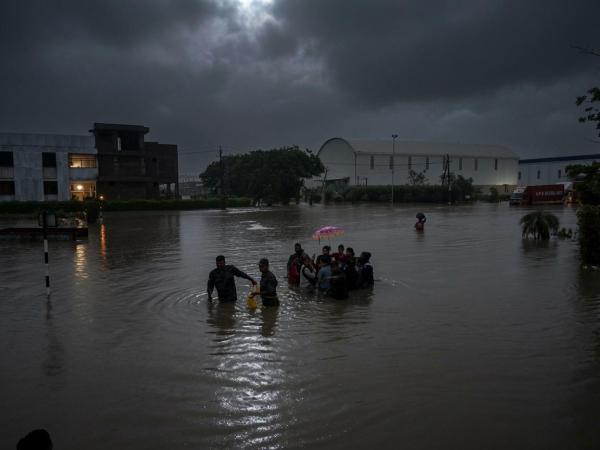 Till Saturday evening, more than 400 people had been evacuated in Dholka; many were taken to the Swaminarayan temple, which is on higher ground. (Express)
Ahmedabad District Development Officer (DDO) Videh Khare told The Indian Express, “Dholka has a flooding issue, especially in its Nagarpalika area. We have moved people from Bhetawada, Transad and Nesda villages and sent them to higher grounds. We have provided food and shelter to some villages that have been completely cut off. These villages are Jalalpur, Vazifa and Ambaliyara. We used tractors mostly, and two Army trucks as well. Three NDRF teams stepped in with their boats.”
Overall, 2,000 police personnel, three SDRF teams, three NDRF teams, two Army teams and two coast guard teams, were deployed across Rural Ahmedabad. Their efforts were complemented by the district administration and Ahmedabad Fire and Emergency Services (AFES).
Why are highways flooded?
Since July 23, the Ahmedabad to Bagodara stretch of the NH47 has remained closed. The Sanand to Viramgam stretch of the state highway (SH)-17 reopened late Saturday evening. All vehicles but two-wheelers were allowed to ply it.
Speaking about the NH47, SP Om Prakash Jat said: “The Ahmedabad-Rajkot highway stretch will remain closed on July 25. We will try to open it on July 26, but it will depend on if there is further rainfall and how much the water levels recede. While there is flooding between Ahmedabad City and Bavla, we have closed the highway up to Bagodara because it is the ideal place to divert traffic to the Dholera Expressway.”
Story continues below this ad
On the situation at SH17, DDO Videh Khare said in the afternoon, “One side of the highway has been opened today afternoon (July 25). But the other side is waterlogged. Traffic is moving slowly, but we have given instructions not to use that highway unless it is very necessary. Vehicles can reach the Chharodi industrial area but beyond that, you need a big vehicle because there is flooding beyond that point.”
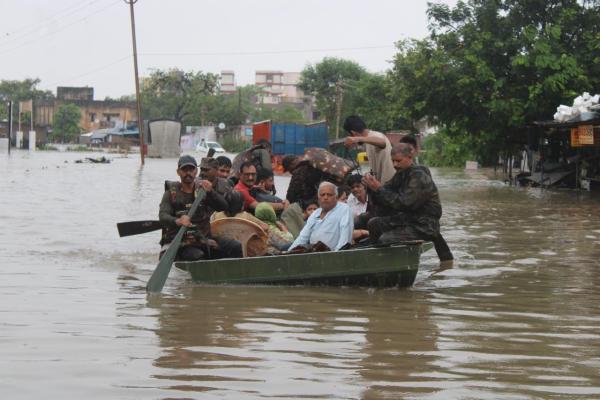 Ahmedabad District Development Officer (DDO) Videh Khare told The Indian Express, “Dholka has a flooding issue, especially in its Nagarpalika area. (Express)
On why these major road arteries being clogged with rainwater, DDO Khare explained, “While we haven’t seen heavy rain in Ahmedabad today, there is a red alert in effect for the upper regions of Banaskantha, Mehsana and Kheda. From there, water comes downstream into rural Ahmedabad through the Sabarmati…”
“Water from Bavla also flows towards Nalsarovar. But when there is flow from the upper regions, the Bavla water cannot move, so it hits the Rajkot highway. Viramgam Town and SH17 are also flooded due to water flowing from upper regions,” added the DDO.
On Saturday evening, the Roads and Buildings Department began digging water channels around the NH 47 to help the floodwater recede faster.
Story continues below this ad
Other rescue operations
While Dholka and Bavla were some of the worst flood-affected talukas in Ahmedabad, severe waterlogging continued in the Ambli-Bopal area of Ahmedabad City. Officials said that while it would take some days for the water to recede from the peripheral suburbs, and many people had been evacuated from there on Thursday and Friday, officials confirmed that there was no danger there and Ahmedabad Municipal Corporation (AMC) was providing food and other supplies to residents stranded in their houses.
Meanwhile, over in Baldana village of Bavla taluka, a team of the firefighters from the city deployed and successfully rescued 62 persons stuck in farms and fields. They also rescued herds of livestock, mostly goats, on their inflatable rafts.
In Bagodara, where water receded by Saturday, 35 people were evacuated by the police.