Prateek Tanmay
In today’s world, many of us believe that the surest path to financial security lies in a stable 9-to-5 job. But what if there’s more to wealth creation than just clocking in and out? Robert Kiyosaki, author of the now-classic Rich Dad, Poor Dad, is the one who invited the world first to see money — and life — through a different lens.
Published more than two decades ago and still evolving, Kiyosaki’s book draws a sharp contrast between the financial mindsets of his two father figures: his real father, a respected educator, and his friend’s father, a savvy entrepreneur. Their differing philosophies taught Kiyosaki lessons that would eventually shape the views of millions of readers on money, success, and risk. Here are seven lessons from the book you need to remember:

Disclaimer: This article is for informational purposes only and does not constitute financial or investment advice. Individual financial situations vary, and readers are advised to consult a qualified financial planner, advisor, or mental health professional before making financial decisions.
Cash flow over paychecks: A shift in thinking
One of the most powerful ideas Kiyosaki shares is valuing cash flow over a steady paycheck. While his biological father emphasised job security and climbing the corporate ladder, his “rich dad” stressed the importance of building streams of income that continue to flow whether you are present or not.
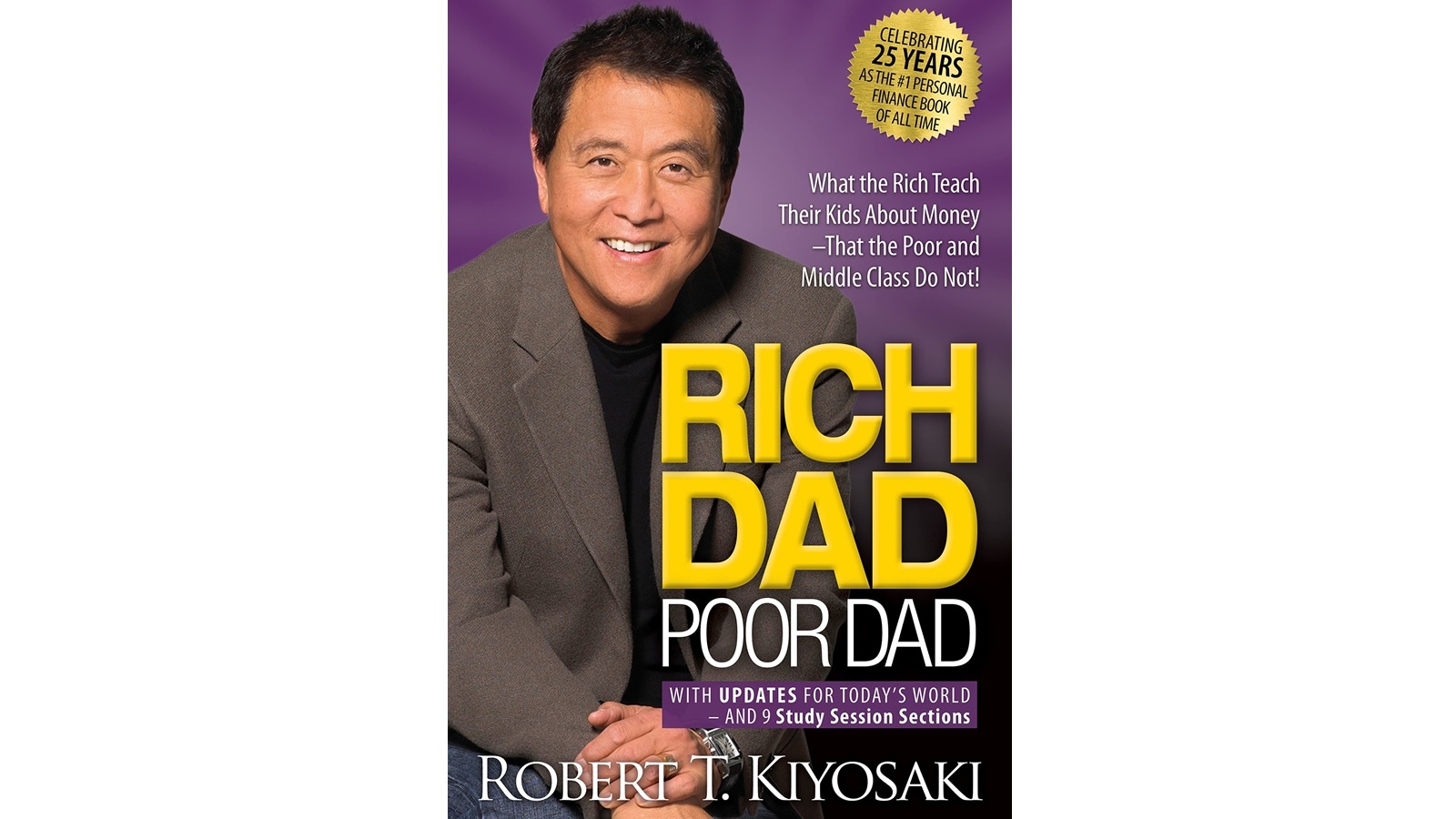 Kiyosaki’s book draws a sharp contrast between the financial mindsets of his two father figures: his real father, a respected educator, and his friend’s father, a savvy entrepreneur. (Source: Amazon.in)
As Kiyosaki puts it bluntly — and somewhat cheekily — in his talks, working solely for money often means “becoming a slave for money and working for idiots like me.” It’s a jarring statement, but it certainly makes you think.
Good debt vs. bad debt: Knowing the difference
Debt has a bad reputation, and often with good reason. But Kiyosaki makes an important distinction. To him, good debt is borrowing money to invest in things that bring money in — like real estate, businesses, or assets — while bad debt eats away at your income.
He’s honest about his own financial approach, too. Kiyosaki holds over $1.2 billion in debt, but he isn’t losing sleep over it. In fact, he once joked that if anything went wrong, “it’s the bank’s problem, not mine.” His confidence lies in knowing that this debt is tied to income-producing assets, not consumer spending.
Story continues below this ad
Using debt to grow, not sink
Rather than shying away from debt, Kiyosaki suggests leveraging it strategically. By using borrowed money to acquire assets like gold, silver, or property, he believes you can significantly grow your wealth — all while gaining tax benefits along the way.
While this approach contradicts mainstream financial advice, Kiyosaki’s point is straightforward: used wisely, debt isn’t a danger — it’s a tool.
Budgeting — but not the way you think
When most of us hear the word “budget,” we think about cutting back — less coffee, fewer nights out. But Kiyosaki turns that idea on its head. He suggests focusing less on shrinking your expenses and more on growing your income.
Whether it’s through side businesses, rental properties, or online sales, increasing your earning potential, he argues, is a more sustainable — and empowering — way to achieve financial freedom. In Kiyosaki’s world, assets are the real goal, not frugality.
Story continues below this ad
Learning about money is an ongoing mission
In every talk, book, and interview, Kiyosaki returns to one central idea: financial literacy matters.
 In every talk, book, and interview, Kiyosaki returns to one central idea: financial literacy matters. (Source: Freepik)
Schools don’t teach us how to manage money, he points out, leaving many adults struggling with basic financial concepts. True financial education — understanding how money works, how investments grow, how to spot opportunities — is something you have to pursue on your own. And if you don’t? Well, in Kiyosaki’s eyes, you’re leaving your financial future up to chance.
You hold the power to change your financial future
One of Kiyosaki’s most empowering messages is that wealth doesn’t happen by accident. It’s the result of conscious decisions, continuous learning, and a willingness to step outside your comfort zone.
Rather than working to make someone else rich, he urges people to start building something of their own — something they believe in, something they can grow. It’s not about luck. It’s about courage and persistence.
Story continues below this ad
Embracing risk — and learning along the way
Finally, Kiyosaki is a strong believer that fear of failure is often our biggest roadblock. He encourages us not to run from risks but to calculate them carefully and face them head-on.
“Failure isn’t the end — it’s education,” he often says. Every misstep, every loss, carries a lesson that can make your future decisions smarter and stronger. In his view, playing it safe might feel comfortable in the short term, but it rarely leads to anything extraordinary.
As Kiyosaki reminds us again and again: “Your financial destiny is yours to create.”
Reflecting on the lessons, Dr Sandeep Pachpande, Chairman, ASM Group of Institutes, says that the continues to inspire generations to think differently about money, wealth creation, and financial independence. “While a traditional job provides stability, Kiyosaki emphasises the importance of developing financial intelligence to build long-term wealth. Some of his most valuable lessons include understanding the difference between assets and liabilities, creating multiple income streams, investing early, and making money work for you rather than working solely for money. Equally important is the discipline of budgeting, which helps individuals gain control over their finances and make informed investment decisions,” he said.
Story continues below this ad
Adding, Dr Kanishk Agrawal, Chief Technology Officer at Judge Group India, says the book remains relevant because it challenges one of the most common financial assumptions, that wealth is built solely through a stable 9-to-5 job. One of the biggest lessons from the book is that income alone does not create wealth; how you manage, invest, and grow that income matters far more. “Kiyosaki’s philosophy is not about avoiding work but about building financial intelligence. Wealth is created when money is put to work through smart budgeting, disciplined investing, and prudent use of debt, enabling individuals to create multiple streams of income beyond traditional employment.”
Disclaimer: This article is for informational purposes only and does not constitute financial or investment advice. Individual financial situations vary, and readers are advised to consult a qualified financial planner, advisor, or mental health professional before making financial decisions.