Prateek Tanmay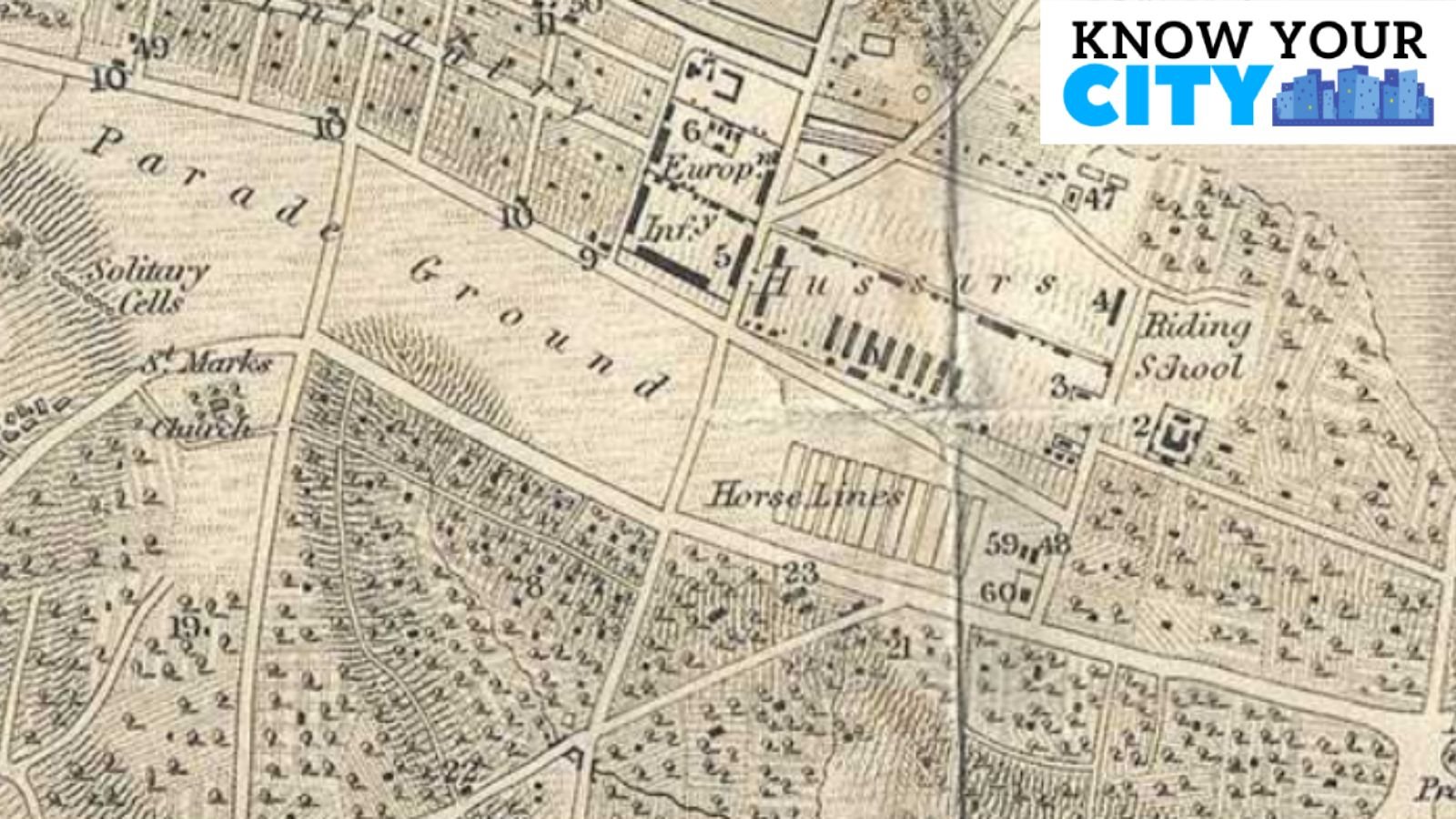
5 min readBengaluruUpdated: Jul 29, 2026 11:49 AM IST
Most discussion of colonial Bengaluru is split between the Pete, the original walled portion of the city, and the Cantonment, the centre of British influence and everything that came with it. But while the Cantonment region eventually grew to represent many aspects of British high society — from elegant homes to clubs catering to the elite of the time — it began as a purely military establishment. As such, its construction was overseen by a military engineer, John Blakiston, who served in the East India Company military from 1802 to 1814.
As it happens, Blakiston also wrote one of the earlier accounts of Bengaluru in the period immediately following the Anglo-Mysore Wars – as part of his personal memoirs, ‘Twelve Years Military Adventure in Three Quarters of The Globe’.

Cooler climate
Blakiston’s first impressions of the Bengaluru region border on the stereotypical — like virtually every other Englishman of the time writing about the region — he noted its capacity to grow fruits and vegetables. Arriving near the old Nundydroog fort some 30 miles north of the city, he had pointed out that, “The climate here is considered to be cooler than in any part of the peninsula ….all the vegetables or fruits of Europe can be grown with facility.” He also had an unfortunate first impression of the district’s monsoon rains, when a mud hut collapsed on his head during a downpour.
In the early 1800s, he was ordered to Bengaluru to prepare the establishment of a cantonment on a “large scale”. Initially, it was modeled after the existing cantonment in Madras. As Blakiston himself noted, “In less than a year ….had completed barracks for two regiments of Europeans, five regiments of natives, and a proportion of artillery, besides hospitals and other requisites…..before I left, it had grown into the first military station on the Madras establishment; while its climate, situation, and productions contributed, with its extensive society, to render it by far the pleasantest and most agreeable residence in the peninsula.”
He went on to praise it as having later grown into the largest and finest cantonment of India — something that points to the fast growth of Bengaluru’s Cantonment area from a purely military setup. Blakiston published his memoirs in 1829, not very long after his military service in 1814. Blakiston also gave us early insight into the culture of the cantonment, at least from a British point of view. He has noted, “Besides the general amusements of cricket, and other similar pastimes, which the mildness of the climate for the greater part of the year enables the officers and soldiers to enjoy in perfection, meetings are held annually, at which the best horses in India contest the prizes.”
Gambling culture
However, it was not all a paradise. Blakiston lamented the prevalence of “gaming” or gambling for stakes in Bengaluru. Apart from bets on horse races, which still exists as a legal phenomenon in Bengaluru, it seems he was referring to card games.
Story continues below this ad
Several fascinating incidents relating to this are recorded by Blakiston – such as one case where a senior British official lost several thousand pounds to a young officer in a fluke. Worried over the fact that the young man’s lack of skill at cards might ruin him in the future, the senior official gave him his winnings on the sole condition that the officer would not play for high stakes again. Another incident ended less happily — an argument over gambling debts between two officers escalated into personal insults and then a duel over personal honour – leaving one of them dead.
Perhaps presciently, Blakiston seems to have noted a growing gap between the native and European soldiery and certain sources of discontent. “Here was too evident a desire to copy the European regiments, in matters not really essential to the discipline of the native corps… tending to produce discontent, and to diminish their attachment to the service. For instance, the frequent drills, parades and roll calls …..though absolutely necessary to preserve the Europeans, whose habits were anything but temperate or quiescent, in any degree of order, were by no means so to the sober and domestic sepoy.”
He also noted that British officers, “carried themselves too high with the native officers, and did not encourage their visits”. Indeed, Bengaluru witnessed its very own mutiny in the cantonment much before the Sepoy Mutiny of 1857, although the British discovered the plot and crushed it after being tipped off by a loyal Indian soldier.