Prateek Tanmay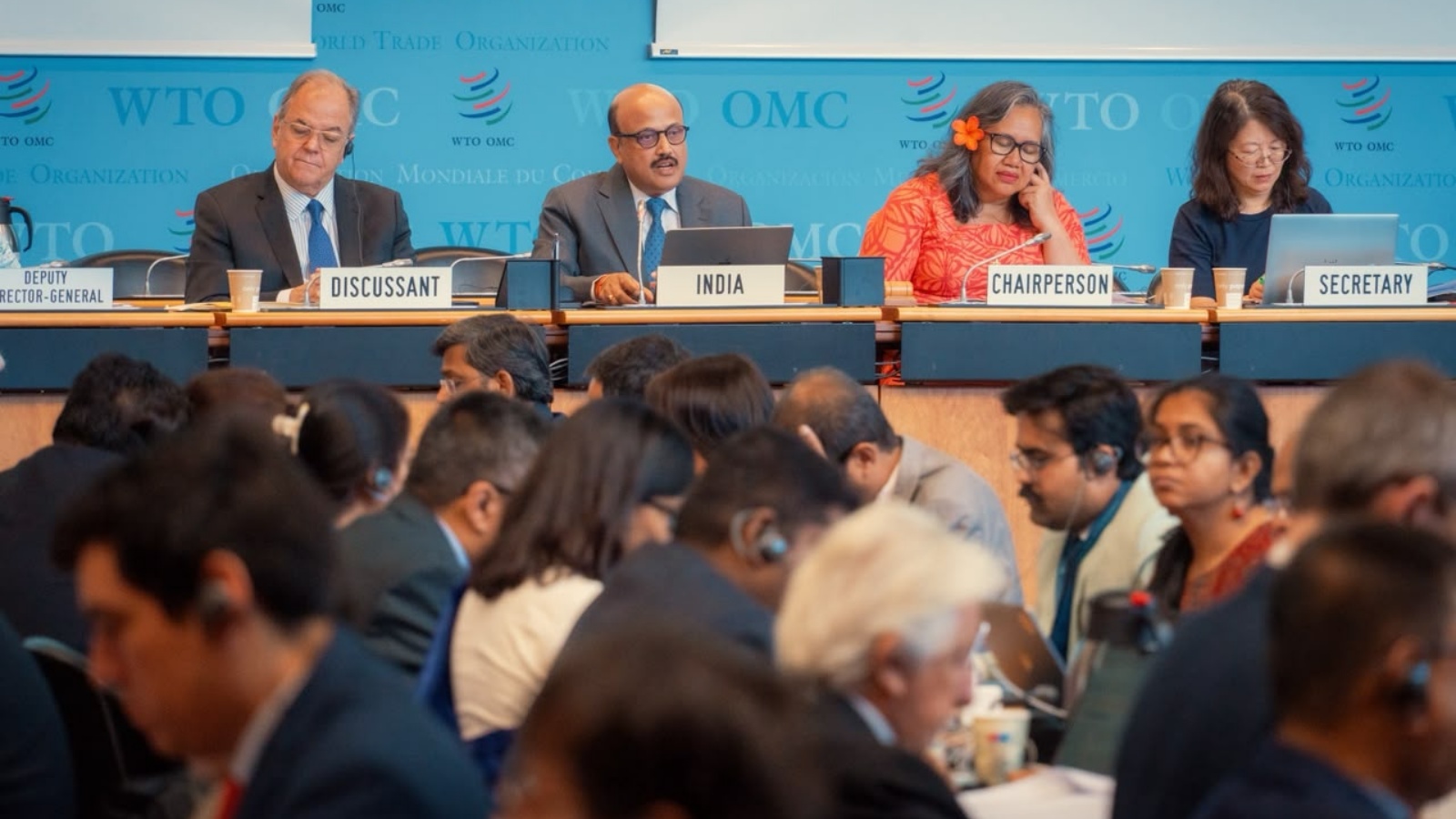
5 min readNew DelhiUpdated: Jul 23, 2026 10:10 AM IST
As India remains among the few large countries opposing plurilateral agreements on e-commerce and investments, a group of countries across developed and developing nations blocks such as EU, Canada, UK, Cambodia and Gambia on Tuesday questioned its approach, alleging that New Delhi was holding up the WTO reform process, The Indian Express has learnt.
Questions were raised during India’s trade policy review, which happens once every five years. An Indian delegation led by Commerce Secretary Rajesh Agrawal presented details on India’s reforms to WTO members.

Plurilateral agreements, which are negotiated and implemented by exclusive groups rather than by all members, have begun being featured prominently in various World Trade Organisation (WTO) reform-related proposals.
India, meanwhile, maintained that plurilateral agreements were against the core WTO principle of consensus-based decision-making process. Major trading powers like the US, EU and China are backing plurilateral negotiations, where benefits and responsibilities would be limited to the signatory members.
While Canada most prominently opposed India’s stand on plurilateral agreements, the EU said that over the past decade, India has benefited significantly from its integration into global trade and has increased its share in world trade.
“The EU encourages India to rethink its approach to plurilateral agreements and to consider them as an opportunity to shape the agenda of the WTO and to modernise the organisation rather than as a threat to multilateralism — which they are not, if we build them properly,” the EU representative said in the internal meeting as per sources.
While Gambia and Costa Rica asked India to withdraw its opposition to the Investment Facilitation for Development (IFD) agreement, several countries asked India to join negotiations for plurilateral agreements such as the fossil fuels subsidy reform initiative, dialogue on plastics pollution and environmentally sustainable plastics trade.
Story continues below this ad
As many as 129 members have supported IFD, but India remains the primary holdout, citing systemic risks and stating that investment is not a core trade issue.
An international trade expert, who did not wish to be named, said that after the proponents of e-commerce plurilaterals failed in their attempts during MC14, they tried a new strategy by trying to have interim arrangements on e-commerce without following WTO rules.
They made WTO DG Ngozi Okonjo-Iweala the depository of the interim arrangements, and India has rightly challenged this arrangement, as this agreement makes a “mockery” of the rules, the expert said.
In a July 9 letter to the WTO, India questioned the “legal basis” under which the WTO DG was assigned the role to act as the “depositary of the Agreement on Electronic Commerce (ECA)”.
Story continues below this ad
“The Marrakesh Agreement requires consensus to add an Agreement to Annex 4. Consensus was not reached on two occasions. In the absence of consensus, we would like to understand the institutional basis on which the Interim Arrangements are operating,” India said.
As per the WTO, 66 members, covering approximately 70% of global trade, have adopted a pathway to bring into force the WTO Agreement on Electronic Commerce through “interim arrangements” while continuing to work towards its incorporation into the WTO legal framework of rules.
The E-Commerce Agreement prohibits the imposition of customs duties on electronic transmissions between a person of one party and a person of another party.
India’s stand against plurilateral pacts
During the 14th Ministerial Conference (MC14) in Yaoundé, Cameroon, India was the only country opposing IFD’s incorporation into the WTO framework as an Annex 4 Agreement.
Story continues below this ad
Annex 4 of the Marrakesh Agreement contains the Plurilateral Trade Agreements, and unlike multilateral agreements that bind all 164 WTO member states, these agreements are only legally binding on the specific members that voluntarily sign and accept them Commerce Minister Piyush Goyal in March said that incorporation of the IFD agreement risks eroding the functional limits of the WTO and undermining its foundational principles.
“At WTO MC14, drawing inspiration from Mahatma Gandhi ji’s philosophy of truth prevailing over conformity, India showed the courage to stand alone on the contentious issue of the IFD Agreement and did not agree to its incorporation into the WTO framework as an Annex 4 Agreement,” Goyal said.
“Despite a challenging global environment, India has remained the world’s fastest-growing major economy, achieved record exports, accelerated digital transformation, strengthened innovation, improved the ease of doing business, and expanded opportunities for trade and investment,” Commerce Secretary Rajesh Agrawal said in a social media post on Tuesday.