Prateek Tanmay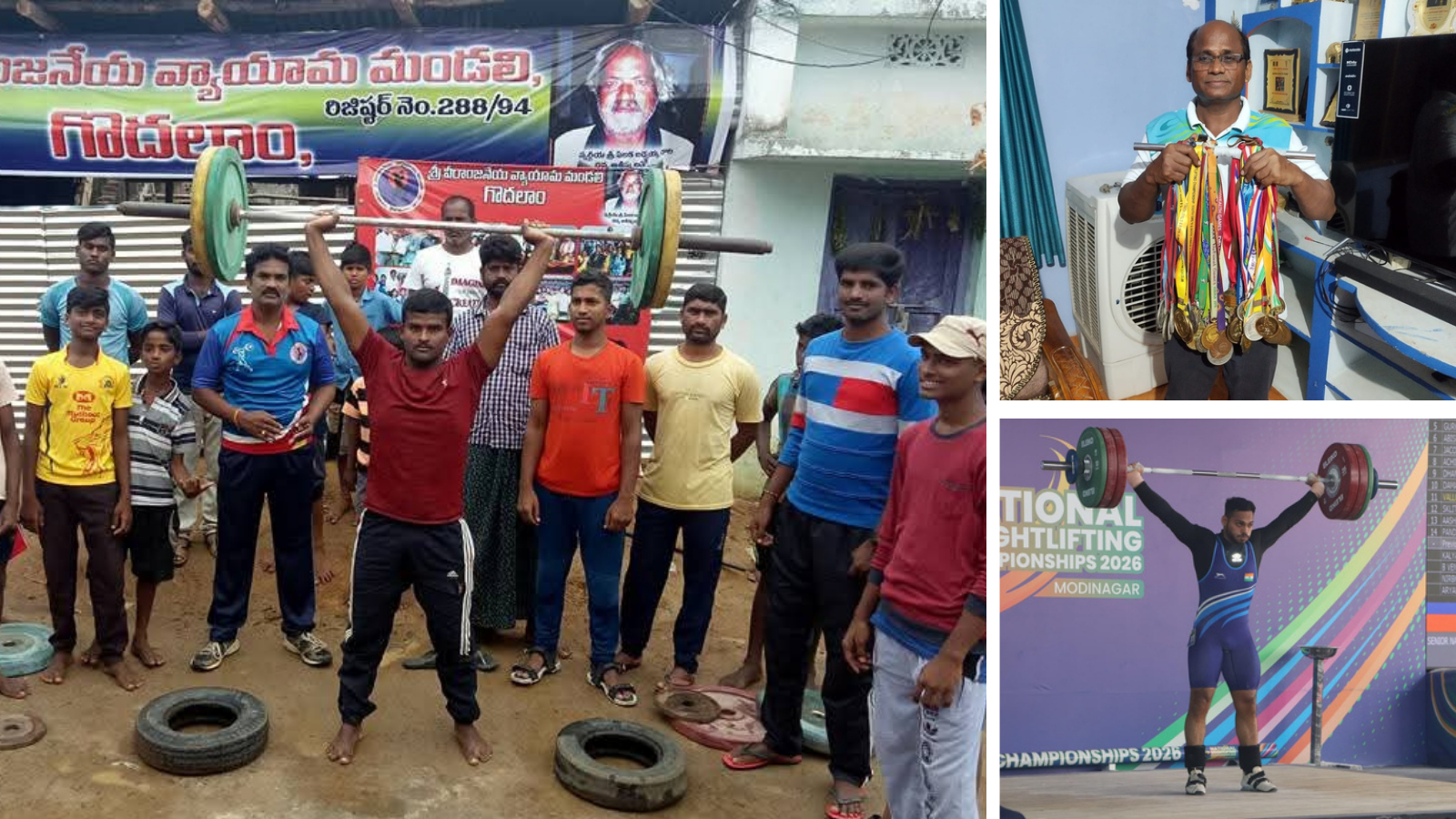
Ustad is the title bestowed on the winner of Sangidi Rallu, a traditional strength contest held during Pongal in village festivals of northern Andhra Pradesh.
Exported worldwide, black granite is a popular stone of the region. It has been used for years to carve the Sangidi Rallu, a torus weighing 80-220 Kg.
Over time, that folk contest evolved into organised weightlifting in Kondavelagada (pr: kon-duh-wella-gadaa), a village in Vizianagaram district. The village has produced 20 national and 13 international weightlifters, with successive generations securing government jobs through sport, and lifting their families out of poverty.
Among the latest are sisters Bellana Bhargavi (17) and Bellana Harika (19), who won gold medals at the Commonwealth Youth and Junior Weightlifting Championships in Samoa in April 2026. Next week, the tiny village will be in the spotlight once again when Ajay Babu – the son of Valluri Srinivasa Rao, a weightlifting pioneer in these parts – steps on the platform at the Commonwealth Games in Glasgow later this month.
Ajay, who is in Glasgow currently, spoke to the Indian Express about continuing a tradition. “In 2010, my father won a bronze medal, and in 2014 Santoshi Matsa claimed silver at the Commonwealth Games. I want to better that and win gold, and participate in the Olympics.”
The story of Kondavelagada’s remarkable production line began more than three decades ago.
In 1991, a young Valluri Srinivasa Rao, Annapurna Challa and her elder brother Ramu were among the many children captivated by the annual Sangidi Rallu competition. Winning it was a matter of immense pride, and the contest drew almost the entire village.
Story continues below this ad
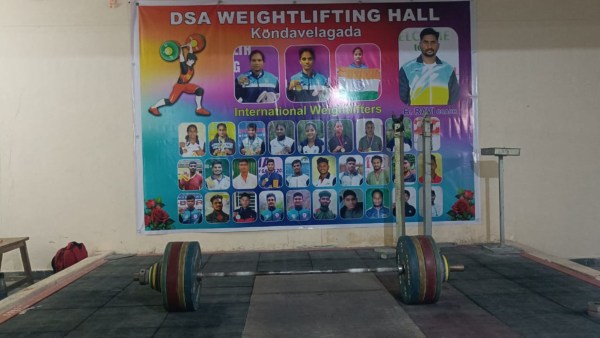 Challa Ramu’s gym in Kondavelagada. (Special Arrangement)
Around the same time, weightlifting was gaining popularity across northern Andhra. Inspired by what they had seen elsewhere, a few elderly villagers decided to bring proper weightlifting equipment to Kondavelagada.
That decision changed the village’s future.
Ramu, whose movement had been restricted by polio, never had the opportunity to become a competitive weightlifter. But he had developed a fascination for physical strength after watching bodybuilders on Doordarshan. Rao, meanwhile, inherited his father’s love for Sangidi Rallu and tried his hand at the village contest, though without much success.
The two friends found another outlet. Every morning, after the regular Sangidi Rallu participants finished training around seven or eight o’clock, they would quietly slip into the gym and experiment with the new equipment.
Flower cultivation – marigold, roses, crossandra, was the village’s primary occupation, and Rao’s family depended on it for a living. Morning training was followed by long hours in the fields. “From morning to evening, we worked in the flower fields,” Rao (47) recalled with a smile. “School was optional.”
Story continues below this ad
While training, Rao observed older lifters closely, copying their techniques and picking up whatever advice they were willing to offer. Before long, he entered a district-level competition. Despite having no formal coaching, he won. That victory changed everything.
“M.S. Sharma, who was the district weightlifting coach, came home and asked my parents to send me to his academy,” Rao said. “They were thrilled after that district medal and agreed immediately.”
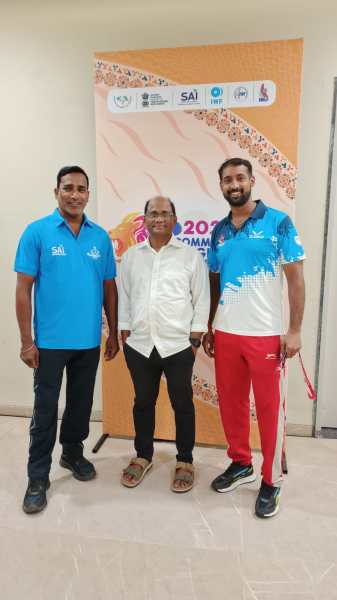 Challa Ramu with Valluri Srinivas Rao and a weightlifter. (Special arrangement)
Life, however, did not become any easier. “I used to cycle from the village to Vizianagaram every day to sell flowers. After that, I would go for training.”
In 1996, Vizianagaram hosted the National Weightlifting Championships. Rao, Ramu and Annapurna travelled to watch India’s best lifters compete. What they witnessed left a lasting impression. “Our jaws dropped,” Ramu recalled. “It wasn’t just men competing. Women were lifting weights, too.”
Story continues below this ad
ALSO READ | Delhi cop lifts 145 kg in contest while being 7 months pregnant: Is weightlifting safe for pregnant women?
For Annapurna, that moment proved life-changing. “My sister started lifting weights soon after,” Ramu said. “Within a couple of years, she became a national champion in the rural championships, while Rao became state champion.”
Their progress attracted the attention of the Sports Authority of India (SAI). When Sharma was transferred to the SAI centre in Eluru, he invited both Rao and Annapurna to continue training under him. They accepted immediately.
Then, tragedy struck.
Just days before they were due to leave for Eluru in 1999, Annapurna died after falling into an open well on the family’s farm.
Story continues below this ad
Her death devastated not only the family but the entire village, which had celebrated her rise as one of its own. Rao no longer wanted to leave. “The whole village had to convince him,” Ramu recalled. “There were times when his family didn’t even have enough food. We told him that if he went to Eluru, he would at least get three meals a day, become stronger and continue weightlifting.”
The argument eventually persuaded him.
Eluru transformed Rao’s career. Under Sharma, the farmer’s son developed into one of Andhra Pradesh’s leading weightlifters, winning silver medals at the National Games in Visakhapatnam (2002) and the inaugural Afro-Asian Championships (2003) in Hyderabad.
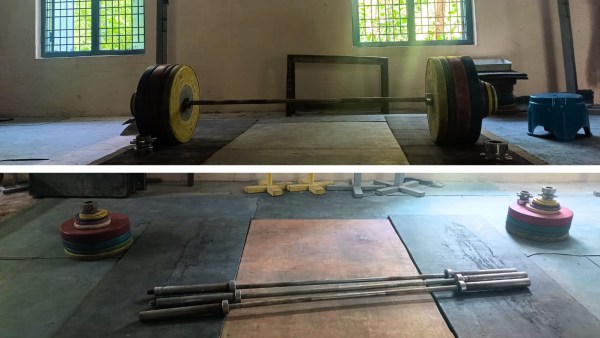 Challa Ramu’s gym in Kondavelagada. (Special Arrangement)
Back home, his success sparked a ripple effect. Children who had watched Rao grow up now wanted to follow the same path.
For Ramu, though, the years after Annapurna’s death were far more difficult. “For three or four years, I didn’t know what I was doing,” he said. Then one day, village elders approached him with a proposal. “‘We’ll help you set up a gym,’ they told me. ‘Will you teach our children?’”
Story continues below this ad
He accepted. “When Rao and Annapurna trained under Sharma in Vizianagaram, I was always there. I learned the techniques, nutrition, training loads—everything by watching. When the village trusted me with its children, I couldn’t say no. That faith turned my grief into strength.”
By 2005, Kondavelagada had its own coaching centre. And soon, Ramu’s trainees were winning national medals.
Today, Rao has taken voluntary retirement from the Army and has returned to the village, where he and Ramu are building another gym – determined to ensure the next generation does not have to leave home to chase their dreams. Weightlifting is a route out of poverty with government jobs for medallists.
“Our village has around 3,000 people,” Rao said. “Most families still depend on farming. Many take loans just to provide proper nutrition for their children. We can only do so much ourselves. A weightlifter needs Rs 50,000 to 60,000 every month for food and training. Where will these farmers find that kind of money?”
Story continues below this ad
***
Before Kondavelagada became a weightlifting nursery, there was Amadalavalasa (Pr: Amm-duh-luh-vuhluh-saaa) in the neighbouring Srikakulam district. Its Maruthi Yuvajana Vyayama Mandali, produced eight international and 46 national weightlifters, making it the region’s original weightlifting powerhouse. Founded in 1969 by tailor K. Amminaidu, the gym laid the foundation for northern Andhra’s weightlifting culture.
Amminaidu is now 86, partially deaf, and lives a quiet life. He is looked after by his five children, three of whom are weightlifters. “Our inspiration was Kodi Rammurthy Naidu,” Amminaidu said.
His son Madhusudhan added: “Even today, whenever someone joins us, or when we go to Sangidi Rallu competitions to identify youngsters, we invoke Rammurthy’s name as a blessing for a successful career.”
The region’s folklore says Kodi Rammurthy Naidu, from Veeragattam near the Odisha border, discovered an idol of Lord Hanuman while bathing in a pond in the late 1800s. Inspired by the deity, he resolved to become the strongest man in the world.
Story continues below this ad
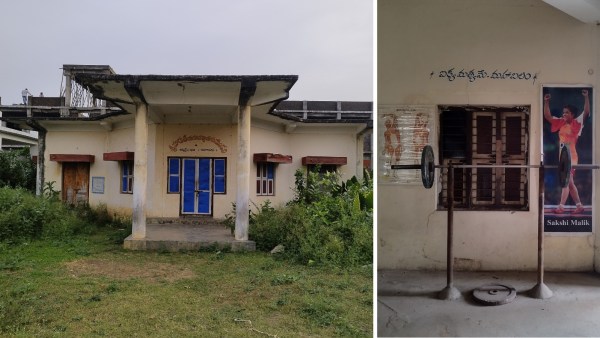 Maruthi Yuvajana Vyayama Mandali in Amadalavalasa in Srikakulam district. (Express photo)
“He had a special breathing technique that allowed an elephant to walk across wooden planks placed on his chest,” former weightlifter Mugithi Appalanaidu recalled a story that’s now a part of the folklore. “The Vizianagaram king was so impressed that he rewarded him with gold and jewels, and sent him to England and China to display his feats of strength and challenge wrestlers there.”
Rammurthy’s exploits inspired and he also established a gym in Vizianagaram, where his methods were passed down to students who carried them across the region.
One of those inspired was Amminaidu, a former kusthi wrestler himself. “In those days, we pushed a rod through two stones and lifted it—that was our weightlifting,” he recalled. “I travelled across the region looking for better facilities, coaches and equipment.”
Eventually, they persuaded R. Suryanarayana of Andhra University, who had trained under Russian coaches, to help them. They also found a fabricator in Rajahmundry capable of building modern weightlifting equipment.
As medals followed, so did government jobs. Among those inspired was Neelamsetty Appanna, who turned to coaching after retiring from competition.
He travelled to the Netaji Subhas National Institute of Sports (NSNIS), Patiala, for a one-year coaching diploma. There, a lecturer offered advice that would transform the region. “We may soon have women competing in weightlifting,” he told Appanna. “Find girls who are interested.”
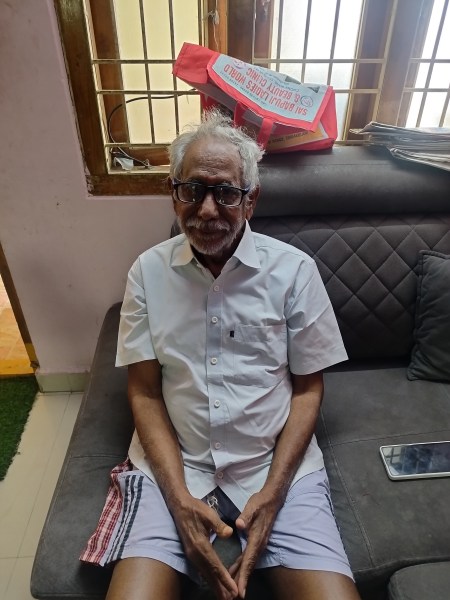 Maruthi Yuvajana Vyayama Mandali in Amadalavalasa in Srikakulam district. (Express photo)
Back in Voosavanipeta, Appanna and Vishwanatham, the former secretary of the Srikakulam Weightlifting Association, began doing exactly that. “Sometimes parents tried to assault us,” he laughed. “They asked who would marry their daughters if they started lifting weights.”
Eventually, they changed strategy and focused on children aged nine to 12. Vishwanatham paid for their food from his own pocket to ensure they had enough nutrition to train. “Most of them came from very poor families.”
One day, two sisters from the railway colony walked into their lives. The elder was Karnam Narsamma. The younger was nine-year-old Karnam Malleswari. After training under Appanna for a couple of years, Malleswari joined the Maruthi Gym. “She was a tiny girl peeping through the doors,” recalled Appalanaidu. “We told her she shouldn’t be watching semi-naked men train. But Amminaidu took her in and started teaching her.”
The little girl would go on to become India’s first woman Olympic medallist, winning bronze at the 2000 Sydney Olympics. Her success, along with that of several others from the region, appeared to herald a golden era. It didn’t last.
As of today, only seven weightlifters are from the Maruthi gym. There are about 3-4 preparing for national level from the region said Madhusudhan.
“We did everything we could. But none of those who got government jobs came back to build gyms or help the next generation. We never received recognition, and neither did our village,” said Vishwanatham.
Appanna still remembers the sacrifices. “I travelled with the team in general compartments. The government paid only half of our expenses. The rest came from our own pockets. I was always worried about the saftey of those girls while travelling”
The Maruthi Gym now faces another challenge. “Today’s weightlifters need modern equipment, but we simply don’t have the money,” Madhusudhan said. “We don’t know what else to do. But spreading the culture of weightlifting is my father’s legacy. As long as we can, we’ll continue.”
***
Tilaka Dhananjaya Kumar, who won bronze at the National Weightlifting Championships in Pondicherry in 1992, secured a government job as a teacher and was posted in his hometown of Godalam, a remote hamlet of around 1,200 people in Srikakulam district, barely four kilometres from the Bay of Bengal.
Like Kondavelagada and Amadalavalasa before it, Godalam became another village where weightlifting offered a route out of poverty. For Dhananjaya, reaching a gym was once a struggle.
There was no road connecting his village to Maruthi Gym, forcing him to hitch rides to Kottabommali, around 13 kilometres away, where the nearest railway station was located. “I travelled there in the morning to train, stayed overnight and returned home the next evening,” he recalled.
Weightlifting became Dhananjaya’s way out. After securing his teaching job, he established a gym in Godalam, determined to give local children the opportunities he never had. “There are only two things I know — teaching and weightlifting. If these children reach the national level and get government jobs, their lives, and this region, will improve.”
Every year, veteran coaches and former weightlifters from across Srikakulam gather for Sangati Rallu and local weightlifting competitions with 60-65 registrations. “It’s almost like an annual reunion,” Madhusudhan said. “That’s where we first noticed Dhananjaya arriving with children from his region.”
But sustaining momentum got difficult. Since being promoted to a high-school teacher, Dhananjaya has struggled to devote the same amount of time to coaching. “Earlier, I trained around 15 or 16 children. Now I’m down to three or four. That helps maintain quality, but our equipment has become rusty and needs replacing.”
He paused, unsure of what the future held.
The equipment may have rusted, the gyms may be ageing, and the coaches may no longer have the means they once did. But every year, when the Sangidi Rallu competition returns, so does the hope that another child will discover a different future.