Prateek Tanmay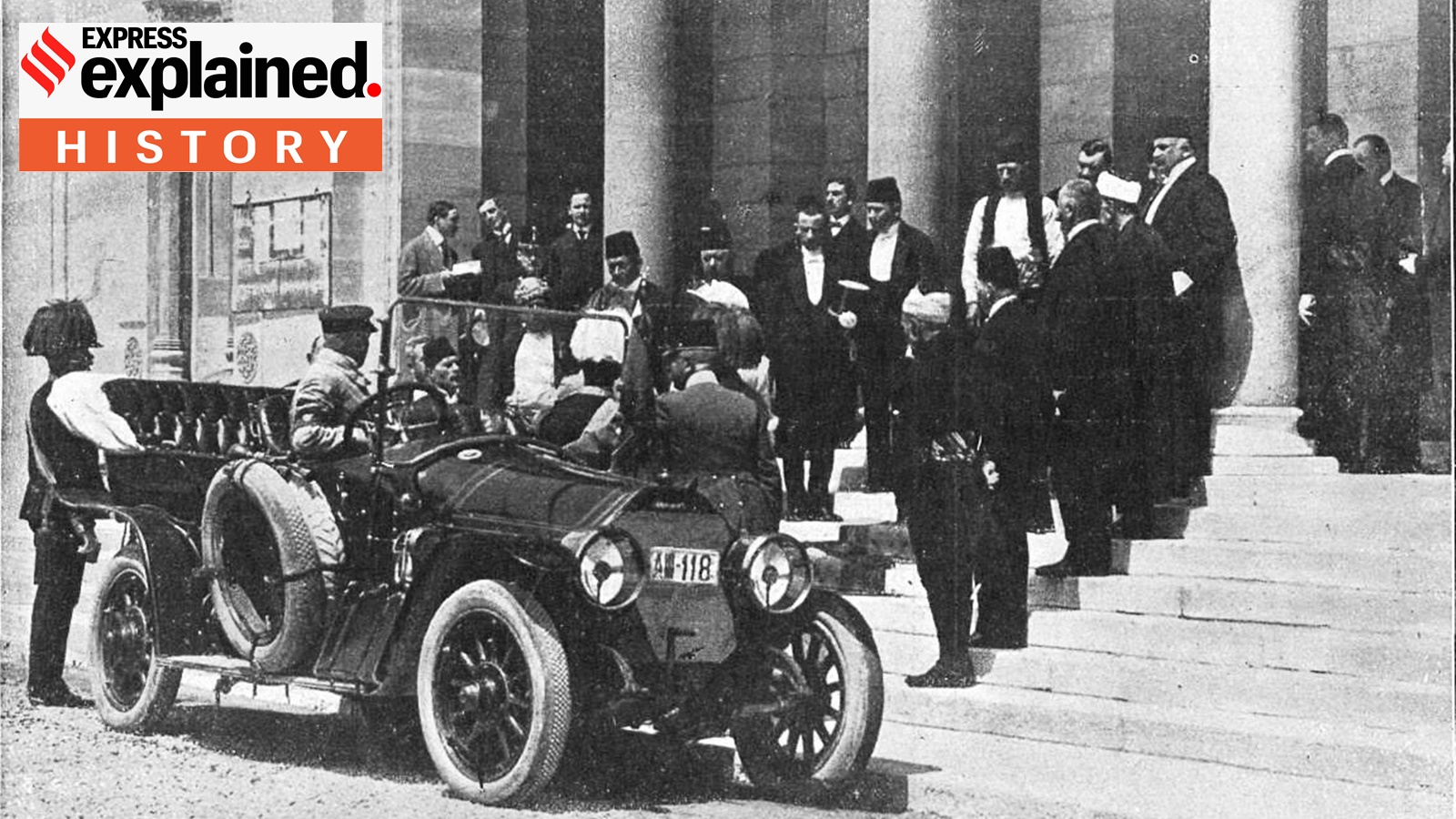
At a time when several years-long conflicts rage in many parts of the world, driven and sustained by bigger players and their own interests, the relatively small-intensity trigger for the First World War (1914-18) may not seem like an anomaly.
But the assassination of Archduke Franz Ferdinand, the heir to the Austro-Hungarian Empire, on June 28, 1914, set off a chain of events that massively dwarfed the conflicts of its time.
The war redrew the world map, leaving 15 million people dead, and, in turn, created conditions that brought on the Second World War (1939-45), which would result in an even greater scale of destruction. It took only a month after the assassination for European powers to formally declare war. Here is what happened.
A surprising shooting
Born in Graz, Austria, in 1863, Archduke Franz Ferdinand was the heir to the Austro-Hungarian Empire. European nation-states at this point were involved in aggressive imperialist conquests and were in tough competition with one another, driven to dominate in several domains, including their colonies and naval strength.
Austria-Hungary was not far behind, and by 1914, it had covered large parts of Eastern Europe. When Archduke Ferdinand was murdered, he was in Bosnia-Herzegovina, which had been made a part of the empire in 1908.
However, this acquisition was seen as threatening by the Western powers on the one hand, and by those holding aspirations of Greater Serbia, who wanted the region to be part of a Serbia-led, pan-Slavic empire.
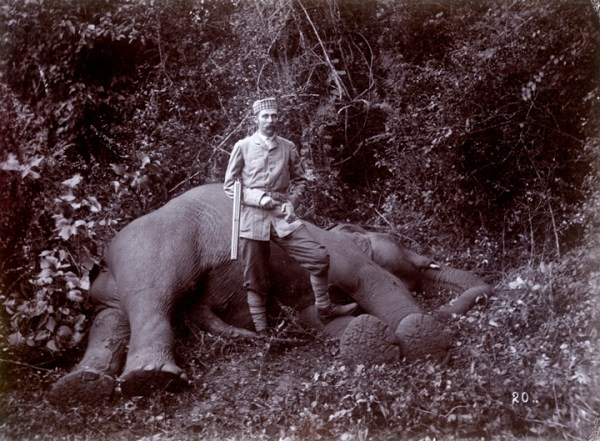 Franz Ferdinand. (Wikimedia Commons)
Archduke Ferdinand was on a visit to Bosnia-Herzegovina when a Serbian nationalist group, “the Black Hand”, decided to attack him with the resolve to stall his plans of extending the Austro-Hungarian empire. Archduke Ferdinand and his wife Sophie were assassinated by 19-year-old Gavrilo Princip.
Story continues below this ad
The exact circumstances of the shooting were unusual. Ferdinand and his wife visited Sarajevo to inspect the army, and while they travelled the route, six assassins from the Black Hand were awaiting their arrival. According to the Cambridge University library archives, “The first conspirator failed to throw his bomb; the second failed to draw his pistol; and the third threw his bomb, but missed.” It would seem that the archduke had escaped, but he then changed his schedule to visit bombing victims at a hospital.
While attempting to get there, his chauffeur took a wrong turn, stopped and then reversed his car. “Princip was sitting at a café across the street. He seized his opportunity, walked across the street and shot both Franz Ferdinand and his wife at point blank range,” the archives said.
Princip attempted to take his own life, first with a cyanide capsule and then with his pistol, but failed. He was too young to face the death penalty and was sentenced to 20 years in prison. In 1918, also the year the war ended, he died of tuberculosis at the age of 23.
The fallout
Story continues below this ad
The assassination did not attract much attention at the time and was considered an isolated incident resulting from strained diplomatic relations.
However, a month later, Austria-Hungary, in collaboration with its German allies, declared war on Serbia. Russia’s support of its ally Serbia brought the country, as well as France, into the conflict. At a time of heightened competition among the European powers, Britain’s concerns about Germany’s expansion brought it into the war as well. Together, Russia, France and Britain were known as the Triple Entente or the Allies.
Several factors built the stage for this rapid, multi-party escalation. At the time, Europe was divided into two rival groups, with the German unification of the 19th century influencing its decision to be friendly towards Austria-Hungary. This prompted the Triple Entente to come together in 1893.
Germany felt cornered by these developments, and with its close ties to Austria-Hungary, conflict seemed imminent. In late July, following the assassination, Austria-Hungary served an ultimatum with several conditions to Serbia, which would threaten Serbian sovereignty. This led to the declaration of war on July 28, 1914. Seeing Russian preparations for mobilisation, Germany sent its own message to ask for its retreat, but upon receiving no response, began its own mobilisation.
Story continues below this ad
As London’s Imperial War Museum described it, “These actions reflect the fears, anxieties and ambitions of the European powers. The decisions for war were made in the context of growing nationalism, increased militarism, imperial rivalry and competition for power and influence. Europe’s leaders were willing to go to war to defend or extend national interests and their choices were shaped by a combination of long and short-term foreign policy goals, political pressures at home, previous crises, and the system of opposing alliances that had developed over the previous 35 years.”