Prateek Tanmay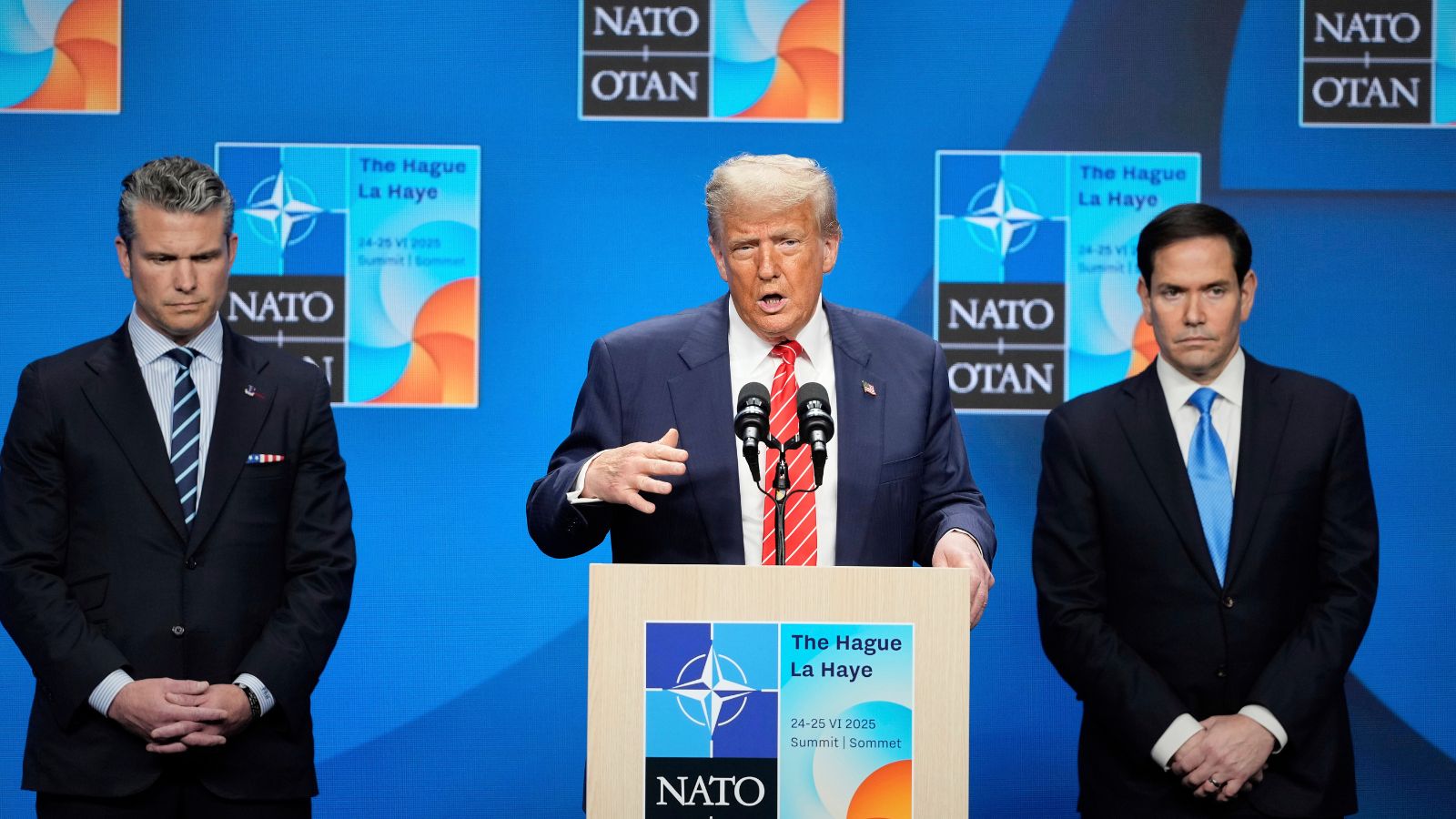
With Eastern Europe and West Asia in prolonged turmoil, leaders of the 32 member countries of the North Atlantic Treaty Organisation (NATO) will gather in Turkey on July 6-7 for the so-called Ankara Summit.
NATO summits take place roughly once a year to impart strategic direction to the world’s most powerful alliance. Established at the beginning of the Cold War in 1949, NATO aims to safeguard its members through political cooperation and collective defence. The cornerstone of NATO, enshrined in Article 5 of the North Atlantic Treaty, or the Washington Treaty, stipulates that an armed attack against one or more of its members will be considered an attack against all. But now, alongside the military threat from its principal adversary, Russia, NATO faces demands for a more equitable burden-sharing from its principal financial contributor, the US.

Last fortnight, NATO outlined the broad themes that it expected to dominate discussions during the Ankara Summit. The first is a topic that has been contentious ever since NATO’s beginnings: Spending levels on defence by the alliance’s European members.
At last year’s NATO summit in The Hague, NATO’s European members committed to investing 5 per cent of their respective Gross Domestic Products (GDPs) into defence. This commitment covers two categories of defence expenditure. First, each member must spend at least 3.5 per cent of GDP on core defence equipment and to meet NATO Capability Targets. In addition, NATO countries must spend 1.5 per cent of GDP on defence- and security-related investments, such as protection of critical infrastructure, defence networks, and strengthening the defence industrial base.
The Ankara Summit will be about execution, not grand strategy, say NATO watchers. The focus will be on delivering on the 5 per cent pledge with the US piling pressure on the European allies to step up. Washington is altering its contribution to NATO, pressing Europe to grow high-end capabilities, such as logistics, command and control, aerial refuelling, missile defence, and special operations forces.
NATO watchers expect three themes to dominate the Ankara Summit. The first will be a continued focus on “alliance adaptation”, as NATO seeks to transform from a force optimised for crisis management to one that is focused on collective defence against peer competitors. The second theme will be “capability delivery”, with NATO identifying its security requirements and actually fielding those capabilities at the speed demanded by today’s security environment. The third theme will be “technology and industrial resilience”.
The rocky path to NATO’s current 5 per cent commitment dates back to its founding in 1949. For its first 40 years, NATO formed the first line of Western European defence against the threat of invasion by the Soviet-led Warsaw Pact. During the 1950s, NATO’s European allies willingly spent an average of 4.8 per cent of their GDP on defence. Alongside this, the US heavily subsidised NATO, picking up 60-76 per cent of the tab for Europe’s defence.
With the collapse of the Soviet Union in 1991, NATO countries sharply pared defence spending to fund public infrastructure and social programmes. In 2006, at the Riga Summit, NATO’s defence ministers issued a guideline advising member countries to spend at least 2 per cent of their GDP on defence. But, with the Soviet threat having receded, the non-binding Riga commitment was largely ignored.
Russia’s annexation of Ukraine’s Crimean Peninsula in 2014 was the wake-up call that goaded NATO into reversing a quarter century of spending cuts. At the 2014 Wales Summit, the NATO allies signed the so-called “Defence Investment Pledge”, committing themselves to spending targets of 2 per cent of their GDPs by 2024.
Even so, it took a full-scale Russian invasion of Ukraine in 2022 to push NATO countries into adopting, at the 2025 Hague Summit, a massive new defence spending target of 5 per cent of GDP by 2035. Galvanised by the Russian threat, 2023 saw an unprecedented 11 per cent increase in NATO’s real defence spending. In 2024, the European allies spent a combined total of $380 billion. In 2025, collective defence spending rose by another $90 billion, a rise of almost 20 per cent. Some NATO allies are on track to reach the 5 per cent target in 2026, far ahead of schedule.
European security experts say the success of the Ankara Summit will rest not just on pushing NATO allies into spending more, but rather on directing spending into the right capabilities. NATO increasingly believes that Ukraine, which has demonstrated astounding capabilities in battlefield adaptation and rapid innovation, provides the right blueprint for a more effective way to operate in a war fuelled by artificial intelligence. Kyiv has demonstrated how to sense the domain, adapt cheap commercial tools, and iterate fast.
Ultimately, military advantage will be generated less by platforms and weapons, and more by the ability to innovate, to produce, to sustain and to adapt faster than the adversary. Developing an agile defence industry will be the centrepiece of the Ankara Summit, with the entire day of July 7 being an industry forum.
The writer is a retired army officer and journalist