Prateek Tanmay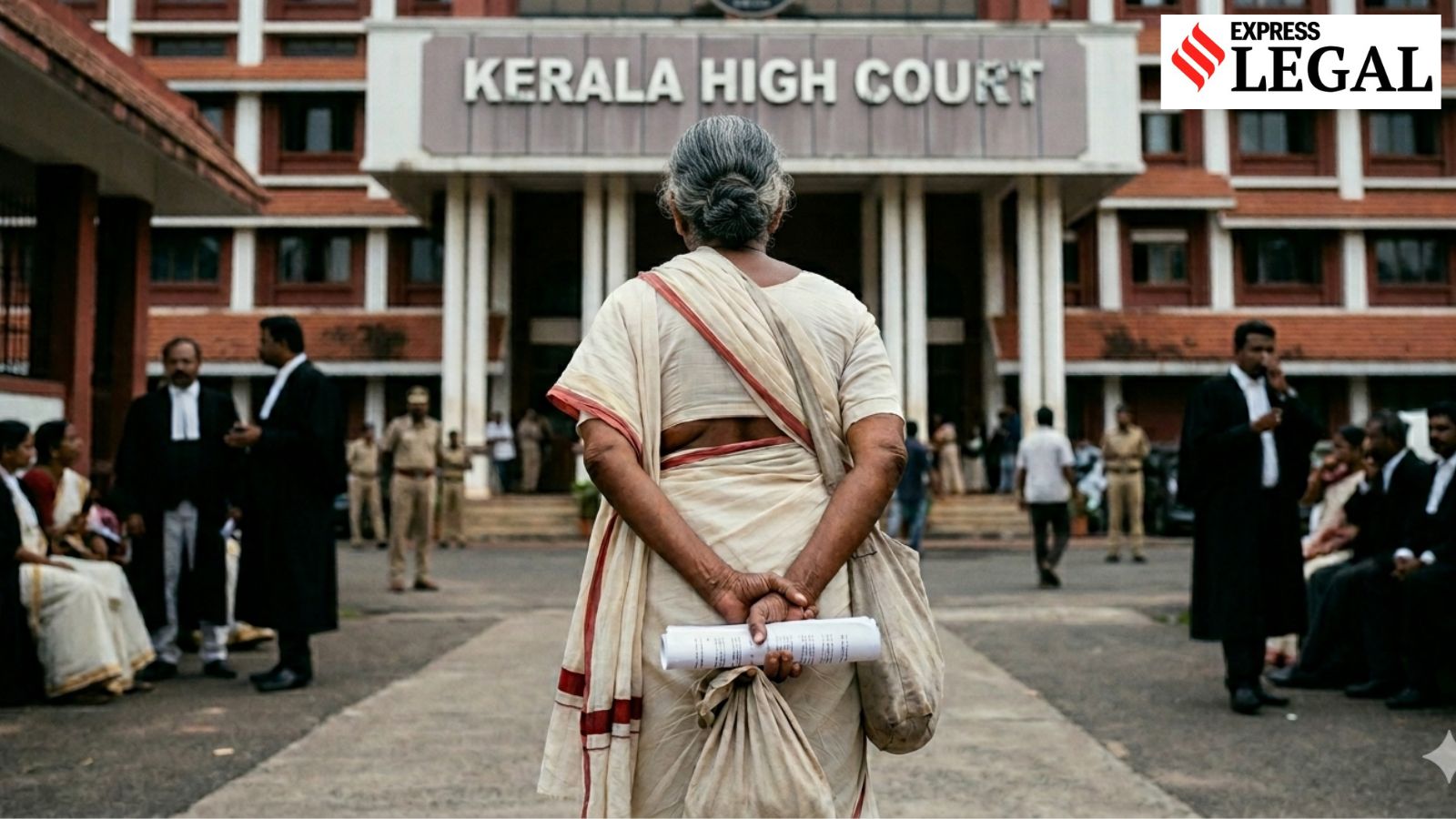
A bench of Justices A K Jayasankaran Nambiar and Preeta A K was hearing an appeal filed by a 60-year-old woman against an order of the Family Court, Thiruvananthapuram, who sought to establish her marital status as the legal wife of a dead man while claiming a share in his property.
The family court had earlier directed that her petition be returned for presentation before a competent civil court.
“A dispute that arises at a point in time when one of the parties to the marriage, whether actual or alleged, is no more, cannot be presented before a Forum that is tasked with adjudicating disputes that arise in a subsisting relationship between living persons,” the Kerala High Court said on June 11.
 The Kerala High Court noted that a reading of the petition showed that the principal object of the proceedings was to obtain rights over the property left behind by the late man. (Image generated using AI)
Woman sought declaration as wife, share in property
The marital and property dispute arose from an original petition filed by the woman before the family court in 2018.
She claimed that she was the legally wedded wife of a man who is no more now and alleged that despite the marital status of the man, another woman had maintained an illicit relationship with him.
She also claimed that two respondents in the case were children born out of that marital relationship.
Story continues below this ad
In her petition, she sought a declaration that she was the late man’s lawful wife, partition of the properties left behind by him and recovery of mesne profits from those properties.
Respondents challenged family court’s jurisdiction
Although the respondents were initially set ex-parte, they later appeared before the family court and challenged the maintainability of the proceedings.
They argued that the dispute did not fall within the jurisdiction of the family court under the Family Courts Act, 1984, and that the matter should instead be adjudicated by a civil court.
Accepting the objection, the family court directed that the original petition be returned to the woman for presentation before the appropriate civil court.
Aggrieved by that decision, she approached the high court.
Story continues below this ad
Family court jurisdiction limited to subsisting marriages
Before the high court, the appellant argued that Section 7 of the Family Courts Act empowered family courts to decide questions relating to the validity of a marriage and the marital status of a person.
She contended that the family court could determine whether she was the legally wedded wife of the late man even though he had died before the institution of the proceedings.
The respondents, however, argued that the man had died on December 3, 2016, before the original petition was filed.
They relied on Supreme Court precedents to contend that disputes arising after the death of a spouse cease to be family disputes and become ordinary civil disputes.
Story continues below this ad
Court finds dispute was essentially over property
The high court agreed with the respondents and noted that a reading of the petition showed that the principal object of the proceedings was to obtain rights over the property left behind by the deceased.
“The declaration of marriage sought for was merely to bolster the appellant’s principal claim for a share in the said property,” the court said.
The court held that the legislature intended family courts to deal with disputes connected with a subsisting marital relationship and not with disputes arising after the death of one of the spouses.
Referring to the purpose behind the Family Courts Act, the court said family courts were established to facilitate settlement of family disputes and preserve the institution of marriage through specialised procedures that differ from ordinary civil litigation.
Story continues below this ad
Such objectives, the court said, can be achieved only when both parties to the marriage are alive and before the court.
Appeal dismissed
Finding no error in the family court’s order, the high court dismissed the appeal and upheld the direction requiring the woman to pursue her claims before a civil court.
However, the court granted her limited relief by directing that the time spent pursuing the matter before the family court and the high court should be excluded while calculating the limitation period for any civil suit she may now file.
Why this ruling matters
The judgment clarifies that family courts cannot be used to establish marital status after the death of an alleged spouse when the ultimate objective is to secure inheritance or property rights.
Story continues below this ad
Such disputes, the Kerala High Court has held, are civil disputes that must be decided by ordinary civil courts, even if a declaration regarding marriage is sought as part of the claim.