Prateek Tanmay
The Delhi government’s new Electric Vehicles (EV) policy seeks to ensure that 30% of Delhi’s vehicle fleet is electrified by March 31, 2030, to achieve the larger aim of curbing air pollution.
The policy cites the Commission for Air Quality Management (CAQM), which identified vehicular emissions as the largest contributor to air pollution in the National Capital Territory of Delhi. Two-wheelers constitute approximately 67% of the total vehicle stock in Delhi, it stated.
Different fuel sources mean that EVs and conventional vehicles operate differently. The former uses a battery pack to power the electric motor, and that battery must be periodically charged. In comparison, a petrol or diesel car typically uses Internal Combustion Engines (ICEs), where fuel is used to create combustion. The resulting energy powers the mechanical movement of parts. Such variations impact not just the functioning of the cars from a consumer standpoint, but also the larger ecosystem required for their smooth operations.
Gauhar Raza, former professor at the Academy of Scientific and Innovative Research and Chief Scientist at the Council of Scientific and Industrial Research, spoke with The Indian Express about the planned shift, how EVs compare to conventional vehicles in terms of efficiency, and what the environmental gains could look like.
Why is the transition to EVs important?
The transition is important because the ICE has largely reached its technological limits. For decades, engineers have tried to improve its efficiency. There have certainly been improvements, but most of them have come through better accessories, electronics, design and supporting systems rather than dramatic gains in the engine itself. There is very little room left for major improvements in ICE technology.
That is why research and innovation are increasingly focused on electric mobility. This is where the next technological leap is expected to come from. The future of transportation is clearly moving in that direction.
Recent events in West Asia have also exposed India’s vulnerability as an import-dependent country in terms of fossil fuels.
Story continues below this ad
What do these limits, in terms of the ICE, mean in terms of efficiency?
Efficiency is a technical concept. The overall efficiency of a vehicle is determined by the combined efficiency of all its components, not by the maximum efficiency of any single part.
In an ICE, energy is lost at several stages — through heat, friction and the various mechanical systems that transfer power from the engine to the wheels. Even if individual components are improved, the overall efficiency has a practical ceiling. That is why, despite decades of research, there has been only limited scope for improvement.
In an EV, the drivetrain or transmission system is inherently more efficient because there are fewer stages where energy is lost. More of the energy stored in the battery is actually used to move the vehicle.
Story continues below this ad
Ultimately, efficiency is reflected in how much energy is consumed to cover a given distance, and that depends not only on the vehicle’s design but also on how it is driven.
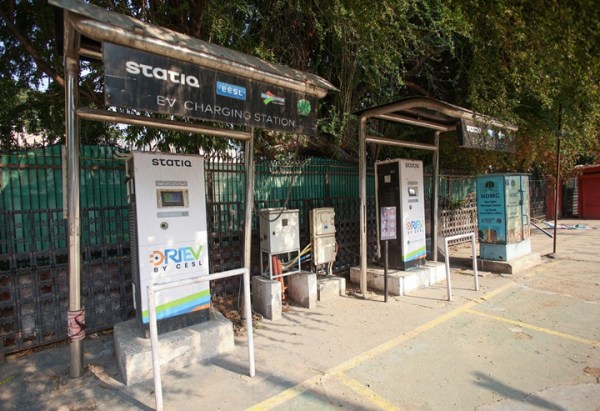 EV charging station at Rafi Marg, in New Delhi. (Express photo by Praveen Khanna)
Does that automatically make EVs environmentally superior?
Not entirely. EVs certainly reduce pollution within cities because they have no tailpipe emissions, but we also have to look at the entire energy chain.
If the electricity used to charge these vehicles comes from thermal power plants, then a part of the environmental burden is shifted from cities to the places where electricity is generated. So, while EVs improve urban air quality, their overall environmental benefit depends on how clean the electricity grid becomes.
Story continues below this ad
The transition to electric mobility should, therefore, go hand in hand with cleaner sources of power generation.
From an engineering perspective, how are EVs different from conventional vehicles?
One important difference is regenerative braking. In a conventional vehicle, much of the energy is lost as heat when you apply the brakes. In an EV, part of that energy can be recovered and sent back to the battery.
That means driving behaviour becomes much more important. Smooth acceleration, anticipating traffic conditions and avoiding unnecessary braking all help improve efficiency. The vehicle rewards efficient driving.
Why is ‘range’ such an important concern for EV users?
The battery can run the motor only for a limited period before requiring recharging because it stores a finite amount of energy. Its capacity is measured in ampere-hours, and the amount of energy it delivers depends on the electrical load placed on it.
Story continues below this ad
In simple terms, the more load you put on the battery, the faster its stored energy is consumed. Rapid acceleration, repeated braking and aggressive driving all increase the load on the battery, reducing the distance the vehicle can travel on a single charge.
Suppose a vehicle is capable of travelling around 200 kilometres under a particular set of conditions. If the battery load becomes much higher because of the way it is driven, the available energy will be consumed faster, and the vehicle may not even complete 150 kilometres before it needs to be recharged.
That is why range is so important for EV users. It is not determined only by the battery’s rated capacity but also by how efficiently the stored energy is used.
Manufacturers usually specify a certified range under standard testing conditions. In real-world conditions, the actual range depends on how the vehicle is driven. This needs more assessment. If a vehicle is driven smoothly under favourable conditions, it may even exceed its certified range.
Story continues below this ad
What are the biggest challenges to EVs becoming mainstream in India?
The biggest challenge is that since India does not have lithium, cobalt, or nickel reserves, the raw materials for battery production will be a problem. Technologically, other than the body, an EV has three major components: the primary battery, electric motor, and the control system (software and hardware). Except for the motor, we lack the capabilities to produce efficient, durable and recyclable batteries and hardware for the control system. This could increase our dependence on suppliers like China.
Then there is the availability of charging infrastructure. Another challenge is ensuring that electricity increasingly comes from cleaner sources.
A major challenge that also needs attention is what happens to batteries after they reach the end of their life. We need effective systems for reuse, recycling and safe disposal. As EV adoption grows, battery lifecycle management will become increasingly important.
From April 1, 2028, only electric two-wheelers will be permitted for new registration in the NCT of Delhi under the new policy. However, this timeline isn’t practical. On one hand, we will not be able to install enough charging points, and on the other hand, I think the national electrical grid will not be able to handle the load, which will be very different in its nature from the traditional load.
Story continues below this ad
As a whole, the transition requires putting the entire innovation chain in order. Fascinated by glittering technology, such policies are often implemented without thinking about their larger impact on society and future generations. Half-baked solutions implemented in haste may, in turn, lead to more dependence on other countries.
Some experts argue that hydrogen could eventually replace batteries. How do you see hydrogen as an alternative?
Hydrogen is a promising technology and research continues in that area. However, at present, it remains a very expensive option. Producing hydrogen, storing it, transporting it and building the infrastructure required to use it all involve high costs.
For now, electric mobility is the more practical and commercially viable pathway for large-scale adoption. That is where most of the technological development and investment are happening. Hydrogen may have an important role in the future, particularly for certain applications, but at the moment it is not in a position to replace battery electric vehicles on scale.