Prateek Tanmay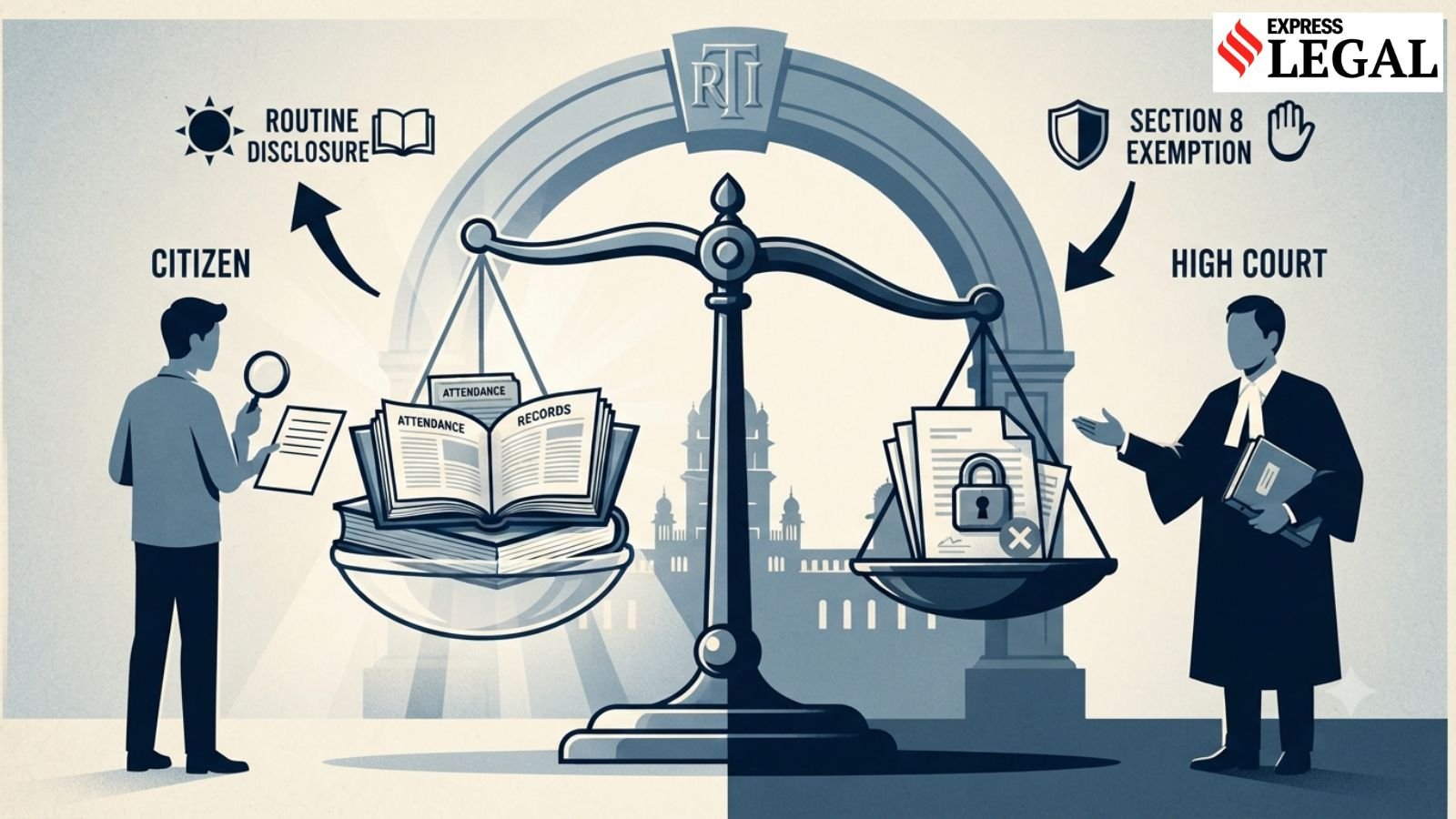
The Madras High Court has held that routine administrative information cannot be withheld under the Right to Information (RTI) Act unless it falls within the exemptions under Section 8, directing the high court registry to disclose details relating to its Party-In-Person Committee while withholding only the details of the members’ conduct.
Justice M Dhandapani was on July 27 hearing a writ petition filed by the high court registrar general challenging a 2023 order of the Tamil Nadu Information Commission which directed the high court registry to furnish information sought by an RTI applicant relating to the Party-in-Person Committee and the administrative committee of the high court.

“So long as there is no conflicting interest and the security and safety is not jeopardized, the citizens are to be provided with all the information that are available at the disposal of the public… The information cannot be denied to the Parliament or a State Legislature and, therefore, any citizen is entitled to get the said information under the provisions of the RTI Act,” the court said.
The ruling is significant because it clarifies that while confidential records such as vigilance inquiries and disciplinary matters may be exempt under the RTI Act, routine administrative information relating to the functioning of a public authority cannot usually be withheld by invoking Section 8 (exemption from disclosure of information).
The dispute arose from an RTI application filed by one Akbar Ahamed on July 28, 2021. The applicant sought details relating to the High Court of Madras (Conduct of Proceedings by Party-in-Person) Rules, 2019, including the names and designations of members of the Party-in-Person Committee, their educational qualifications, experience, achievements, field of expertise, pay scale and salary details, and the functions, responsibilities, powers and jurisdiction of the high court’s administrative committee. The application also sought the conduct details of the committee members.
 Justice M Dhandapani held that the conduct details of committee members were not liable to be disclosed as such information was not available with the high court.
The public information officer rejected the application, relying on an earlier division bench judgment of the high court. The first appellate authority upheld the rejection. The applicant then approached the Tamil Nadu Information Commission, which, by an order dated October 18, 2023, directed the high court registry to furnish the requested information and submit a compliance report. Aggrieved, the registrar general filed the present writ petition before the high court.
Comparison with earlier judgment
The registry argued that the information related to its internal administration and was exempt from disclosure under Section 8. It relied on an earlier division bench judgment that had upheld the non-disclosure of vigilance-related information concerning judicial officers.
Story continues below this ad
Justice Dhandapani, however, held that the reliance was misplaced. The earlier judgment, the court noted, dealt with vigilance inquiries, disciplinary proceedings and personal information relating to judicial officers, where disclosure could prejudice institutional functioning and invade individual privacy.
The present case, by contrast, involved information relating to the constitution of a committee, the qualifications and experience of its members, their pay details and the committee’s functions. “The information sought for by the 2nd respondent would by no stretch fall within the exemptions prescribed under Section 8 of the RTI Act,” the court held.
The court observed that several details sought by the applicant, including the qualifications and experience of committee members, were already available on the high court’s official website. “The constitution of the Committee and the composition of the members of the Committee is an administrative act, which is not a classified information that could not be parted,” it said.
In such circumstances, it added, the registry could simply inform the applicant that the information was available in the public domain. “The petitioner cannot shield itself under Section 8 to claim that the said information are exempted/classified information,” it added.
Story continues below this ad
Clarification on salary details
After the judgment was delivered on June 15, the matter was mentioned before the court, which was informed that the committee for which information had been sought comprised registrars and registry officers, and not judges as had been assumed while deciding the case.
By a correction order dated July 27, Justice Dhandapani modified the judgment and clarified that the pay scale and salary details sought related to registrars and registry officers. The court held that their salaries and allowances are matters of public record because they are paid from public funds.
“Such salary and allowances are paid from out of the amount collected from the taxpayers and the taxpayers cannot be precluded from knowing about the details of the same by shielding the same under Section 8 of the Act,” the court said. It, however, accepted the registry’s stand in respect of one category of information.
The judge held that the conduct details of committee members were not liable to be disclosed, observing that such information was not available with the high court in the manner sought by the applicant. Barring that, the applicant was held entitled to receive all the information sought under the RTI Act.
Story continues below this ad
Plea disposed of
Disposing of the writ petition, the high court directed the registrar general to provide the RTI applicant with all the information sought, except the conduct details of the committee members, within two weeks from receipt of a copy of the order.
The court also directed the registry to carry out the corrections incorporated through the July 27 order and issue a fresh copy of the judgment reflecting the clarification regarding the committee’s composition and the reasoning regarding disclosure of the salary details.