Prateek Tanmay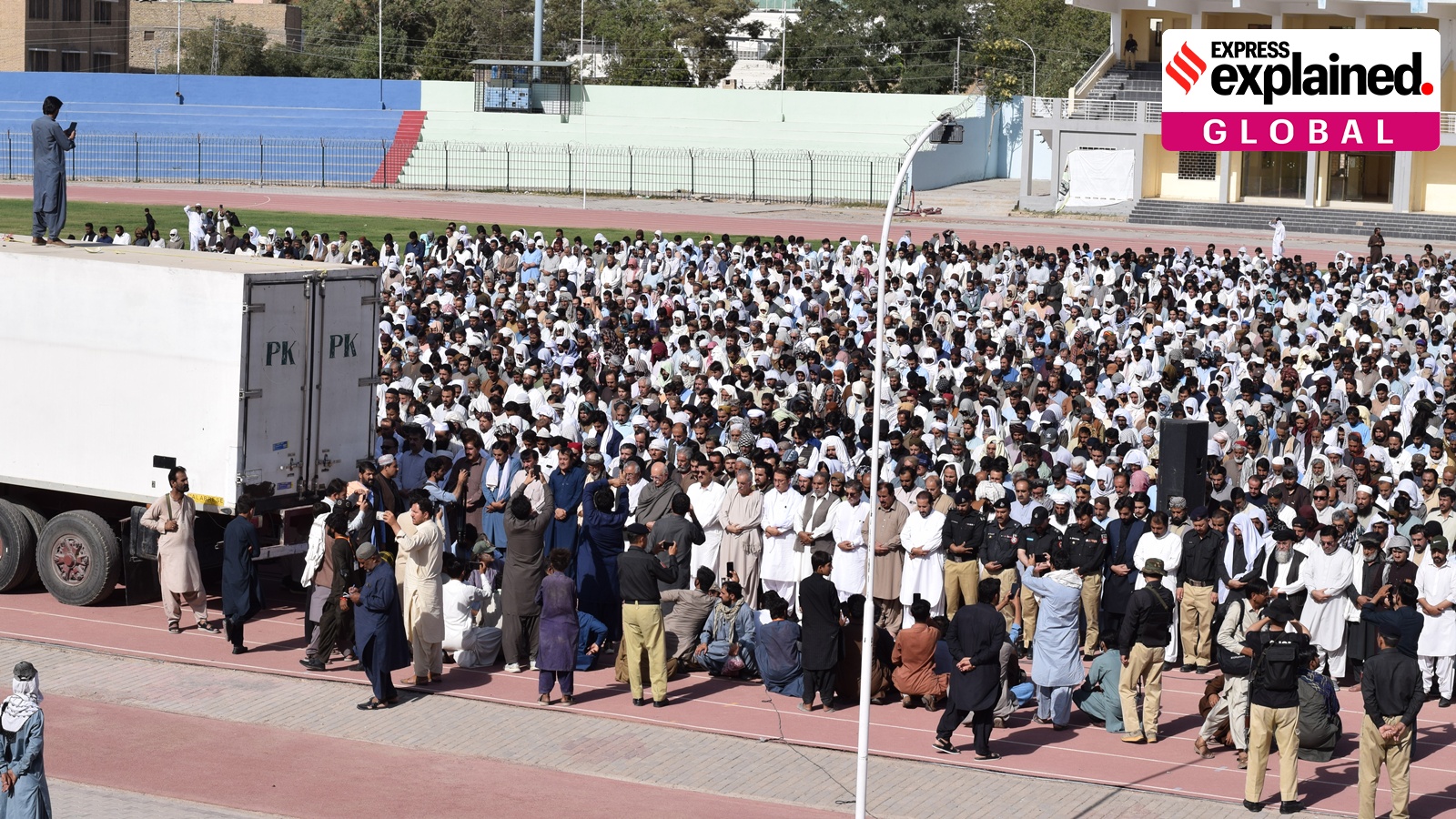
For 10 days in Pakistan recently, family members of 27 policemen killed in Balochistan sat on a protest, refusing to bury their dead till the government accepted their demands. Last week, their sit-in ended after the authorities agreed to set up a judicial commission to investigate two recent attacks — in Ziarat on July 6, in which the policemen were killed, and in Hanna Urak a day before, in which five civilians were killed — allegedly by Baloch militants.
‘Operation Shaban’ was also launched in response to the killing of the policemen, in which 129 “terrorists” have been killed since July 5, Pakistani authorities claim.

This is the latest in a long history of bloodshed, militancy, and state repression in Balochistan, where Pakistan accuses India of fomenting trouble. Bordering Iran and Afghanistan, Balochistan is not just strategically important for Pakistan, but is also its richest state in terms of natural resources. Why, then, does conflict continue to simmer here? We explain, in five points.
Partition roots of Balochistan problem
When the British left the Indian subcontinent in 1947, the princely states were given the option of joining either India or the newly created Pakistan. The present-day Balochistan was then a collection of tribal principalities. Like many other parts of the world, the British empire had divided the Baloch areas arbitrarily, transferring some to the control of the Persian empire.
In 1947, the main tribal principality here was of Kalat. The Khan of Kalat, Mir Ahmad Yar Khan, wished to remain independent. However, as the months rolled on, pressure started increasing on him to join Pakistan, as the other tribal feudatories around Kalat all acceded. Isolated and facing Pakistani military pressure, the Khan finally acceded on March 27, 1948. The disagreement over Kalat’s accession became one of the foundational grievances for Baloch nationalists, although Pakistan considers the accession final and legal.
In almost every decade of Pakistan’s life, it has faced insurgency in Balochistan. The current one, which began under Pervez Musharraf, is believed to be the fifth, triggered by the 2005 rape of a Baloch doctor by an army officer at her home on the Sui gas plant, and then the killing in 2006 of powerful local leader Akbar Bugti.
Tussle over ethnic differences, natural resources
The Baloch are an ethnically distinct community. In fact, all of Pakistan’s provinces, from Sindh to Balochistan to Khyber Pakhtunkhwa to Punjab, have distinct identities, and all three have complained, to varying degrees, of Punjabi domination.
Story continues below this ad
Balochistan is rich in reserves of copper, gold, natural gas, etc. However, it is sparsely populated, and the Baloch people say they have not been allowed to reap the fruits of their state’s natural wealth.
Some of Pakistan’s show-piece foreign projects are in Balochsitan. China has built invested heavily in the strategic Gwadar port, the crown jewel of the China Pakistan Economic Corridor (CPEC). The Saindak copper and gold mine is run by China. Last December, the Donald Trump administration announced it would invest $1.3 billion in the Reko Diq copper and gold mine.
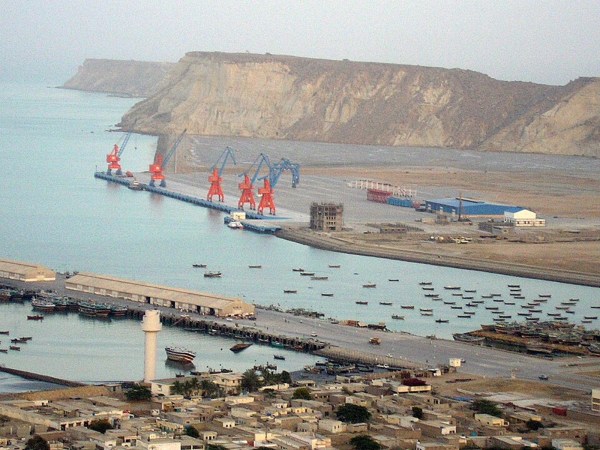 Gwadar port on the Arabian Sea, close to the Strait of Hormuz, is in Balochistan. (Photo: Wikimedia Commons)
The Baloch people have opposed the exploitation of their land to fill foreign pockets, and pointed out that even the plum jobs of engineers and managers often go to Punjabis or Sindhis. China-funded projects, and Chinese workers, have been major targets of Baloch militants.
However, Pakistan government dismisses the claims of widespread discontent in Balochistan. Ali Chishti, a defence and security expert from Pakistan, told The Indian Express, “Millions of Baloch participate in the country’s political, economic, and military institutions. The insurgency represents a small militant movement, not the will of the Baloch people. Pakistan has consistently maintained that these militant groups receive support from India, an allegation India rejects. Attempts to portray Balochistan as evidence of a failed state ignore both the facts on the ground and the continued commitment of the Pakistani state to the province’s security, development, and prosperity.”
Story continues below this ad
Baloch people’s demands
The Baloch insurgency in no way speaks in one voice. There is a section that wants an independent state of Balochistan and restores to violence for its aims. But there are many others who are happy to work within the constitutional framework in Pakistan, demanding greater autonomy and greater control over decisions that affect their region.
The discontent has evolved over the years. While there is a middle class that speaks the language of activism, petitions, and political representation, the violent organisations, such as the Baloch Liberation Army (BLA), have gained in strength. They primarily target State or Army-linked places and people, but have also killed civilians.
Then there is the fact that in Pakistan, militants and terrorists are highly trained and have access to sophisticated weaponry, because of the NATO war against terror in Afghanistan. After the Americans withdrew from Afghanistan in 2021, they left behind large quantities of advanced weapons and battle-hardened fighters.
In the past couple of years, since the Taliban came back to power in Kabul, Pakistani security forces have claimed there are signs of collaboration between the BLA and the Tehreek-e-Taliban Pakistan (TTP), or the Pakistan Taliban.
Story continues below this ad
The ‘disappeared’ people of Balochistan
A major, and very emotive, issue in Balochistan is that of disappearing people. Activists allege that over the years, some 5,000 people, picked up by security forces, have either never been found or found dead months or even years later. Last month, Maharang Baloch, a prominent activist working on the issue of disappearances, was sentenced to life imprisonment.
The state claims these ‘disappeared’ people have either joined the militancy or have left home on their own accord.
The State’s response
The Pakistan government’s response in Balochistan has usually been heavy handed, with Operation Shaban being the continuation of a long trend. Voices within Pakistan have pointed out that an insurgency that has local support cannot be rooted out through force alone.
When asked if the government was planning a political process parallel to Operation Shaban, Chishti said, “The State is always talking, but would not with foreign sponsored proxies or terrorists.”