Prateek Tanmay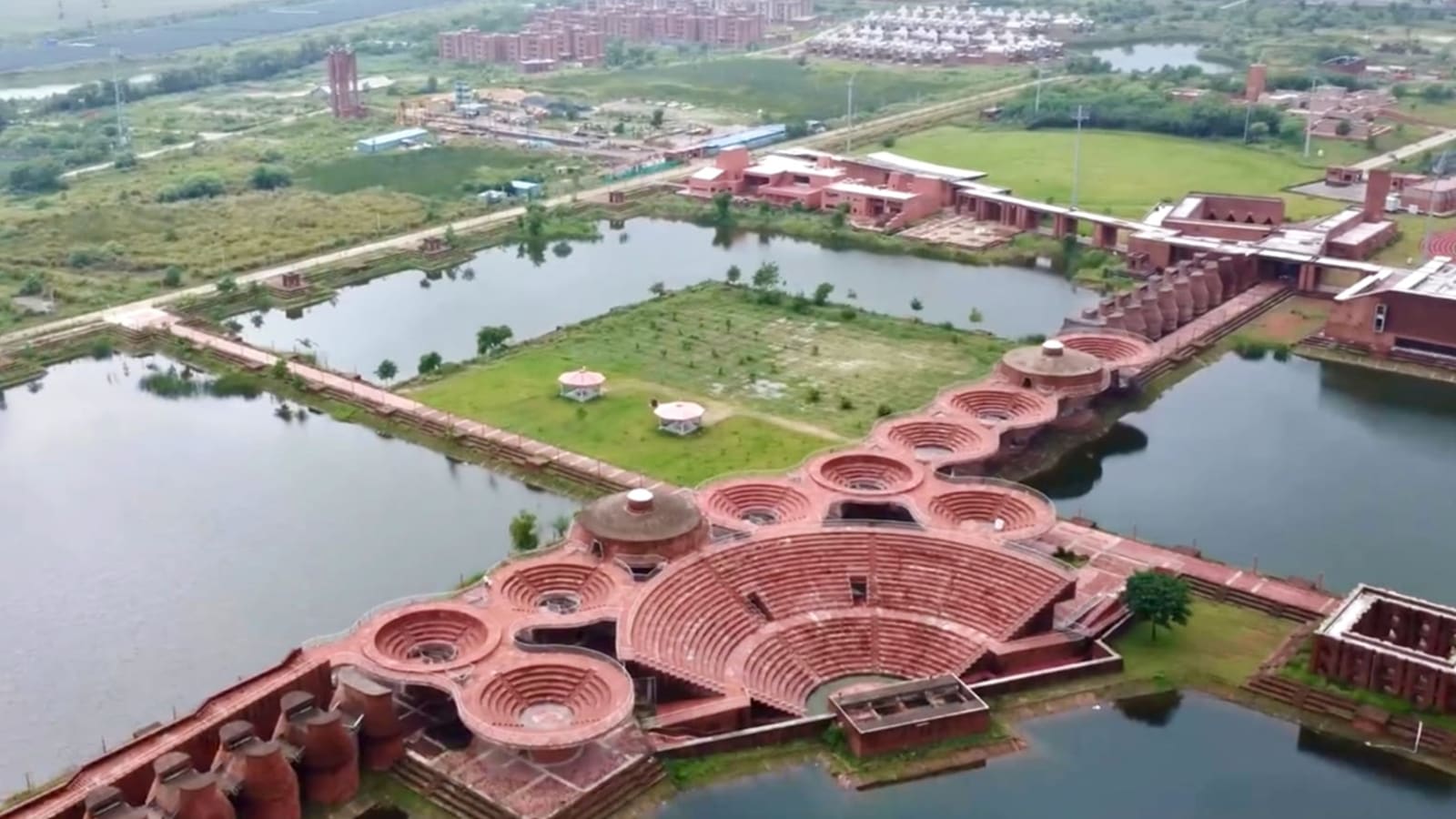
How would Lord Rama have positioned India in the wake of the Strait of Hormuz crisis? What advice would Lord Krishna have given on India’s relationships with the USA, China, and Russia? How would ancient Indian knowledge systems have addressed the current energy crisis?
These are among the questions being explored at Nalanda University, which draws students from over 30 countries, through its specialised postgraduate discipline: International Relations and Peace Studies (IRPS). Believed to be the first course of its kind, it devotes research to the epics — the Ramayana and the Mahabharata — and the Indian knowledge system to offer solutions for modern international relations and diplomacy.

According to Nalanda University Vice Chancellor Sachin Chaturvedi, the course aims at revitalising ancient Indic traditions and engaging with the texts on contemporary global concerns “through a meaningful dialogue”.
 A look at research papers shows how students are using ancient Indian systems to address current global problems.
“Of late, the university has initiated multiple intellectual and interdisciplinary academic initiatives aimed at revitalising ancient Indic traditions and engaging with the texts through a meaningful dialogue with contemporary global concerns. A number of recent student dissertations have attempted to examine themes of Indic knowledge systems in relation to present-day international relations, ethics, governance, and strategic studies. Some discussions have also reflected upon insights from the Arthaśāstra in the context of ESG (Environmental, Social, and Governance) principles and the broader Indic civilizational context,” Nalanda University Vice Chancellor Sachin Chaturvedi told The Indian Express.
A look at research papers shows how students are using ancient Indian systems to address current global problems. While one paper attempts to link classical thought with contemporary Indian foreign policy, another uses the Mahabharata to examine the importance of “soft power”.
In her paper, India’s Strategic Partnerships Through the Lens of Rāmayana Alliances, Master’s student Surabhi Rani writes that the Kishkindha Kand of the Ramayana offers a durable framework for understanding diplomacy, sovereignty, and ethical intervention.
“The alliance between Rama and Sugrīva is not simply a narrative of friendship; it is a model of asymmetric partnership shaped by Mitra-dharma, Vishwas, Rajdharma, and Dharmic realism…. The Rama-Sugriva alliance therefore becomes a powerful example of partnership without domination, influence without annexation, and leadership grounded in responsibility,” the paper says.
Story continues below this ad
It adds: “While we carry forward arguments of scholars such as Stephen Walt and Glenn Snyder on alliance formation, we also dwell at length on S. Jaishankar’s civilizational vision of India as a Vishwa Bandhu. It also builds on Ravi Dutt Bajpai’s reading of the Rāmāyaṇa as a source of strategic insight, and on broader discussions of soft power, diplomatic ethics, and Indic statecraft. These contributions together show that epics can function as analytical resources for modern international relations.”
Another IRPS researcher, Preeti Kumari, highlights Lord Krishna’s use of soft power in her paper Mahabharata: Rule-based order.
“Krishna’s philosophy mirrors the modern Just War concept of a ‘Supreme Emergency’, a term popularized by Michael Walzer to describe an imminent, existential threat to a state’s political and moral survival. Just as Krishna denied combatant protections to Karna due to his past violations of fair play (the murder of Abhimanyu and humiliation of Draupadi), modern IR (international relations) grapples with denying protections to terror networks or rogue states that use armed conflict laws as a shield while systematically violating them,” it says.
A third paper on using Indian knowledge systems to boost renewable energy has gained relevance amid the current energy crisis triggered by the US/Israel-Iran conflict. SIPS student Himanshi Gupta, in her dissertation Reframing India’s energy transition: The lens of governance through community agency, indigenous knowledge systems, and global insights, evaluates Nalanda through the synthesis of ancient ecological wisdom and contemporary sustainable architecture, reflecting applied civilizational sustainability.
Story continues below this ad
The paper says: “The discussions about Ahar-Pyne, community-managed water distribution systems, were pioneering techniques of Bihar…The Himalayan state of Himachal Pradesh occupies a critical position in India’s northern frontier system, bordering Tibet. Himalayan region demonstrates an embedded form of decentralised environmental governance, wherein community-led practices in agriculture, forestry, or water management. Himachal’s case reinforces the thesis’s central argument: community is ‘not merely a stakeholder in the energy transition but a condition of its possibility’.”
The university is considering integrating initiatives like Shastrartha (debate) more systematically into its academic framework next year.
“While Western debates are mostly about winning or losing, the Indian knowledge system has been about cumulative wisdom. Drawing on the Ramayana, Mahabharata and Indian knowledge tradition, we are offering the world a distinctly Indian framework to understand conflict, peace, and global order,” Nalanda University Vice Chancellor Sachin Chaturvedi told The Indian Express.