Prateek Tanmay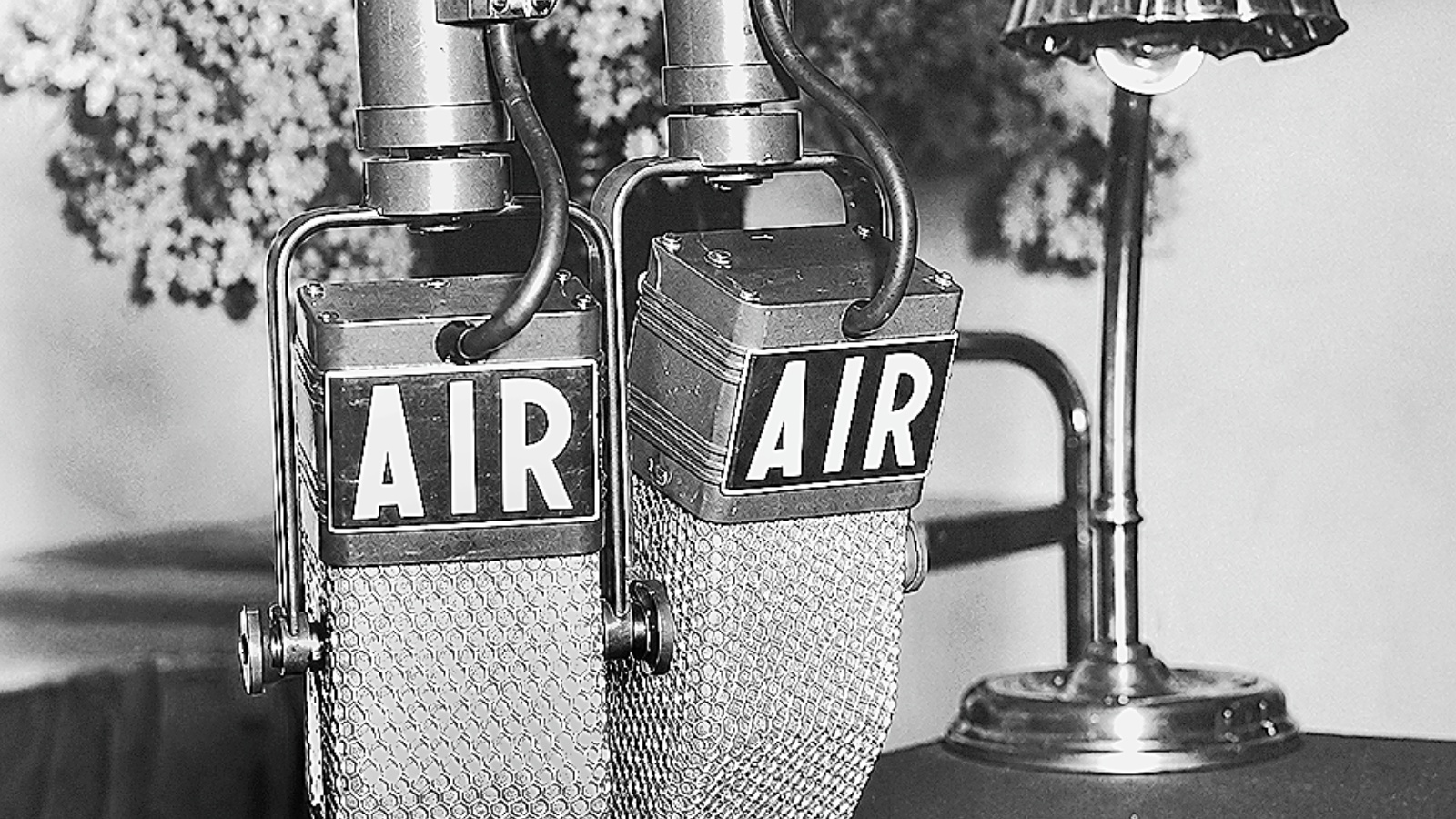
As Akashvani, the official radio broadcasting wing of Prasar Bharati under the Ministry of Information and Broadcasting, celebrates its 90 years, it should not be forgotten that it was born under a different name: All India Radio.
Akashvani (meaning voice from the sky), the delightful term adapted from Rabindranath Tagore’s eponymous poem, entered the official vocabulary only two decades later, in 1956, and then coexisted with All India Radio. Until 2023. When an internal order severed ties with the original name and made it mandatory for the institution to be called only by the new official name, Akashvani. In a satellite message, a section of the Prasar Bharati Act, 1990 (which came into force in 1997), was enforced, defining Akashvani as “the offices, stations and other establishments by whatever name called, which immediately before the appointed day formed part of or were under the Director General, All India Radio of the Union Ministry of Information and Broadcasting.” It was described as implementing an existing statutory position rather than introducing a new policy. However, the execution strangely occurred more than two decades later.

Celebrating 90 years of Akashvani, then, is technically inaccurate.
The institution may have been called only Akashvani since 2023, but what has turned 90 is what generations of Indians have known as All India Radio.
The distinction between the two names is more than just linguistic. It, perhaps, has little to do with affection for the poetry of Tagore, the Nobel laureate who was extremely critical of the extreme nationalism that later became the core philosophy of the RSS, the ideological mentor of the BJP. The change in nomenclature likely reflects the Union government’s Hindi-first approach, which has often mistaken some people’s linguistic preferences for national identity. In a multilingual nation. There is also reliance on explaining the term All India Radio as colonial baggage, similar to the justification used for promoting ‘Bharat’ instead of India.
The 2023 change puzzled many because, for the nation, both names coexisted. While Akashvani was widely used in Indian-language broadcasts, in English bulletins and shows, one always heard, ‘This is All India Radio’. AIR has also been the institution’s global identity.
Not happy with the change, Tamil Nadu MP T R Balu had also written to the Centre, calling the name change “unwarranted” and stating that Tamil Nadu always used the term ‘Vaanoli’ instead of Akashvani.
One individual instrumental in bringing the name AIR and its identity to the fore was Lionel Fielden, the BBC producer recruited in 1935 as undivided India’s first Controller of Broadcasting, and who had the difficult task of coordinating broadcasting development in India. Unhappy with the long and clunky Indian State Broadcasting Service (ISBS), he wanted something simpler. For the change, he had to get past the then Viceroy, Lord Linlithgow. Fielden wrote in his book, The Natural Bent (1960), that he cornered Linlithgow after a State dinner, asking for his advice — an opening the man could not ignore. Complaining that the Indian State Broadcasting Service “was a clumsy title” and that “ ‘broadcasting’ was difficult for many Indians to pronounce,” Fielden requested the Viceroy’s help in suggesting a better alternative. “ ‘Indian State’, I said, was a term which, as he well knew, hardly fitted into the 1935 Act. It should be something general. He rose beautifully to the bait. ‘All India’? I expressed my astonishment and admiration… After some thought, he suggested ‘Radio’? Splendid, I said — and what beautiful initials. The Viceroy concluded that he had invented it, and there was no more trouble…Thus All India Radio (AIR) was born,” wrote Fielden.
This was a landmark moment that gave a fledgling broadcasting network a distinct character, making it a cultural anchor of sorts, one that people in undivided British India identified with. The name went on to become synonymous with public broadcasting in the Subcontinent. After this, Delhi, Lahore and Dhaka, among others, had their All India Radio stations. Independence would come almost a decade later, in the wake of a bloody Partition and the station names in Pakistan and East Bengal (later East Pakistan) were altered. All India Radio, which would always open with Walter Kauffman’s signature tune on the violin played by Mehli Mehta (conductor Zubin Mehta’s father), carried official announcements, voices of leaders and film songs that became a soundtrack to our lives. It thrilled us with vivid cricket commentary, and regaled us with classical music recitals — strands that brought together millions who could not read a newspaper, and in the process, shaped the country’s cultural imagination.
Around the time Fielden came to India, a private radio station — Radio Mysore — began in 1935 at a college professor’s residence. It started using the name Akashvani in 1942 when writer Narayana Kasturi began managing it; Kasturi’s mother is said to have come up with the name. One isn’t sure if she had read the Tagore poem too. Akashvani, informally in use in regional broadcasts, was officially adopted two decades later.
“What’s in a name?” asked Shakespeare. “That which we call a rose, by any other name would smell as sweet”. One can agree that a name change may not change the core truth of an organisation. And one, possibly, cannot dispute the elegance of the word Akashvani. But at the same time one cannot dismiss ‘All India Radio’ as a vestige of the Empire. The institution outgrew that long ago, becoming the voice of an independent nation by unifying disconnected regions and princely states post-Independence. But those in charge at Prasar Bharati also need to be precise when discussing their own history and organising celebrations, marathons and competitions as is being done this year.
All India Radio is as Indian as Akashvani. For decades, it held multiple stories and identities. Honouring one should not come at the cost of completely omitting the other.
The writer is a Senior Assistant Editor