Prateek Tanmay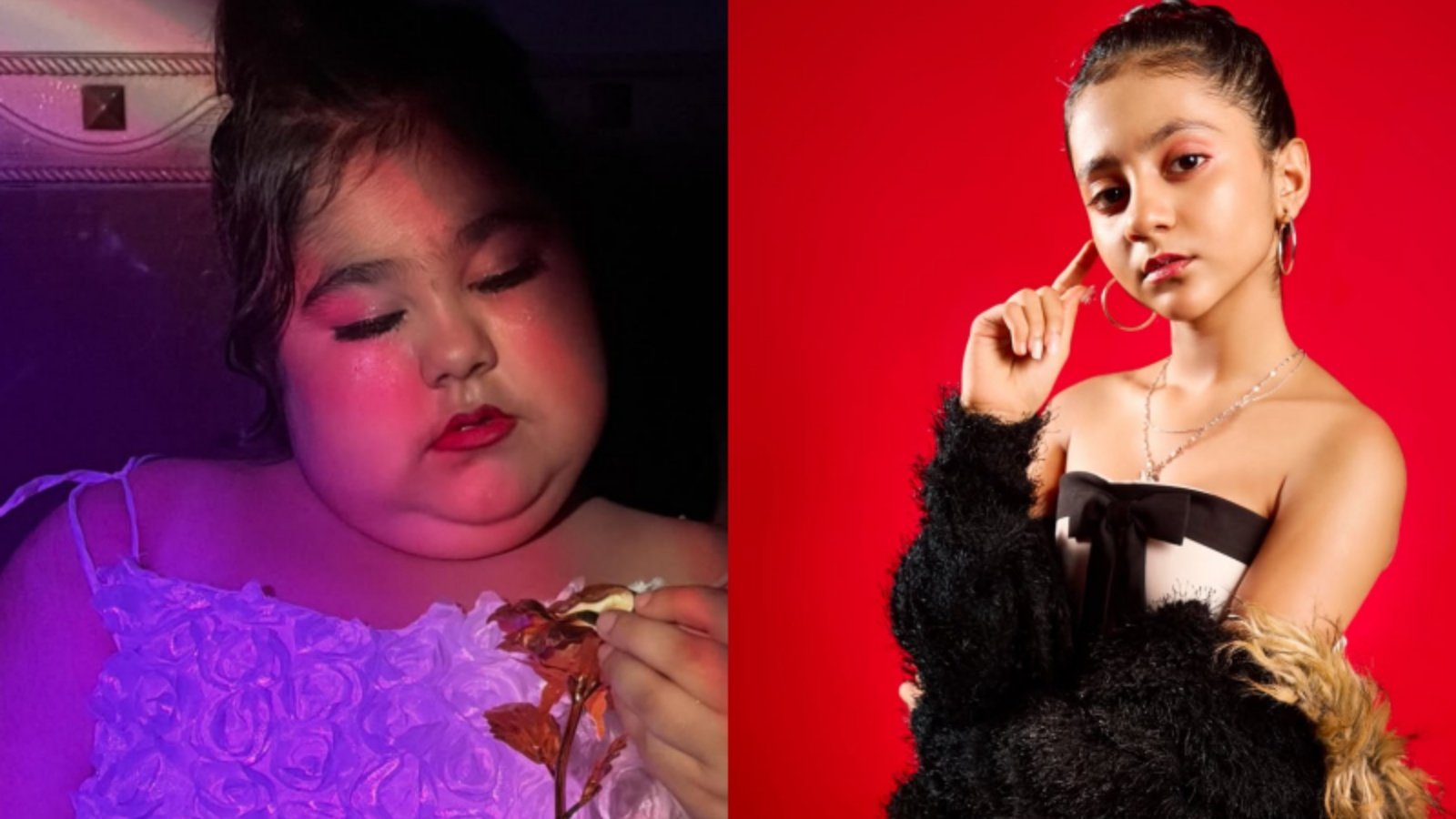
When filmmaker Farah Khan recently revealed that she does not allow her daughters to wear makeup because they are still underage, her remark resonated with many parents. Stressing that there is an appropriate age for everything, she reflected a concern shared by countless families navigating a world where children are increasingly exposed to beauty trends.
Yet, that parental instinct contrasts with a rapidly evolving cosmetics industry. Today, several brands market “non-toxic”, “clean”, and “kids-safe” makeup products specifically for children between the ages of six and sixteen. The influence of social media has only accelerated this shift. Platforms are flooded with GRWM (Get Ready With Me) videos, skincare hauls, and beauty tutorials created by influencers as young as 10.

DISCLAIMER: This article is based on information from the public domain and/or the experts we spoke to.
It takes just one scroll to find a pre-teen demonstrating a three-step skincare routine or recommending her favourite “skin-friendly” lip tint or moisturiser. What appears to be harmless experimentation is now raising concern among dermatologists, who say they are witnessing a growing trend that has prompted the use of a new term: cosmeticorexia.
The term describes an unhealthy obsession with achieving “perfect” or “flawless” skin at a very young age, often resulting in the unnecessary and excessive use of skincare and cosmetic products.
“Many dermatologists are seeing a lot more children and teenagers, especially those between 10 and 16 years of age, coming in for skincare advice,” said Dr Bhawuk Dhir, Consultant Dermatologist, PSRI Hospital, Delhi.
According to Dr Dhir, clinic visits are no longer just about medical skin conditions. “Many adolescents, particularly girls, are concerned about pores, skin texture, pigmentation and even skincare routines they have seen on social media. While acne continues to be the most common medical complaint, cosmetic anxiety among young patients has increased significantly,” he explained.
Story continues below this ad
Admiring mom
But what exactly is making children so conscious about their appearance? For 12-year-old Guneet Banga, it wasn’t anxiety that sparked her interest in makeup. It was admiration.
Like many children who watch their parents get ready for family functions, Guneet was fascinated by the process. “My mom used to do her makeup whenever there were family gatherings. I’d watch every step carefully, and then one day I thought, ‘Why not try it myself?’” she recalled.
Her mother laughed when she first caught her experimenting with makeup but gently explained that those products were designed for adults and could damage a child’s delicate skin.
“I thought, ‘Okay, I won’t do it again.’ But after about five months, I tried it again,” Guneet said, laughing. That moment, perhaps unknowingly, marked the beginning of her fascination with makeup.
Story continues below this ad
A similar experience unfolded in 12-year-old Aaradhya Sharma’s life. “My mom has always loved doing my makeup. Ever since I was little, she would do my makeup, and gradually I started enjoying it too. Around the age of 10 or 11, I became more interested in taking care of my skin. That’s when I started following a skincare routine,” she said.
Unlike Guneet, however, Aaradhya’s skincare journey stemmed from a genuine skin concern. She developed white patches on her face due to excessive dryness.
“That’s when I became more conscious about my skin. My mom told me I should start taking care of it because the white spots had become visible. I didn’t like how they looked either, so we started following a proper skincare routine,” she explained.
The desire to “take care” of one’s skin can slowly transform into the pursuit of flawless skin—a distinction that concerns dermatologists today. “This unhealthy interest in beauty and skincare, particularly among tweens and teenagers, is largely a byproduct of social media, beauty influencers, and celebrity culture. The clearest examples are viral GRWM videos and skincare hauls, which create the impression that flawless skin requires multiple products. In reality, young skin is naturally healthy,” said Dr Dhir.
When makeup is a professional requirement
Not every child uses makeup because of social media. For child artiste Princy Prajapati, makeup is an occupational necessity.
Story continues below this ad
“During shoots, there are times when the director asks for makeup, especially for close-up shots. We can’t really refuse because it is part of the profession. But after every shoot, we make sure the makeup is removed properly, the skin is cleansed thoroughly, and she follows her skincare routine,” her mother, Sushmita Prajapati, explained.
Interestingly, despite their different experiences, all three girls have one thing in common: they keep their everyday skincare relatively simple.
For Guneet, skincare begins after makeup comes off. “Wash your face properly, apply a good moisturiser and clean your face well. You can also apply a little oil or gulab jal (rose water) if needed. Then it doesn’t really cause much damage,” she said.
Aaradhya also believes in sticking to the basics. She uses a mild moisturiser without harsh ingredients, reapplies it after bathing, and moisturises again after returning from school.
Story continues below this ad
“When I come back from school, there’s usually tanning, so I wash my face again, apply a serum and then moisturiser. Before sleeping, I moisturise once more,” she said.
Among all the products she uses, moisturiser remains the one she believes benefits her skin the most. Princy follows an equally simple routine. “We should wash our face every day, cleanse it properly and, if a dermatologist recommends it, children can use a suitable moisturiser,” she said. The 11-year-old also recommends washing the face twice a day, applying sunscreen regularly, and staying hydrated.
What children’s skin actually needs
According to Dr Dhir, children’s skin is biologically different from adult skin. “It is thinner, more sensitive and has a naturally stronger skin barrier than ageing adult skin. Excessive use of powerful active ingredients like retinol, alpha hydroxy acids (AHAs), beta hydroxy acids (BHAs) and high-strength vitamin C can lead to redness, dryness, irritation, peeling and damage to the skin barrier,” he explained.
Although some of these ingredients may be prescribed for medical conditions such as acne, dermatologists caution against their routine use on healthy young skin without professional supervision.
Instead, Dr Dhir recommends keeping skincare uncomplicated.
“Most school-going children need only a gentle cleanser, a fragrance-free moisturiser if required and a broad-spectrum sunscreen with SPF 30 or higher during the day. Teenagers with acne or oily skin may require dermatologist-prescribed acne treatment, but most children do not need specialised skincare products. Much of the ‘kids-safe skincare’ market is driven by marketing rather than medical necessity.”
Story continues below this ad
He also advises children and teenagers to avoid anti-ageing products containing retinol or retinoids, high concentrations of AHAs and BHAs, harsh exfoliating scrubs, chemical peels, hydroquinone, unnecessary brightening products, and heavily fragranced formulations.
“Layering multiple active ingredients can compromise the skin barrier. Ideally, treatment-based skincare products should only be used after consulting a dermatologist,” he emphasised.
Even occasional makeup can cause problems
Interestingly, all three girls use only dermatologist-recommended face washes, moisturisers, and sunscreen as part of their routine. The concern arises during occasional makeup use.
Aaradhya experienced this firsthand. “I once applied foundation for a wedding. After removing it, my face became slightly swollen, and I developed two or three pimples. After that, I stopped using foundation,” she said.
Story continues below this ad
Guneet’s mother Jasmeet Banga says her daughter rarely wears heavy makeup. “She usually doesn’t use foundation. Most of the time it’s just concealer, mascara, and a few basic products. Using them once or twice a week is generally fine,” she said.
Princy, despite working in front of the camera, keeps makeup minimal. “Most of the time I just use baby powder and lip gloss or lip balm,” she said enthusiastically, adding that lipstick, blush, and highlighter remain her favourite makeup products.
The girls also prefer products they believe are gentle on their skin, including basic moisturisers, sunscreen, lip balms, and baby-care products.
According to Dr Dhir, occasional makeup is not necessarily harmful if children use non-comedogenic (unlikely to clog pores), skin-friendly products, remove makeup thoroughly after use, moisturise adequately, and avoid sleeping with makeup.
Story continues below this ad
“If irritation, allergies or acne develop because of repeated makeup use, children should consult a dermatologist instead of experimenting with multiple skincare products,” he advised.
 Aaradhya Sharma runs a lifestyle and fashion content creator (Photo: Instagram/princessaaradhya03)
The psychological cost
Today’s children are growing up in an environment where beauty ideals are increasingly shaped by algorithms, influencers, and constant online validation. Guneet knows this better than most.
Living with nephrotic syndrome has presented its own set of emotional challenges. Content creation eventually became an outlet where she found confidence and self-expression.
“If I had stopped her from touching makeup that day, I would never have known that this was her talent,” her mother said.
However, according to Radhika Mehendale Bhosale, a counselling psychologist and arts-based therapy practitioner, constant exposure to “perfect skin” content encourages unhealthy comparisons at a stage when children’s identities are still developing.
“Adolescence is a formative period. Views, habits, preferences, and self-image develop during these years, and unhealthy beauty practices adopted now may continue into adulthood. Unrealistic beauty standards can trigger body-image concerns, emotional distress, and even eating disorders. More importantly, they interfere with the healthy process of self-acceptance, making children feel inadequate simply because they don’t resemble what they see online,” she said.
DISCLAIMER: This article is based on information from the public domain and/or the experts we spoke to.