Prateek Tanmay
The revelation had come after weeks of turmoil — the mother discovering her daughter’s pregnancy, followed by secretive hospital visits for a discreet abortion. That day, 27 weeks pregnant, the girl and her mother were on their way to Mumbai’s state-run JJ Hospital. What followed were a series of delays, shame and court-ordered relief for termination of her pregnancy — and the trauma of delivering a stillborn foetus.

The girl’s story, one of the many marked in court petitions and police logs, spotlight the fraught terrain of medical termination of pregnancy (MTP), where a woman’s trauma collides with legal timelines, social stigma and medical risks. Over the years, High Courts across the country and the Supreme Court have been witnessing a steady inflow of cases seeking judicial intervention by women for abortions in pregnancies that may have crossed the statutory limit of 24 weeks.
These rulings, often ad hoc and based on the peculiarities of individual cases, have triggered debates on the right to life, often pitting the unborn child against the woman’s rights.
At the heart of the latest debate is a Supreme Court ruling in April, which allowed a minor rape survivor to terminate a 30-week pregnancy, prioritising her “reproductive autonomy” over foetal viability.
The government and the doctors at India’s premier hospital, the All India Institute of Medical Sciences (AIIMS), challenged the ruling multiple times, arguing that since there were no anomalies in the foetus and the option of adoption could be exercised, there was no need for an MTP of an advanced pregnancy.
The apex court countered that forcing a girl — especially a minor — to carry an unwanted pregnancy to term inflicts deeper trauma, regardless of consent debates or criminal complaints. “This is a case of child rape. The victim will have a lifelong scar and trauma. It is now a fight between the foetus and the child. The child must survive, and she must have a dignified life…,” Chief Justice of India Surya Kant observed on April 30.
Story continues below this ad
Despite the court’s firm rejection of the government’s plea, doctors at AIIMS and the government eventually counselled the parents to allow the minor to deliver the foetus.
The journey of many of these women tells the tale of why they choose to knock on the doors of justice at the highest levels, despite insurmountable odds and knowing that any relief from the court will be a pyrrhic victory.
This, despite the fact that in India, reproductive autonomy — the right to decide if, when, with whom, and how to have children — is a fundamental right. The Supreme Court has in multiple judgments recognised that the right to life and liberty under Article 21 of the Constitution includes the right to reproductive autonomy — the right to make “reproductive choices … to procreate as well as to abstain from procreating.”
In February 2026, allowing the termination of a 30-week pregnancy of a woman who was a minor when she conceived, Justice B V Nagarathna of the Supreme Court said, “If the interest of the mother is to be taken note of, then her reproductive autonomy must be given sufficient emphasis. The Court cannot compel any woman, much less a minor child, to complete her pregnancy if she is otherwise not intending to do so…”
Story continues below this ad
The law and the redlines
Weeks before the 13-year-old from Konkan and her mother walked into the teeming corridors of JJ Hospital, they had done everything they could to arrange for a discreet abortion for the girl, the family told The Indian Express. The minor’s mother even planned to take her to Gujarat after learning that an unqualified doctor facilitated such abortions. She spent over a week searching for the quack, but nothing worked and someone suggested Mumbai. The mother was worried about the stigma they would face in a government hospital but by then, they were desperate — the girl was nearly 27 weeks pregnant, three weeks above the limit set by law for minors and victims of rape.
Finally, the mother and daughter made the journey to JJ Hospital.
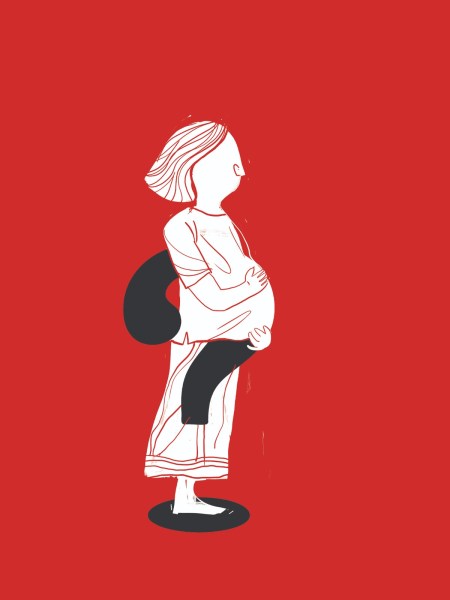 Given the uneven interpretation of the law in many of these rulings, what shapes a woman’s agency and reproductive autonomy are often factors far beyond her control — the opinions of doctors, government lawyers, judges, society.
The law on abortion in India stems from the colonial-era framework for punishing “voluntary miscarriage”. The Bharatiya Nyaya Sanhita, the penal code that replaced the colonial-era IPC in 2024, also criminalises voluntarily causing miscarriage — even when the miscarriage is with the pregnant woman’s consent, except when the miscarriage is caused to save the woman’s life.
The Medical Termination of Pregnancy (MTP) Act, however, creates broader statutory exceptions, permitting abortion in specified circumstances.
Story continues below this ad
Experts point to the language in which the law is framed to say that it addresses the medical fraternity, not the reproductive autonomy of the woman, when it tells doctors when they can carry out an MTP.
According to the MTP Act,
- a doctor can perform an MTP procedure for pregnancies up to 20 weeks. Yet, women often endure significant social and legal barriers, with medical practitioners routinely requiring spousal or parental consent and extensive paperwork.
- For pregnancies between 20-24 weeks, MTP requires the opinion of two doctors and can only be done in certain cases — for survivors of sexual assault or rape or incest; minors; when there is a change of marital status during the ongoing pregnancy (widowhood and divorce); among others.
But even for women who qualify under this provision, this often means having to endure lengthy medical evaluations, delays in securing doctors’ approvals, and, in many cases, the uncertainty and trauma of approaching courts once the pregnancy advances further.
The lawyer of the minor from Konkan told The Indian Express that in her case, the appointment of para-legal volunteers to assist the victim with the paperwork and other procedures at the hospital, as is required by law, was not done, leading to unnecessary anxiety and chaos for the victim and her mother, who were already in a “vulnerable and distressed state”, and caused delay in the process.
Story continues below this ad
- Beyond 24 weeks, a pregnant woman’s only option is to move the courts. High Courts or the Supreme Court usually direct a medical board to be set up by the state government to determine whether the termination of pregnancy is feasible, after assessing any foetal abnormality or whether the pregnancy poses a risk to the woman’s life, physical or mental health. Based on the medical assessment, courts make a determination to allow or disallow an MTP.
Back in JJ Hospital, the minor and her mother learned about the procedure to terminate the pregnancy. The family contacted a lawyer, referred by the doctors, who helped them approach the Bombay High Court. The court, after two hearings, ordered an abortion. The MTP was carried out, and the child was stillborn.
However, the family’s journey was one of agonising delays that left the minor in physical pain and the weight of whispers and shame. The mother said that after the court intervention, living in the same village was impossible, and they had to move to a chawl in a nearby town.
Walking through lawyer’s door
The decision to opt for an MTP is complicated and vexing. A minor girl who did not understand what was happening to her body; an unmarried woman who kept the pregnancy hidden from her family, fearing she would be thrown out of her home; or even a married woman, realising she cannot continue her second pregnancy when she has not fully dealt with postpartum depression from the first childbirth. This pattern repeats in petitions to various courts by women or their family members.
By the time most of these women walk through a lawyer’s door, they are in their sixth or seventh month of pregnancy. Every additional week of delay means a harder and riskier procedure (in the event of the court ruling in the woman’s favour). In remote or tribal districts, geography and social factors compound the delays.
Story continues below this ad
In Thane district’s tribal region, a 15-year-old, the daughter of brick kiln workers, faced another battle. Pregnant for 30 weeks after being sexually assaulted by the owner of the kiln, she was admitted to a hospital in Thane as the family couldn’t afford the travel to Mumbai’s JJ Hospital, which is usually where the High Court sets up the medical board for MTP cases.
The Investigating Officer (IO) in the case says the family’s financial and emotional condition was too precarious for them to seek legal help, and they had to be counselled for the MTP. “The girl was not able to understand the ordeal she was going through. After the complaint was filed, the parents left for work. They were daily wagers and had other children to look after. So we put the child up at the government hostel for three months. In such cases, the court says the IO is the guardian. However, the consent of the parents was required for an MTP. We had to counsel them to explain how MTP was important for her health,” the officer said.
The medical board that examined the girl found a strong possibility of a live birth even after the MTP procedure, given the advanced stage of pregnancy. There was also the possibility of long-term neurological complications in the newborn, they said.
The court, therefore, did not find it fit to terminate the victim’s pregnancy and ordered that, after full-term delivery, adequate measures can be adopted with the consent of the victim and her parents for taking care of the newborn.
Story continues below this ad
The petitioner then approached the Supreme Court, which did not find any infirmity with the High Court order.
The petitioner’s lawyer finally asked the court that they be allowed to move the High Court again to address the issue of safe delivery with the State’s aid in a neutral surrounding since the family was facing “an unpleasant social situation in the locality where they reside”. After the birth, the child was sent for adoption.
Advocate Ashley Cusher, who appears frequently in MTP cases, says lawyers typically charge only filing fees, ranging from Rs 5,000 to Rs 20,000 from victims, yet the stigma of moving court forces many women to get rid of the pregnancy through discreet, and often risky, means. “They approach unqualified persons for abortions, spending Rs 50,000 to Rs 1 lakh. However, they do not realise it can be fatal,” he said.
Foeticide vs agency
While in the cases of minors and sexual assault survivors, courts and lawyers cite legal precedent to argue for MTP, the fate of women who have other personal reasons for seeking an abortion can depend on the whim and views of individual judges and benches.
Story continues below this ad
In 2022, for instance, a Delhi High Court bench denied abortion for a 25-year-old woman from Manipur who was 23 weeks pregnant. She was in a consensual relationship, but with her partner refusing to marry her, she wanted to terminate her pregnancy.
Here, the bench took a conservative position, saying, “We will not permit you to kill the child; 23 weeks are over. The child will be in the womb for how many weeks for a normal delivery? Hardly how many weeks are left? Give the child to somebody in adoption. Why are you killing the child?”
The law allows a change in marital status as a ground for abortion for pregnancies between 20-24 weeks, but a live-in relationship short of marriage did not qualify for the exemption.
When women seek late-stage abortions, law officers of the Centre, judges and the medical fraternity have at times suggested an alternative: carrying the foetus to term and placing the infant for adoption.
However, legal experts argue this ‘option’ misunderstands the emotional weight involved. “The trauma of childbirth and having to live with that knowledge cannot be pitched as an alternative to the anonymity of the abortion process,” said senior advocate Colin Gonsalves. The distinction, he says, is that while an abortion allows a woman to move on with her life, giving up a child introduces an entirely different burden: a lasting uncertainty about the child’s fate and future, one that does not fade with time.
Yet, in a number of recent instances, the Centre and AIIMS have advocated for carrying the foetus to full term, followed by an adoption. It’s a foetus-centric position that’s usually unsympathetic to the petitioner.
In July 2025, when the Delhi High Court allowed a 16-year-old minor rape survivor to undergo an MTP, AIIMS moved an appeal arguing that allowing the termination of a pregnancy of a minor rape survivor at over 27 weeks would be “akin to foeticide”. After a division bench of the court “suggested” to the victim’s mother to consider the Centre’s stand, it was agreed that the minor shall carry the pregnancy to full term.
In 2023, when a married woman sought a late-stage abortion on the grounds of her mental health, the Centre advised her to proceed with a preterm delivery and said the state would manage adoption and long-term care. In this case, when the Supreme Court allowed termination despite objections from AIIMS, the doctors came back seeking a “specific direction” to “stop foetal heartbeat”.
Although the question by AIIMS was framed as an ethical conundrum, the procedure for stopping foetal heartbeat is the standard method for terminating pregnancies in advanced stages in India. A 2017 set of guidelines by the Ministry of Health and Family Welfare recommends “2-3 ml of strong (15%) potassium chloride injection in the foetal heart prior to termination” as the standard operating procedure.
Given the uneven interpretation of the law in many of these rulings, what shapes a woman’s agency and reproductive autonomy are often factors far beyond her control — the opinions of doctors, government lawyers, judges, society.