Prateek Tanmay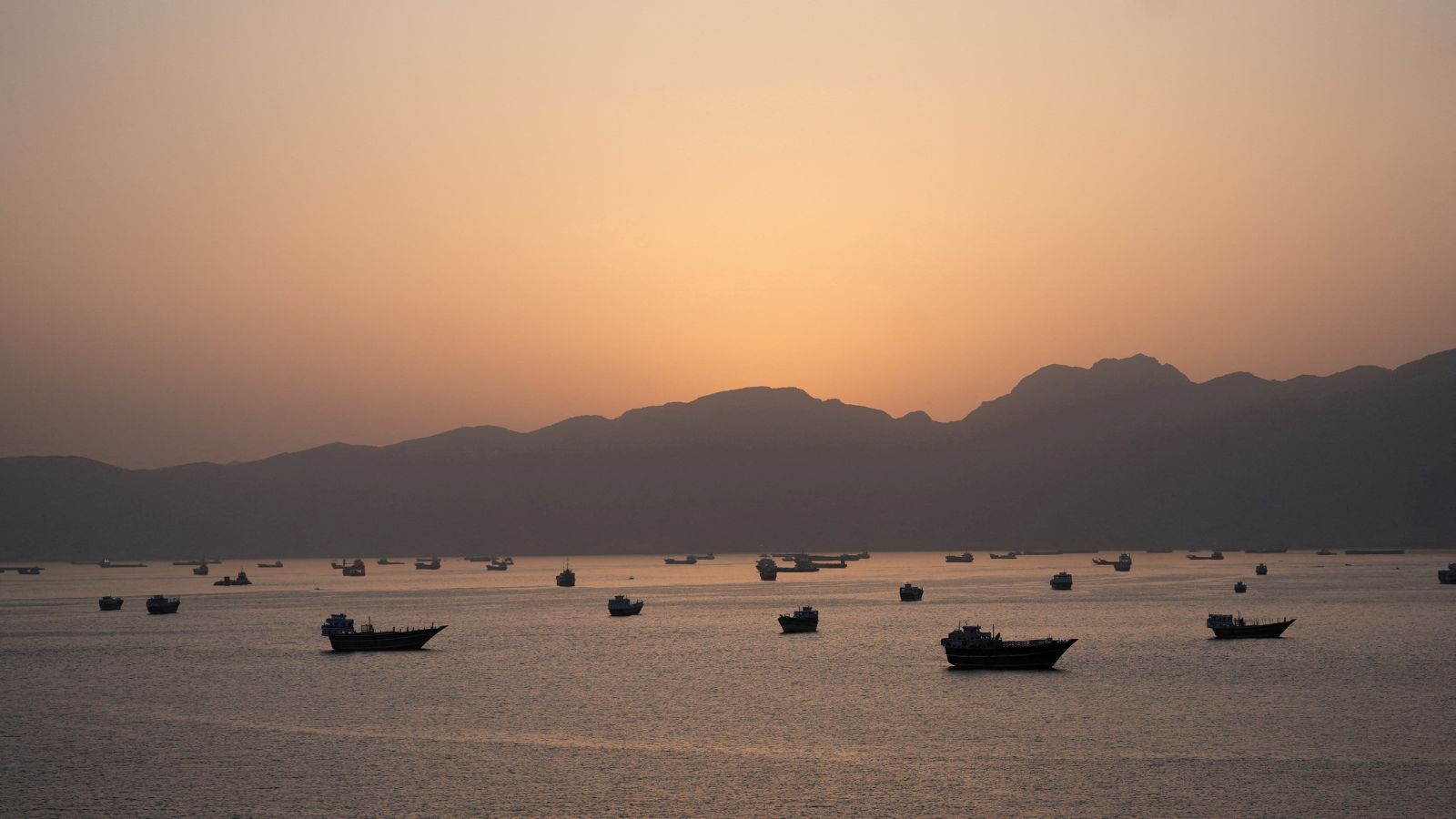
As Washington finished celebrating America’s 250th Independence Day, millions in Tehran, defying predictions, filed past their slain Supreme Leader’s remains to pay homage. The Strait of Hormuz, locked in a volatile “strategic pause”, has now erupted in a renewed spasm of extreme violence. The tension and uncertainty that have become inherent in the Persian Gulf vividly illustrate how geography can be weaponised to hold the global economy and world peace to ransom.
Violence had returned on June 25, when Iran attacked a Singapore-flagged merchant vessel that failed to comply with its prescribed routeing instructions. This was followed by a brief exchange of air and missile strikes with US forces, and a nominal pause in hostilities. The pause was short-lived because each interdiction by Iran of what it considered “errant” merchantmen provoked a retaliatory US strike.

The Islamabad Memorandum of Understanding (MoU), signed on June 17, was intended to establish a 60-day provisional ceasefire between the US-Israel coalition and Iran. As many feared, the shaky agreement began to crumble soon after its signing under the weight of conflicting interpretations and rigid positions adopted by all parties.
On July 8, shortly after President Donald Trump declared the MoU “dead”, US Central Command announced on social media that “US forces completed a new round of offensive strikes against Iran, hitting over 80 targets… as an immediate response to Iran’s latest attacks on vessels transiting the Strait of Hormuz”. This is a dismaying indication that both trigger-happy nations are willing to risk the complete collapse of this fragile agreement.
At the heart of the discord lies Article 5 of the MoU, which mandates that Iran use its “best efforts” to ensure the safe passage of commercial vessels through the Strait. Tehran views the MoU as recognition of its authority to regulate traffic within its territorial waters, while Washington rejects this, insisting the Strait must be governed by the principles of free “transit passage” guaranteed by the UN Convention on the Law of the Sea.
Israel had distanced itself from the MoU, maintaining that the ceasefire did not constrain its military operations against Hezbollah, and its forces continued to wreak death and destruction well inside Lebanon. Given that the deeper roots of this whole conflict lie in Tel Aviv and in Israel’s underlying aims of eliminating Iran’s military and nuclear capabilities as well as its top leadership, Iran’s possible response remains an imponderable of intense concern to the world.
For Iran, engaged in a grossly unequal conflict in which it has suffered tremendous devastation, accompanied by extreme economic hardship due to prolonged sanctions, the Strait is the final strategic card left for it to play. A huge chasm persists between Iran’s demand for security guarantees and economic relief, and the US stipulations in respect of uranium enrichment by Iran and freedom of navigation. Unless mediators like Pakistan and Qatar can hammer out yet another modus vivendi, the Islamabad peace process may have breathed its last and the region risks sliding back into an open-ended crisis.
These events show how quickly rising tensions can turn maritime chokepoints into geopolitical flashpoints, disrupting shipping lanes and global supply chains. As interstate competition grows, the ability to threaten these critical routes for energy, trade, and commerce undermines economic stability and highlights why a rules-based international order must be urgently restored.
Closer to home, parallels are being drawn between Hormuz and the Andaman and Nicobar Islands, situated at the mouth of the Malacca Strait, as a fulcrum of naval dominance in India’s eastern waters. Coincidentally, a mega project that envisages a deepwater port, an international airport and a township on Great Nicobar Island — a mere 90 miles from the Indonesian port of Sabang — is awaiting final government approval. Proponents of this project claim that apart from its economic benefits, the project would bolster India’s regional security posture and act as a deterrent for China’s maritime ambitions in the Indian Ocean region.
While the absence of military fortification of the Andaman and Nicobar Command has been a long-overdue lacuna, equating India’s potential leverage over Malacca with Iran’s tight grip on Hormuz could be misleading. Whereas the Strait of Hormuz is a short passage, dominated by a narrow bottleneck between Iran and Oman, the Strait of Malacca is a 1,100-kilometre-long transit corridor, running between Indonesia, Malaysia, and Singapore, which brook no external interference. Since Hormuz constitutes the Persian Gulf’s sole exit, its closure means total maritime isolation of the littoral states. In the case of Malacca, there are alternative (albeit much longer) routes available via the Sunda, Lombok and Ombai-Wetar Straits, connecting the Pacific and Indian Oceans.
Given the vast ocean areas involved, interdiction or interference with international shipping via Malacca may be a bridge too far, even for a major naval power. And yet there is no doubt that the 800-kilometre north-south geographic spread of the Andaman and Nicobar Islands enables India to dominate the Bay of Bengal, and our naval strategists must draw all the right lessons about sea control, trade-warfare and blockades, from the ongoing Persian Gulf melodrama.
While maintaining a low-key posture throughout this crisis, India has conveyed unmistakable but unwarranted signs of a significant “tilt” in one direction. In anticipation of the coming churn in regional geopolitics, India needs to grasp the earliest opportunity to restore diplomatic balance in its long-term national interest.
Given its cordial relations with all three belligerents, New Delhi needs to shed its diplomatic lassitude and leverage its moral and strategic weight to end the ongoing violence, which could engulf its neighbourhood. India must remonstrate strongly with all parties to abandon reckless brinkmanship, cease actions that threaten regional stability and world peace, and return to the negotiating table. The Global South is watching us.
The writer is a former Indian Navy chief