Prateek Tanmay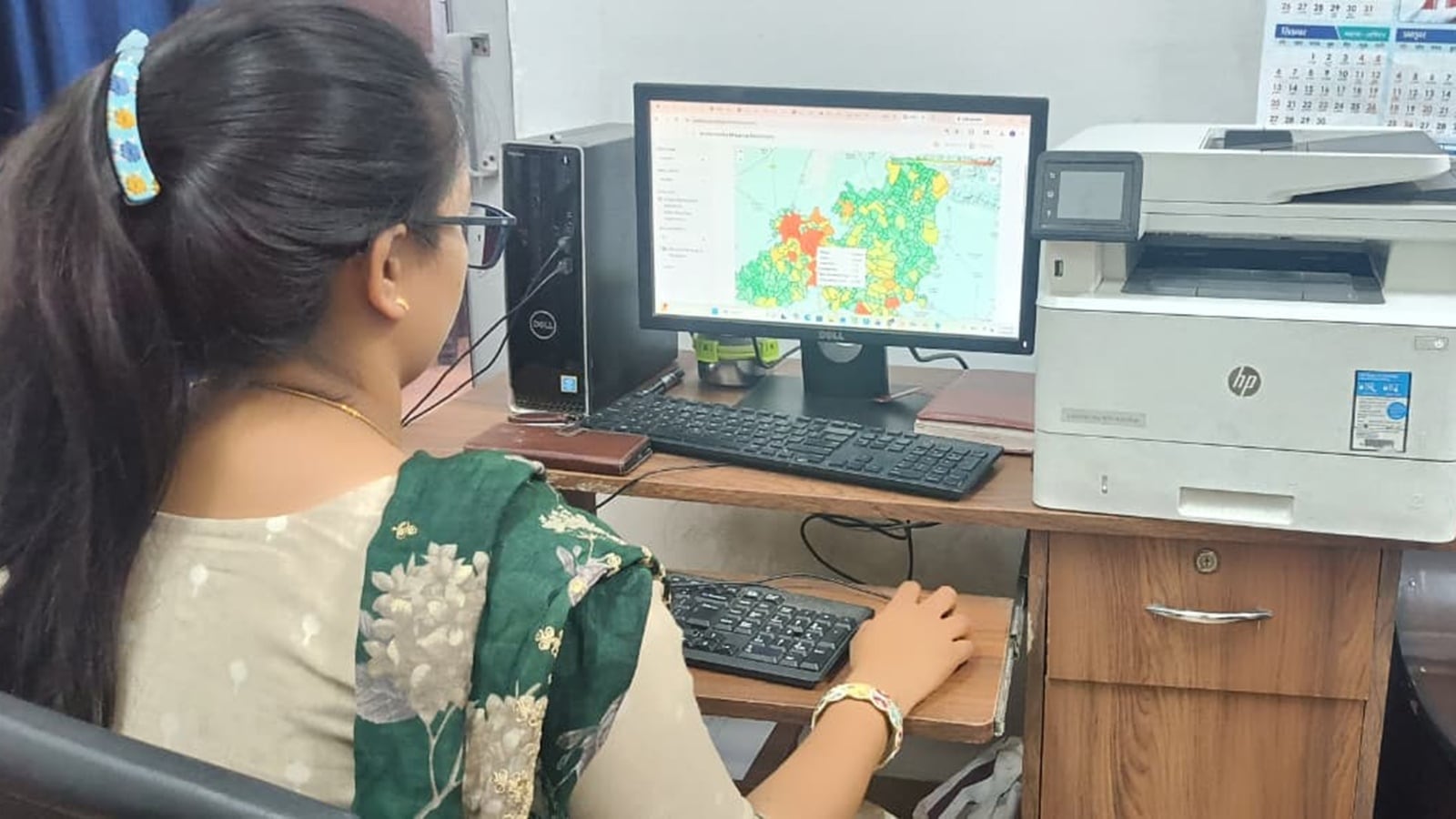
On the first floor of a polyclinic in Haryana’s Ambala, a health worker logs into the government TB programme’s Ni-kshay portal. She clicks on a map of Haryana to check where she should plan her screening camps. All the villages and wards are colour coded red, yellow or green to show the density of the vulnerable population, indicating people who are more likely to have TB. She narrows down on the red zone, the high-risk zone.
This AI-generated map is a new tool in the arsenal of health workers under the National TB Elimination programme. The tool uses data from nearly 30 open-source geospatial datasets such as population density, nutritional profile, access to health centres — proxies for vulnerability of a population to TB — to create a map of places where the health workers are likely to find more TB cases. Called Vulnerability Mapping for Tuberculosis (VMTB), it was piloted in Haryana and Assam before being rolled out across the country under the ongoing 100-day campaign.

Smokers, people with diabetes or other respiratory conditions, those who are malnourished are considered to be vulnerable populations for TB. The challenge, however, is that there is no nationwide registry in our country for the conditions. While ASHA workers would know who these people are in their areas, there is no consolidated data. So, how do you find these populations?
“VMTB takes about 30 open-source datasets of socio-demographic and geospatial data. This includes things like nutrition profiles, NFHS-4 data, presence of night lights, and so on. Along with data on historically confirmed TB cases, the AI can provide prediction of geospatial vulnerability down to the village and ward level, down to a 500×500 metre tile, in fact,” said Dr Neeraj Agrawal, chief programme officer at Wadhwani AI, which developed the programme for the government.
How tool helps in effective screening
What this AI tool does is help the health workers concentrate their resources to areas where more people are likely to get diagnosed during active screening camps, where more cases are likely to be found by testing fewer people. This would ensure early diagnosis of many and fewer people missing from the treatment net. This is essential as the country moves towards eliminating the condition — while India’s 2025 deadline has been missed, the global 2030 deadline remains.
Dr Rajesh Raju, state TB officer for Haryana, said, “There are 6,237 gram-panchayats in Haryana. Last year, 35 per cent of these were declared TB-free as they had an incidence of less than one per million population. That leaves us with 4,080 gram-panchayats where we would need to focus, something that can be very challenging. This tool has helped us identify 1,968 villages and some more wards, a total of 2,111 high-risk areas where we would be concentrating during the current 100-day campaign. So we can focus 100 per cent of our efforts on 50 per cent of the areas. This has increased our efficiency as well as effectiveness.”
This decreased workload has also led to a change in strategy during the current 100-day programme. Instead of testing only the vulnerable populations, the health workers are now screening everyone in these high-risk villages. “With VMTB, now 100 per cent X-ray coverage of the adult population is being attempted in these villages,” he added.
Story continues below this ad
This effort is aided by another AI-technology — a portable hand-held X-ray machine that can screen a person within seconds with an AI-aided tool. Those who show positive indicators for TB have to then give a sputum sample for a confirmatory test. “The hand-held X-rays have made a major difference. Our camps look neutral; we do not screen people only for TB. We also conduct routine tests such as BP and blood sugar so that there is less stigma around getting a medical check-up. Getting an X-ray report within minutes — instead of travelling several kilometres to the nearest health centre — is a big draw for the patients,” said community health officer Avaneeta Sandhu.
She says that the sputum sample is also collected at the camp and sent for testing, with the patients receiving their diagnosis the next day. The ease of testing, availability of technologies such as the AI-based X-ray, and involvement of the sarpanch, has improved active case finding under the programme. “Earlier, where we used to get 10 samples during a camp, now we get around 70 to 80,” said Sandhu.
The mapping tool has another use, says Dr Seema Tanwar, civil surgeon, Ambala. “Once the focused activity is over, we can also choose the green or yellow villages and carry out screening of the vulnerable populations to make these villages TB-free. The sarpanches are now really invested in activities under the TB programme. They motivate the villagers to get tested, thereby making our screening camps more effective,” she said.
More TB cases identified early
The tool, which was first trialled in Haryana and Assam, has already proven to be effective. Data from these two states show that there was a 251 per cent relative increase in the yield of TB cases in Haryana and 61 per cent in Assam last year. “We realised that the yield of active case finding (when health staff reach out instead of waiting for patients to show up) has significantly increased across both states. And by yield, I mean the actual number of TB cases found through active case finding. There was also a reduction in the number of people who needed to be screened to find one TB case,” said Dr Agarwal.
Story continues below this ad
Importantly, more than two lakh TB cases were diagnosed through these active case finding camps accounting for nearly 10% of the 25 lakh cases detected last year. “Meaning, more people are being diagnosed and put on treatment early, preventing them from spreading the disease to others,” said Dr Agarwal.
TB in numbers
The tuberculosis burden in India has continued to decline — with an estimated 27.1 lakh cases and just over 3 lakh deaths in 2024, according to the latest available data from the Global TB Report 2025. Globally, 10.7 million people fell ill and 1.23 million died in 2024, meaning India accounted for nearly a fourth of all the cases and deaths across the world.
The Global TB Report shows that India has reduced its TB incidence by 21% and deaths by 28% between 2015 and 2024, meaning the country is nowhere close to achieving the WHO End TB milestone for 2025 — a reduction of 50% in TB incidence and 75% in TB deaths as compared to 2015. Globally, TB incidence reduced only by 12% between 2015 and 2024.
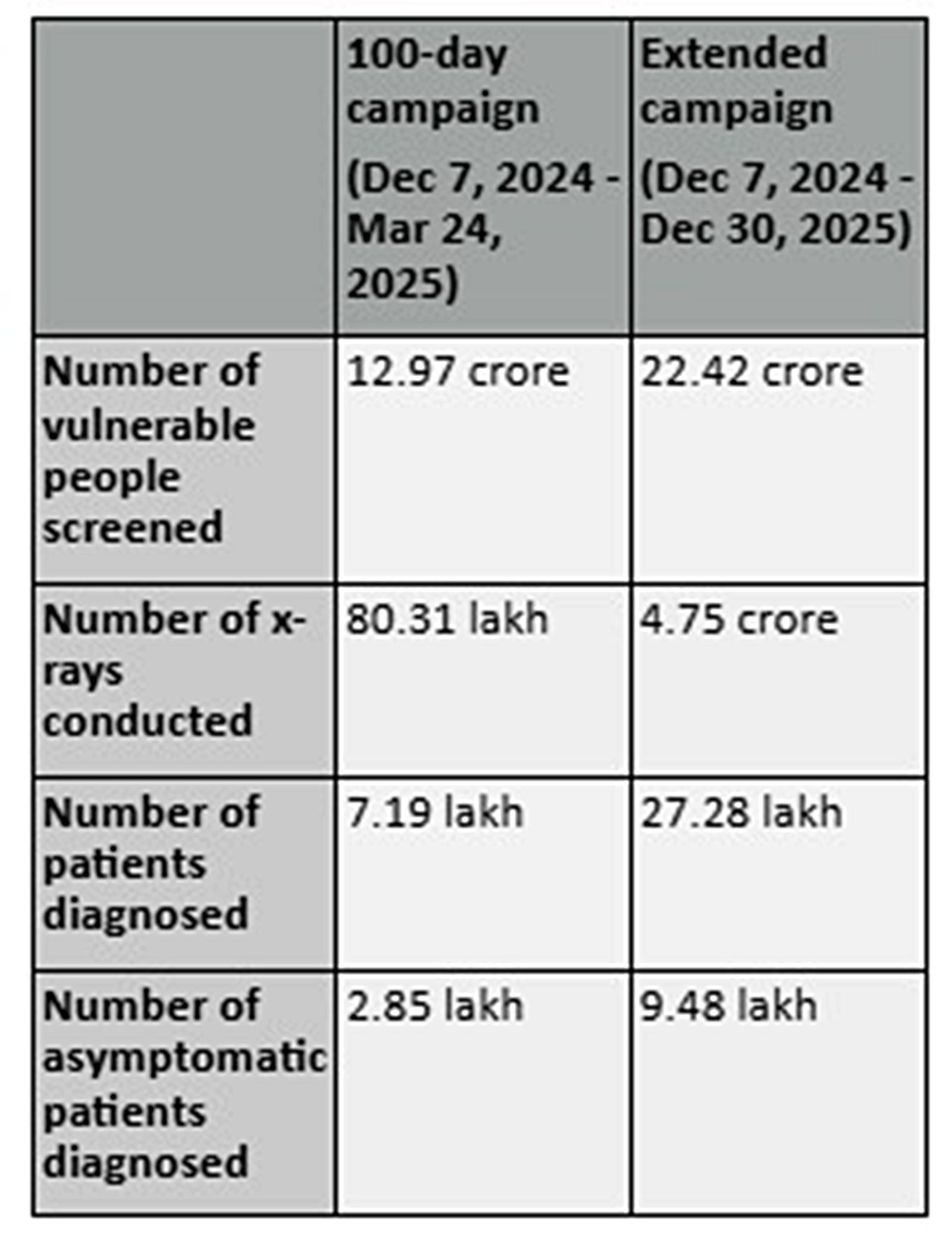 TB in numbers (2024).