The Hindu
Price mismatch may impede India’s battery storage projects: report
Price mismatch may impede India’s battery storage projects: report Tariffs discovered in 2025 auctions increasingly don’t appear to be economically viable, says the report Published – May 19, 2026 10:50 pm IST – NEW DELHIJacob Koshy India’s clean…
Price mismatch may impede India’s battery storage projects: report
Tariffs discovered in 2025 auctions increasingly don’t appear to be economically viable, says the report
Published – May 19, 2026 10:50 pm IST – NEW DELHI

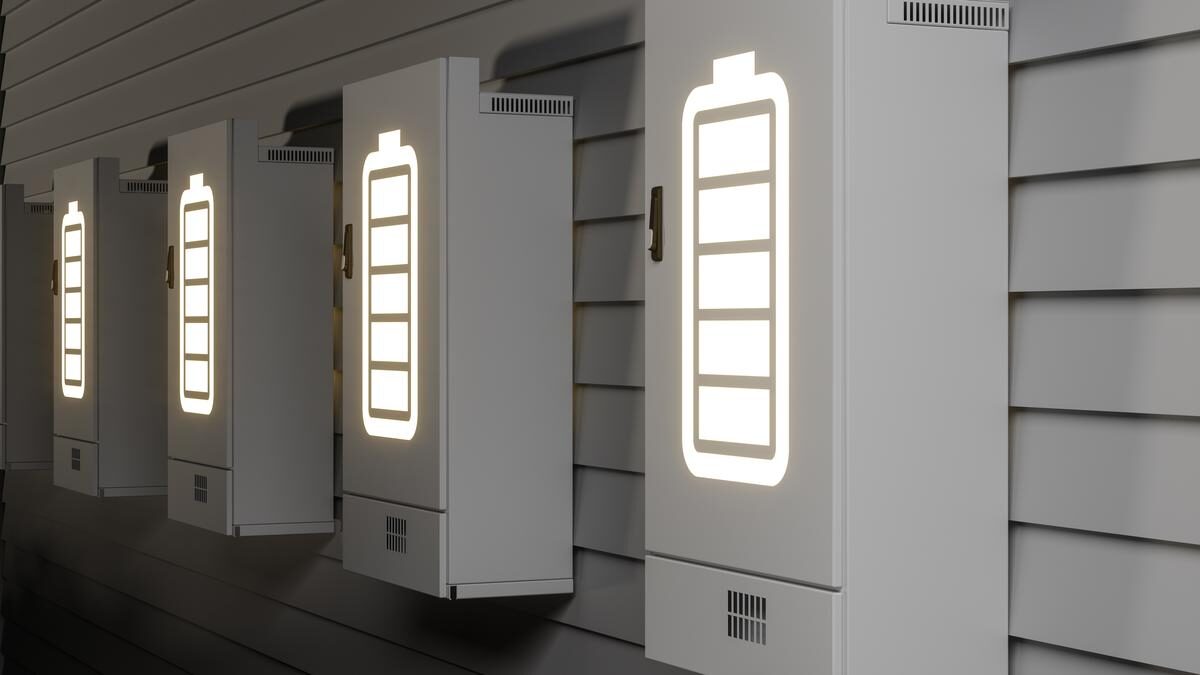
India’s clean energy transition is becoming increasingly dependent on energy storage systems as renewable power generation expands. Image for representation only.
| Photo Credit: Getty Images/iStockphoto
India’s rapid expansion of battery energy storage procurement may be hard to execute as tariffs discovered in 2025 auctions increasingly don’t appear to be economically viable, according to a report released by the Institute for Energy Economics and Financial Analysis (IEEFA) and JMK Research & Analytics.
India’s clean energy transition is becoming increasingly dependent on energy storage systems as renewable power generation expands. Standalone energy storage tenders — where storage capacity is contracted independently of renewable generation assets — accounted for more than 71% of the country’s total energy storage tendered capacity in 2025, with standalone Battery Energy Storage System (BESS) projects comprising around 60% of this share.
During 2025, around 10.4 gigawatts (GW) of standalone BESS capacity was allocated across 18 tenders. The bulk of awarded capacity involved two-hour duration systems, particularly those designed to discharge twice daily to help meet morning and evening electricity demand peaks.
The report, Viability of Standalone Battery Energy Storage Tariffs Discovered in 2025, examines 18 auctions in which about 10.8 GW of standalone BESS capacity was tendered and roughly 10.4 GW allocated. It flags a widening disconnect between tariffs and underlying costs. “Between 2022 and 2025, tariff reduction far exceeded battery cost reductions. Average standalone BESS tariffs declined by 79.6% during this period, whereas battery pack prices fell by 36.5%,” it notes. Lithium carbonate prices in China — a key input for lithium iron phosphate cells — almost doubled between mid-2025 and December 2025, and China’s phased withdrawal of battery export rebates from April 2026 is expected to push landed battery costs in India higher. Tariff reduction “accelerated sharply in the second half of 2025,” the report observes, “suggesting speculative bidding behaviour.”
Then there is also the question of the antecedents of the project developers. Only 46.3% of allocated capacity went to firms, the authors classify, as having prior experience in the BESS sector. Of the top 15 awardees, 10 were new entrants, “including firms primarily engaged in unrelated industries such as food processing, mining and packaging.”
‘Risky segment’
Based on benchmark estimates developed by JMK Research, a two-hour, two-cycle BESS system with a 12-year tenure would require tariffs of around ₹2.3 lakh/MW/month to remain financially viable under prevailing assumptions related to capital expenditure, operating costs and financing. Against this benchmark, nearly 75% of the allocated two-hour BESS capacity in 2025 falls into what the report categorises as a “risky” segment, where tariffs may be insufficient to support project execution.
India’s installed BESS capacity stood at around 1.8 GWh as of March 2026 — set against 50 GWh commissioned in the United States in 2025 and 65 GWh added by China in December 2025 alone. The report warns that cumulative commissioning delays of nine to 18 months could constrain renewable integration and India’s 500 GW renewable capacity target for 2030, and recommends cost-reflective tariff floors, stricter eligibility norms and a standardised payment security mechanism for storage.
Published – May 19, 2026 10:50 pm IST
Related Topics
Source & Attribution
This article was generated from an imported news source and rewritten for clarity and readability. View original source
[anap_related_posts]

 Prateek Tanmay