Prateek Tanmay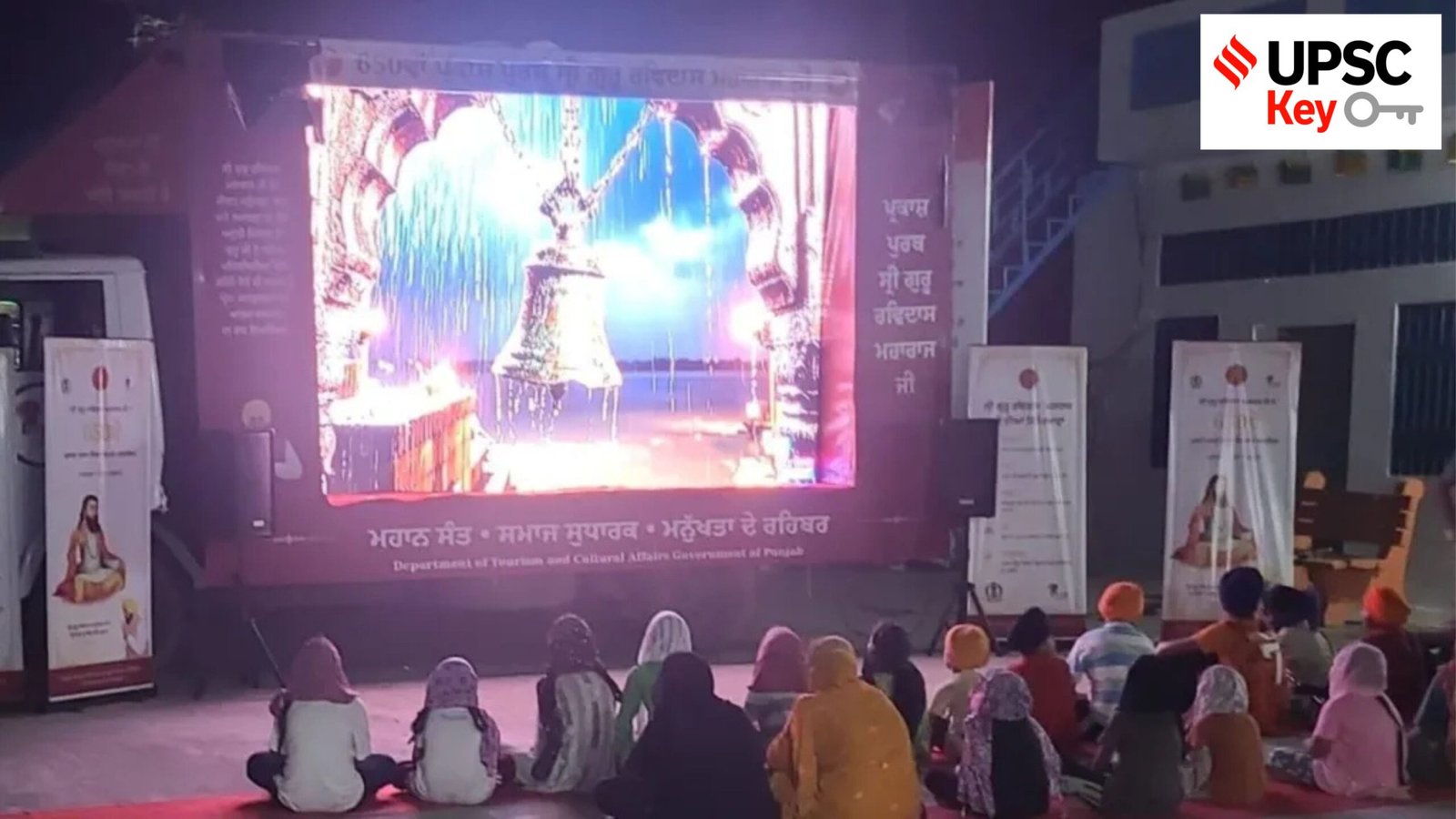

Shouldn’t there be show of fairness: SC on PM panel choosing CEC
Syllabus:
Preliminary Examination: Indian Polity and Governance-Constitution, Political System, Panchayati Raj, Public Policy, Rights Issues, etc.
Main Examination: General Studies II: Appointment to various Constitutional posts, powers, functions and responsibilities of various Constitutional Bodies.
What’s the ongoing story: Questioning the appointment of the Chief Election Commissioner (CEC) and Election Commissioners (ECs) by a three-member committee comprising the Prime Minister, a Union Minister and the Leader of Opposition, the Supreme Court on Thursday asked “should there be no show of fairness” in the procedure.
Key Points to Ponder:
• What are the key provisions in Chief Election Commissioner and Other Election Commissioners (Appointment, Conditions of Service and Term of Office) Act, 2023?
• What exactly Supreme Court has said about the Chief Election Commissioner and Other Election Commissioners (Appointment, Conditions of Service and Term of Office) Act, 2023?
• Who appoints Chief Election Commissioner of India?
• How the Chief Election Commissioner appointed earlier?
• How other Election Commissioners are appointed?
• Election Commission of India and Article 324 of the Constitution-Know in detail
• “There is allegation that the proposed bill seeks to downgrade the service conditions of the three election commissioners and, consequently, threatens to erode their authority”-how far you agree?
• “Over the past few years, the EC’s credibility is increasingly being called into question, with allegations of bias in the scheduling of elections and arbitrary deletion of names of registered voters, ignoring blatant violations of the model code”-Comment
• The independent and impartial functioning of the Election Commission-How it is ensured?
• Election Commission of India- Powers and Functions
• Chief Election Commissioner and the two other Election Commissioners have equal powers-True or False?
Key Takeaways:
• The bench of Justices Dipankar Datta and S C Sharma was hearing petitions challenging the Chief Election Commissioner and Other Election Commissioners (Appointment, Conditions of Service and Term of Office) Act, 2023, which provides for their selection by the three-member panel.
• Defending the law, the Centre, represented by Solicitor General Tushar Mehta, said it would be wrong to assume that the PM and the minister would “not act in the interest of democracy” because they have a “numerical majority” in the selection procedure.
• Mehta submitted that the office of the PM has a “sanctity attached” to it and doubting the decision of the selection committee would undermine the constitutional trust reposed in elected institutions. He said that if the PM was not to be trusted in the discharge of his constitutional duties, should he be asked to consult “outsiders, including a former judge of this Hon’ble Court,” while selecting his Cabinet members too.
• “Now, we are not dealing with a case of appointment of a minister as such. We find the minister is already there. Now, it’s time for the PM to select one of his Cabinet members. It becomes 2:1, two on the side of the Cabinet, one on the side of the Opposition,” Justice Datta said.
Do You Know:
• The Election Commission (EC) is a three-member body comprising one Chief Election Commissioner (CEC) and two Election Commissioners. Although all three election commissioners are equal, the CEC, like the Chief Justice of India, is the first among equals.
• Earlier, there was no law passed by Parliament for the appointment of the CEC and ECs. The President made the appointment on the advice of the Prime Minister. Traditionally, the successor to the incumbent CEC has been the next senior-most Election Commissioner. Seniority was usually defined by who was appointed earlier to the Commission.
• For instance, when Rajiv Kumar was the CEC, Gyanesh Kumar and Sukhbir Singh Sandhu served as Election Commissioners. Kumar and Sandhu were appointed to the Commission on the same day, March 14, 2024, and are both IAS officers of the 1988 batch.
• The new CEC was appointed under a new law — Chief Election Commissioner And Other Election Commissioners (Appointment, Conditions of Service And Term of Office) Act, 2023. This law lays down procedures for the appointment of both the CEC and ECs.
• Under the Act, a search committee headed by the Law Minister and having two senior bureaucrats serving as secretaries to the Government of India must first draw up a shortlist of five candidates. This shortlist is then sent to a Selection Committee made up of the Prime Minister, the Leader of Opposition, and a Cabinet Minister nominated by the PM.
Other Important Articles Covering the same topic:
📍Supreme Court questions delay in CEC appointment law, calls it ‘tyranny of the elected’
Previous year UPSC Prelims Question Covering similar theme:
1) Consider the following statements: (UPSC CSE, 2017)
1. The Election Commission of India is a five-member body.
2. Union Ministry of Home Affairs decides the election schedule for the conduct of both general elections and bye-elections.
3. Election Commission resolves the disputes relating to splits/mergers of recognised political parties.
Which of the statements given above is/are correct?
(a) 1 and 2 only
(b) 2 only
(c) 2 and 3 only
(d) 3 only
2) With reference to the Constitution of India, prohibitions or limitations or provisions contained in ordinary laws cannot act as prohibitions or limitations on the constitutional powers under Article 142. It could mean which one of the following? (UPSC CSE, 2019)
(a) The decisions taken by the Election Commission of India while discharging its duties cannot be challenged in any court of law.
(b) The Supreme Court of India is not constrained in the exercise of its powers by laws made by the Parliament.
(c) In the event of a grave financial crisis in the country, the President of India can declare a Financial Emergency without the counsel from the Cabinet.
(d) State Legislatures cannot make laws on certain matters without the concurrence of the Union Legislature.
Previous year UPSC Main Question Covering similar theme:
📍 Discuss the role of the Election Commission of India in the light of the evolution of the Model Code of Conduct. (2022)
Nation
ISRO’s NavIC system can no longer provide navigation data independently: Govt
Syllabus:
Preliminary Examination: Current events of national and international importance.
Mains Examination: General Studies III: Achievements of Indians in science & technology; indigenization of technology and developing new technology.
What’s the ongoing story: For the first time since positioning data from one of its satellites was lost in March, the government has accepted in the parliament that the seven-satellite navigation constellation (NavIC) can no longer independently aid people in navigation.
Key Points to Ponder:
• What exactly government has said in the parliament?
• What caused the recent disruption in NavIC’s independent navigation capability?
• What is NavIC (Navigation with Indian Constellation)?
• What is the significance of NavIC?
• Applications of NavIC-Know in detail
• What are the issues and challenges associated with NavIC?
• What other navigation systems around the world are in use?
• What practical purpose does the NAvIC constellation serve for users?
• What is the advantage of having a regional navigation system?
Key Takeaways:
• The Indian Space Research Organisation (ISRO) earlier this year informed that IRNSS-1F satellite, which was launched in March 2016, completed its designed mission life of 10 years and the on-board atomic clock stopped functioning.
• “…presently the NavIC constellation has three satellites for providing PNT (Positioning, Navigation, Timing) services — IRNSS-1B, IRNSS-1I and NVS-01. To provide basic positioning service, minimum four operational satellites are required in orbit. Hence, the NavIC constellation cannot provide standalone positioning service, however timing service is functional,” union minister of state for space Dr Jitendra Singh replied in a written answer in Parliament.
• The reply said that the armed forces continue to use NavIC signals as part of the multi-constellation GNSS — Global Navigation Satellite System that uses data from US’ GPS, EU’s Galileo, and Russia’s Glonass among others to navigate.
• When asked whether it compromises accuracy for navigation or real-time mapping, the reply stated: “Since NavIC is being used in multi constellation environment for most of the use-cases, there is no vulnerability for the users.”
• While end-user applications were developed for utilising NavIC signals in aviation, shipping, railways, and even in everyday cell phones, all of these devices carry a GNSS receiver, meaning they can continue to get positioning data from other constellations.
Do You Know:
• The Indian Regional Navigation Satellite System (IRNSS) — also referred to with the operational name of Navigation with Indian Constellation (NavIC) — was planned to be a seven-satellite system to provide positioning data over the Indian subcontinent and 1500 km around it. Ever since its inception, however, it has been plagued by problems affecting its positioning data.
• India is the only country that has a regional satellite-based navigation system. There are four global satellite-based navigation systems — the American GPS, the Russian GLONASS (GLObalnaya NAvigatsionnaya Sputnikovaya Sistema), the European Galileo, and the Chinese Beidou. Japan has a four-satellite system that can augment GPS signals over the country, similar to India’s GAGAN (GPS Aided GEO Augmented Navigation).
Other Important Articles Covering the same topic:
📍What is NavIC, India’s home-grown alternative to the GPS navigation system?
Previous year UPSC Prelims Question Covering similar theme:
3) Which one of the following countries has its own Satellite Navigation System? (UPSC CSE, 2023)
(a) Australia
(b) Canada
(c) Israel
(d) Japan
4) With reference to the Indian Regional Navigation Satellite System (IRNSS), consider the following statements: (UPSC CSE, 2018)
1. IRNSS has three satellites in geostationary and four satellites in geosynchronous orbits.
2. IRNSS covers entire India and about 5500 sq. Km beyond its borders.
3. India will have its own satellite navigation system with full global coverage by the middle of 2019.
Which of the statements given above is/are correct?
(a) 1 only
(b) 1 and 2 only
(c) 2 and 3 only
(d) None
Previous year UPSC Main Question Covering similar theme:
📍Why is Indian Regional Navigational Satellite System (IRNSS) needed? How does it help in navigation? (2018)
Appoint Polar Ambassador, join Arctic Council, suggests panel
Syllabus:
Preliminary Examination: Current events of national and international importance.
Main Examination: General Studies II: Bilateral, regional and global groupings and agreements involving India and/or affecting India’s interests.
What’s the ongoing story: The Parliamentary committee on External Affairs in its report has recommended that India should appoint a Polar Ambassador and urged the government to seek “full-fledged membership” of the Arctic council so that India can engage in its activities more effectively.
Key Points to Ponder:
• What is the Arctic Council?
• What do the Arctic Council do?
• What are the 8 countries in the Arctic Council?
• Map Work-Eight countries in the Arctic Council
• “The active involvement of India as a member of the Arctic Council to voice the concerns of the Global South could help push for an end to further exploitation”-Analyse
• Examine India’s role in Arctic Council
Key Takeaways:
• India is currently one of the 13 observer countries of the Arctic Council, which comprises of 8 nations that have landmass in the region. The observer countries do not have decision making powers. They also can’t make financial contributions or undertake research in the arctic directly.
• The committee, in its recommendations said: “…it is imperative that India also has such an Ambassador at a level equivalent to other countries exclusively to deal with polar regions. Creating such a position will not only help India project the importance given to these regions in its foreign policy architecture but will also help put across its policy stance in relation to polar areas or pursue polar diplomacy in a more effective manner.”
• The committee also recommended that the government adopt a suitable strategy to further strengthen its role as a representative of the Global South. It also suggested a greater collaboration between the Asian observers in the Arctic Council in the form of a quadrilateral agreement with Japan, South Korea and Singapore.
Do You Know:
• India, along with 12 other countries, is Observers to the Arctic Council. So are 13 intergovernmental and inter-parliamentary organisations like the UN Environment Programme, and the UN Development Programme, and 12 other non-governmental organisations.
• The Observers are not part of the decision-making processes, but they are invited to attend the meetings of the Council, especially at the level of the working groups.
• The Observer status is granted to entities that support the objectives of the Arctic Council, and have demonstrated capabilities in this regard, including the ability to make financial contributions. The renewal of Observer status is a formality. The status, once granted, continues till there is a consensus among the members that the Observer was engaging in activities that run counter to the objectives of the Arctic Council.
• India had been given the Observer status in 2013, along with five other countries — China, Italy, Japan, South Korea, and Singapore. Prior to this group, only France, Germany, the Netherlands, Poland, Spain and the United Kingdom were granted Observer status. In 2017, Switzerland too became an Observer.
• India is one of the very few countries to set up a permanent station in the Arctic for the purposes of scientific research. The polar regions offer some unique opportunities to carry out research related to atmospheric and climate sciences that cannot be done anywhere else.
The Himadri research station, located in Ny Alesund, Svalbard in Norway, about 1200 km south of the North Pole, was started in July 2008. The Goa-based National Centre for Antarctic and Ocean Research (NCOAR) is the nodal organisation coordinating the research activities at this station.
• The station has been used to carry out a variety of biological, glaciological and atmospheric and climate sciences research projects in the last one decade, with over 200 scientists from a number of institutions, universities and laboratories having accessed the facilities at the station.
• Himadri came on the back of India’s three-decade experience of carrying out scientific research in the polar regions of Antarctica which began in 1981. India’s first permanent station in Antarctica was set up way back in 1983. In 2010, Indian scientists undertook a scientific expedition to the South Pole as well. India is now among the very few countries which have multiple research stations in the Antarctic.
• The Arctic region is very rich in some minerals, and oil and gas. With some parts of the Arctic melting due to global warming, the region also opens up the possibility of new shipping routes that can reduce existing distances. Countries which already have ongoing activities in the Arctic hope to have a stake in the commercial exploitation of natural resources present in the region.
Other Important Articles Covering the same topic:
📍Arctic opportunities
Previous year UPSC Prelims Question Covering similar theme:
5) Which one of the following statements best describes the ‘Polar Code’? (UPSC CSE, 2022)
(a) It is the international code of safety for ships operating in polar waters.
(b) It is the agreement of the countries around the North Pole regarding the demarcation of their territories in the polar region.
(c) It is a set of norms to be followed by the countries whose scientists undertake research studies in the North Pole and South Pole.
(d) It is a trade and security agreement of the member countries of the Arctic Council.
Explained
SC sets ‘public interest’ test on retrospective green nod
Syllabus:
Preliminary Examination: Current events of national and international importance.
Mains Examination: General Studies III: Conservation, environmental pollution and degradation, environmental impact assessment.
What’s the ongoing story: The Supreme Court’s judgment on Wednesday (July 29) striking down the Centre’s 2021 Office Memorandum (OM) that allowed retrospective approval for projects that had already commenced construction without environment clearances (ECs), now closes the door on blanket and open-ended regularisation of such projects. It leaves limited room for government action under statutory authority.
Key Points to Ponder:
• What is retrospective environmental clearance?
• Why Supreme Court has struck down the Centre’s 2021 office memorandum regarding retrospective approval for projects?
• What exactly Supreme Court said?
• What is Section 3 of the Environment (Protection) Act, 1986?
• What you know about Vanasakthi vs Union of India?
• What was the Supreme Court’s verdict in Vanasakthi vs Union of India?
• What was the 2017 notification by the Ministry of Environment?
• What is Environmental Impact Assessment?
Key Takeaways:
• The judgment has sought to strike a middle path in its evolving environmental jurisprudence, distinguishing between the source of executive power and the limits of regularisation.
• The court held that ex-post facto ECs cannot be created through an OM, but recognised that the government may, in exceptional circumstances and in public interest, provide such a mechanism through a statutory notification issued under delegated legislative powers.
• The test will depend on how narrowly the government frames any future amnesty scheme and whether it meets the Supreme Court’s benchmark of “public interest”.
• An OM is an administrative instruction issued by a ministry or department and does not have the force of law. A statutory notification, by contrast, is issued under authority granted by a statute — the Environment (Protection) Act, 1986, in this case — and notified in the Gazette.
• Applying this distinction, the court set aside the Environment Ministry’s July 2021 OM, which introduced a standard operating procedure (SOP) for granting ex-post facto ECs to “violation cases”. The court held that the OM had created a continuing or “perpetual” regime for condoning violations. It did not invalidate the March 2017 notification, which provided a limited, one-time six-month amnesty window.
• The judgment also departed from the court’s May 2025 position that prohibited ex-post facto ECs “in any form or manner”. Instead, it held that a “narrowly tailored amnesty scheme” may be permissible where justified by “supervening public interest”.
Do You Know:
• Under the Environmental Impact Assessment Notification, 2006, projects requiring EC must obtain approval before starting operations. However, several projects began work or expanded operations without prior clearance.
In March 2017, the Ministry issued a statutory notification offering a one-time six-month opportunity to such projects to disclose violations and seek appraisal for EC, subject to environmental assessment and other legal consequences.
After the window expired in September 2017, the Madras High Court disposed of challenges to the notification after recording the Union government’s undertaking that it was a “one-time measure”.
• Subsequently, in Appaswamy Real Estates v. Puducherry Environment Protection Association, the Madras High Court granted a limited extension in March 2018. The Ministry issued an OM the same month allowing eligible projects that were already in violation as of March 2017 to submit applications within 30 days.
• In Common Cause v. Union of India (2017), a bench of Justices Madan B Lokur and Deepak Gupta held that mining operations requiring EC could not commence without prior approval. It emphasised that the EIA regime is preventive and intended to assess environmental consequences before irreversible harm occurs.
• In Alembic Pharmaceuticals v. Rohit Prajapati (2020), a bench of Justices DY Chandrachud and Ajay Rastogi held that ex-post facto EC was inconsistent with fundamental principles of environmental jurisprudence. The court observed that retrospective approval undermines the precautionary principle by allowing project proponents to commence activities first and seek approval later.
• However, in Pahwa Plastics v. Dastak (2022), a bench of Justices Indira Banerjee and JK Maheshwari adopted a more pragmatic approach that closure was not always the appropriate remedy, particularly where regulatory uncertainty existed and environmental compliance remained possible. The court held that regulation and remediation could, in some cases, better serve environmental protection than immediate closure.
• In Vanashakti v. Union of India, a bench of Justices Abhay S Oka and Ujjal Bhuyan in May 2025 struck down both the March 2017 notification and the July 2021 OM, holding that ex-post facto ECs were impermissible “in any form or manner”. The court also held that the one-time amnesty introduced in 2017 had exhausted itself and could not justify future regularisation.
Other Important Articles Covering the same topic:
📍SC strikes down Vanashakti judgment: Why ruling is significant
Previous year UPSC main Question Covering similar theme:
📍Environmental impact assessment studies are increasingly undertaken before the project is cleared by the government. Discuss the environmental impacts of coal- fired thermal plants located at Pitheads. (2013)
Ravidas: icon of Dalit resistance in Punjab, beyond
Syllabus:
Preliminary Examination: Current events of national and international importance.
Main Examination: General Studies I: Modern Indian history from about the middle of the eighteenth century until the present- significant events, personalities, issues.
What’s the ongoing story: Seven months before Sant Ravidas’s 650th birth anniversary, the BJP launched a nationwide commemoration campaign on Wednesday (July 29) at his birthplace near Varanasi, in the presence of Uttar Pradesh Chief Minister Yogi Adityanath.
Key Points to Ponder:
• Who was Guru Ravidas?
• What is Guru Ravidas known for?
• Know the contribution of Guru Ravidas to the Bhakti Movement and Indian society.
• Compare the teachings of Guru Ravidas and Kabir.
• Know the terms-Nirguna Bhakti and Begampura
• Why is Guru Ravidas widely followed in Punjab?
Key Takeaways:
• Centuries after his lifetime, Guru Ravidas continues to shape religious thought, social reform, politics and Dalit assertion across India, particularly in Punjab. The AAP government also launched a year-long commemoration campaign in February.
• Ronki Ram, a professor emeritus at the Institute for Development and Communication, Chandigarh, and an eminent scholar of Guru Ravidas, told The Indian Express that the saint neither renounced his religion nor abandoned his hereditary occupation. In doing so, his life itself became a form of peaceful social protest at a time when the Bhakti movement sought to challenge social hierarchies.
• While he rejected ritualism and idol worship, accounts say he wore the sacred thread (janeu) and applied the tilak on his forehead. Professor Ram said these actions symbolically challenged the upper castes’ monopoly over religious symbols.
• Guru Ravidas occupies a unique place in Sikhism. Forty of his hymns (shabads) and one shloka are included in the Guru Granth Sahib, the Sikh scripture regarded as the eternal Guru, alongside the compositions of Kabir, Sheikh Farid and other Bhakti and Sufi saints. Professor Sarabjit Singh of Punjabi University said these saints lived before Guru Nanak Dev, who carried forward many of their ideas.
• Professor Ram described him as one of the earliest voices of Dalit resistance, who transformed personal experience into a universal message of equality without advocating hatred or revenge. His influence became particularly visible during Punjab’s Ad Dharm movement of the 1920s, which adopted Guru Ravidas as its patron saint to champion an
independent social and political consciousness.
Do You Know:
• Guru Ravidas was a 15th-16th century saint whose teachings emphasised devotion to a formless God. He belonged to the chamar community of leather workers.
• A Bhakti saint, philosopher and poet, he challenged caste hierarchies while remaining rooted in his occupation as a cobbler, preached the dignity of labour and envisioned a free and equal society.
• Guru Ravidas became widely revered through his devotional poetry and reformist philosophy. He wrote in Sadhukari, a language that blended Awadhi, Braj, Khari Boli, Punjabi, Rajasthani and Sanskrit. According to Professor Yog Raj Angrish, who heads the School of Punjabi Studies at Panjab University, his verses were simple and easy to sing. “While Kabir’s poetry is marked by rhetoric, resistance and poetic deconstruction, Ravidas writes with philosophical depth and humility,” Angrish said.
• One of his best-known hymns declares: “Naam tero aarti majan Murare; Har ke Naam bin jhoothe sagal pasaare” (O Lord, Your Name is my worship and my sacred ablution. Without the Divine Name, all other religious displays are false.) As his fame spread, he attracted followers cutting across caste lines.
• A central idea of his philosophy was of Begumpura (literally meaning a place without sorrow) — that represented an ideal society founded on the principles of equality, justice and freedom. Prof Angrish says Guru Ravidas was among the earliest thinkers to imagine a society free from caste, class and hierarchy. His famous hymn, included in the Guru Granth Sahib, begins: “Begampura sehar ko naau; dookh andoh nahi tih thaau (Begumpura is the name of the city. There is no suffering or anxiety there).” The hymn describes a city free from sorrow, fear, oppressive taxation and discrimination, where all people enjoy equality, dignity and unrestricted movement.
Other Important Articles Covering the same topic:
📍Guru Ravidas 650th Parkash Purab: AAP, BJP step up Dalit connect before Punjab elections
Previous year UPSC Prelims Question Covering similar theme:
6) Consider the following statements: (UPSC CSE, 2019)
1. Saint Nimbarka was a contemporary of Akbar.
2. Saint Kabir was greatly influenced by Shaikh Ahmad Sirhindi.
Which of the statements given above is/are correct?
(a) 1 only
(b) 2 only
(c) Both 1 and 2
(d) Neither 1 nor 2
Previous year UPSC Main Question Covering similar theme:
📍Why is caste identity in India both fluid and static? (2023)
| PRELIMS ANSWER KEY |
| 1.(d) 2.(b) 3.(d) 4.(a) 5.(a) 6.(d) |
For any queries and feedback, contact priya.shukla@indianexpress.com
Subscribe to our UPSC newsletter. Stay updated with the latest UPSC articles by joining our Telegram channel – IndianExpress UPSC Hub, and follow us on Instagram and X.