Prateek Tanmay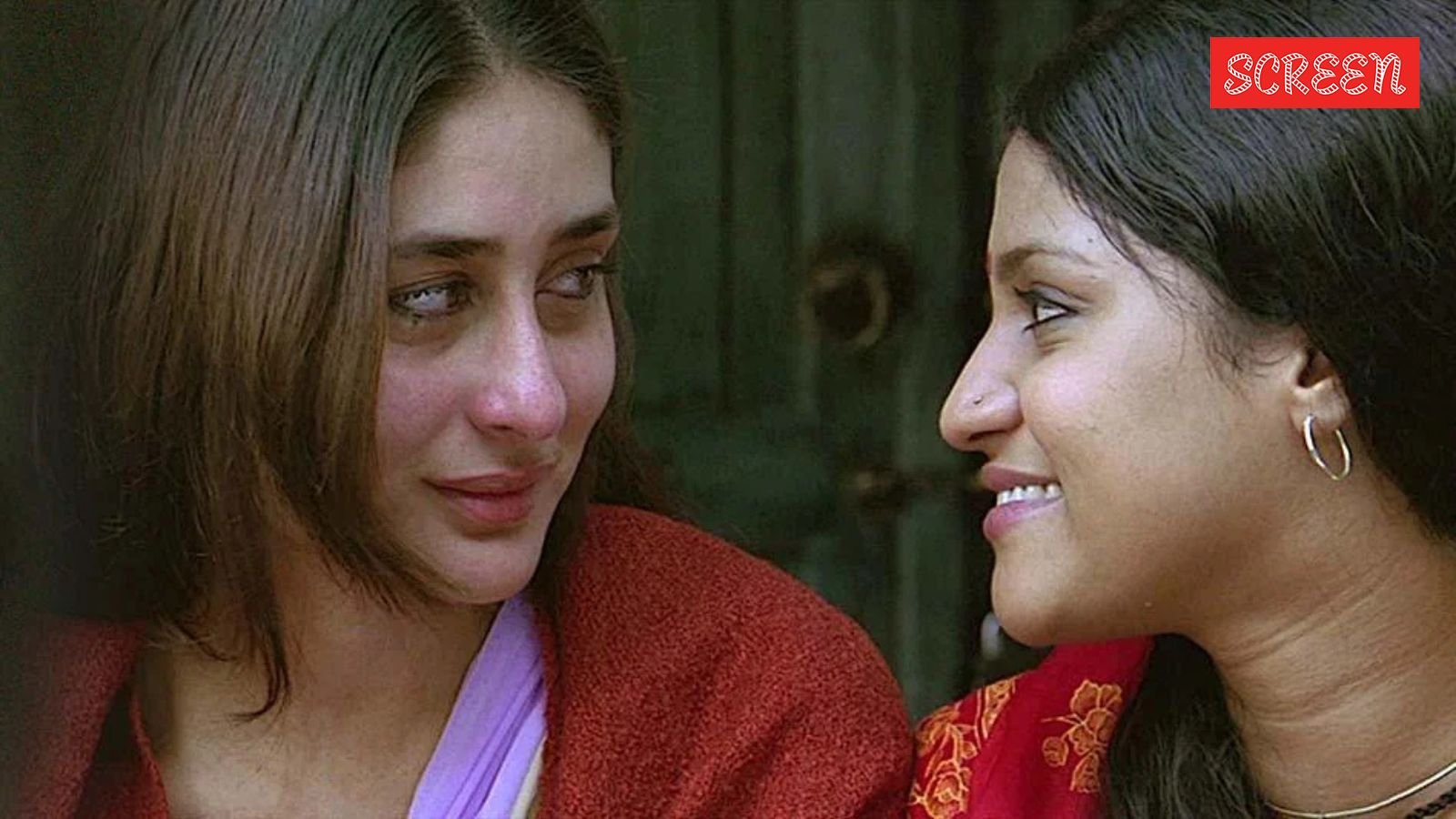
6 min readMumbaiJul 29, 2026 08:19 AM IST
Maqbool, it is. For millions, it will always be Vishal Bhardwaj’s feverish reimagining of Macbeth, with career-cementing performances by Irrfan and Tabu. And, arguably, rightly so. Maqbool was perhaps the trilogy’s boldest act of reinvention, while Haider remains its most searingly political work. But for me, it will always be Bhardwaj’s Moor of Meerut, Omkara. It is the one that has never loosened its grip on me. There is something inexhaustible about it, something that never stops becoming. It is the most cerebral, the most dramatically volatile, and, undoubtedly, the sexiest.
Needless to say, it is Bhardwaj’s earthy re-imagining of Othello, where Venice gives way to the dust and violence of Uttar Pradesh, and perhaps the first mainstream Hindi film to plunge audiences into the Hindi heartland in all its grime and glory. Its language was not ornamental, but simply organic. Its characters did not live in the world; the world had already lived in them. That is why Omkara walked, so that the likes of Gangs of Wasseypur, Mirzapur, and an entire generation of heartland storytelling could run.

But beyond all of this lies what truly makes Omkara the film it is: its women. In a world overwhelmingly inhabited by men, and in a story governed by their appetites, egos, and insecurities, it is the women who become its moral centre. Omkara can be read in many ways, but to me, it will always remain a story of marriages, or rather, of the tragedies that marriages so often become under patriarchy. Dolly (Kareena Kapoor), Indu (Konkona Sen Sharma), and Billo (Bipasha Basu) are written with a depth that far exceeds their Shakespearean counterparts. Through them, Bhardwaj arrives at a simple realisation: that Shakespeare’s men may be vain, vile, and often devastatingly dumb, but it is the women who are condemned to inherit their violence and, all too often, their murders.
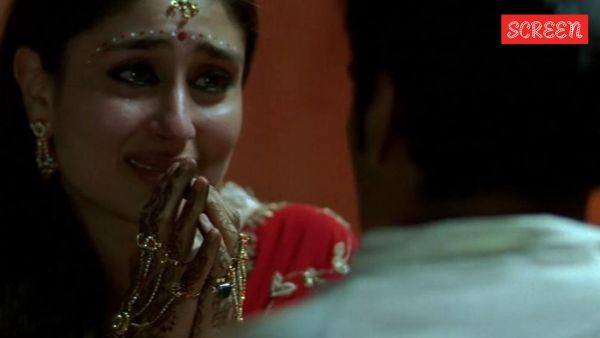 The film frames Dolly through two opposing ways of seeing.
Even before we begin to truly know Dolly, Bhardwaj tells us how she will be seen. Her father warns Omkara (Ajay Devgn): “May you never forget the two-faced monster a woman can be.” And then comes a remarkable visual passage. We see two Dollys. One through Omkara’s eyes, filtered through the tinted glass of a car window, where she appears distant, elusive, almost inscrutable. The other is free of his gaze: no tinted glass, no distortion, just Dolly in her innocence. For the rest of the film, she sways between these two images, much like the swing in her kitchen: between her own truth and the fiction men spun about her, and, consequently, between freedom and the cage built around her. Just as the film frames her between two selves, Dolly herself exists between two worlds.
She stands at the cusp of modernity, yet never entirely relinquishes tradition. Take, for instance, the moment she chooses Omkara. It is captured in one of Bhardwaj’s most visceral images. Standing before her mirror, Dolly gently caresses the kameez stained with Omkara’s blood, while her hands, adorned with fresh mehndi, hints at her arranged marriage that is yet to come. It’s a shot where blood and bridal red become indistinguishable. Dolly is modern enough to choose the man she loves, yet traditional enough to believe that very man’s anger must somehow be her burden to bear. She is modern enough to claim love for herself, yet traditional enough to surrender herself to the sanctity of marriage.
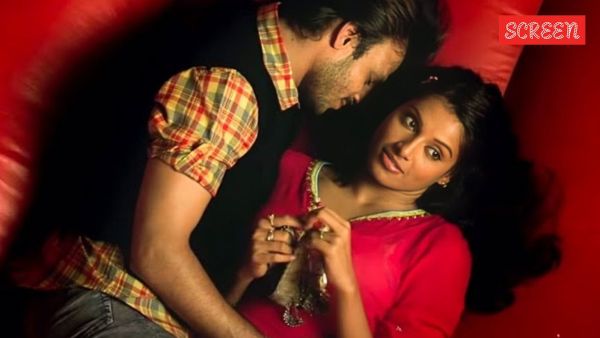 Billo’s independence is tempered by her desire for the stability afforded by a heterosexual union.
Also Read | In Diljit Dosanjh’s Satluj, the state writes the obituary but the river remembers the truth
However, Bhardwaj reaches his most profound register when he frames Dolly through the figure of Sita. Much like Sita, who was compelled to prove her chastity to Ram, Dolly, too, is condemned to prove her innocence. It is an intriguing invocation of mythology, one that reveals how marriages are so often built upon the insecurities of men. The idea finds its most vivid expression in a plot point revolving around a kamarband. When Dolly misplaces the heirloom gifted to her by Omkara, the loss threatens to become an affront to the husband’s honour, suggesting a failure to command his own household. Bhardwaj reveals how little it takes for patriarchy to unravel. A missing kamarband becomes enough for Omkara to put Dolly’s fidelity on trial.
Story continues below this ad
Very much like Dolly, Billo, too, yearns for the comfort that the institution of marriage promises. She, too, is a woman of contradictions, her public persona forever at odds with the life she inhabits in private. As the audacious performer, she commands every gaze in the room, holding her audience spellbound. But in her private life, it is her breath that is held by Kesu (Vivek Oberoi). Once again, Bhardwaj exposes the paradox of these women. For all their strength and defiance, their lives remain tied to the men they love. However, unlike Dolly, Billo is not confined by domestic spaces. Her prison is less visible, but no less real. It is built by the social sanctity accorded to marriage, and by the expectation that a woman’s life must eventually find its meaning within it.
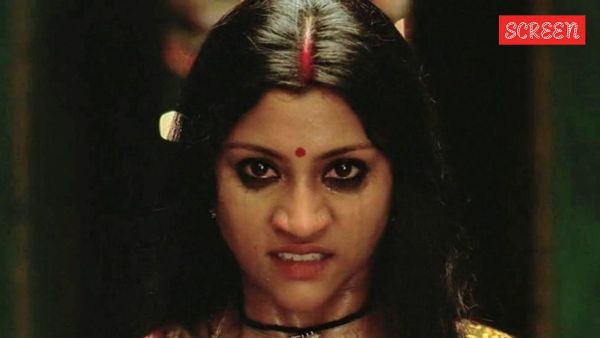 In the climactic moment, Bhardwaj invokes the iconography of Durga through Indu.
And then there is Indu, the film’s fiercest woman. Bound within the conventions of a traditional marriage to Langda (Saif Ali Khan), she is, paradoxically, the freest soul in Omkara. She fears no man. Not her husband, not even her brother. Time and again, she emerges as the film’s moral conscience, nowhere more powerfully than when she holds a mirror to Omkara and reminds him that no matter how much a woman loves, sacrifices, or endures, men inevitably find a way to put her character on trial. But Bhardwaj’s most radical departure from Shakespeare arrives in the film’s final act, where he lets Indu reclaim the story. By killing Langda, in a moment that invokes the imagery of Durga, she does not simply avenge Dolly; she restores a measure of justice to a world corrupted by masculine vanity. Shakespeare might have called it a tragedy. Bhardwaj knows it is simply patriarchy.

Click here to follow Screen Digital on YouTube and stay updated with the latest from the world of cinema.