Prateek Tanmay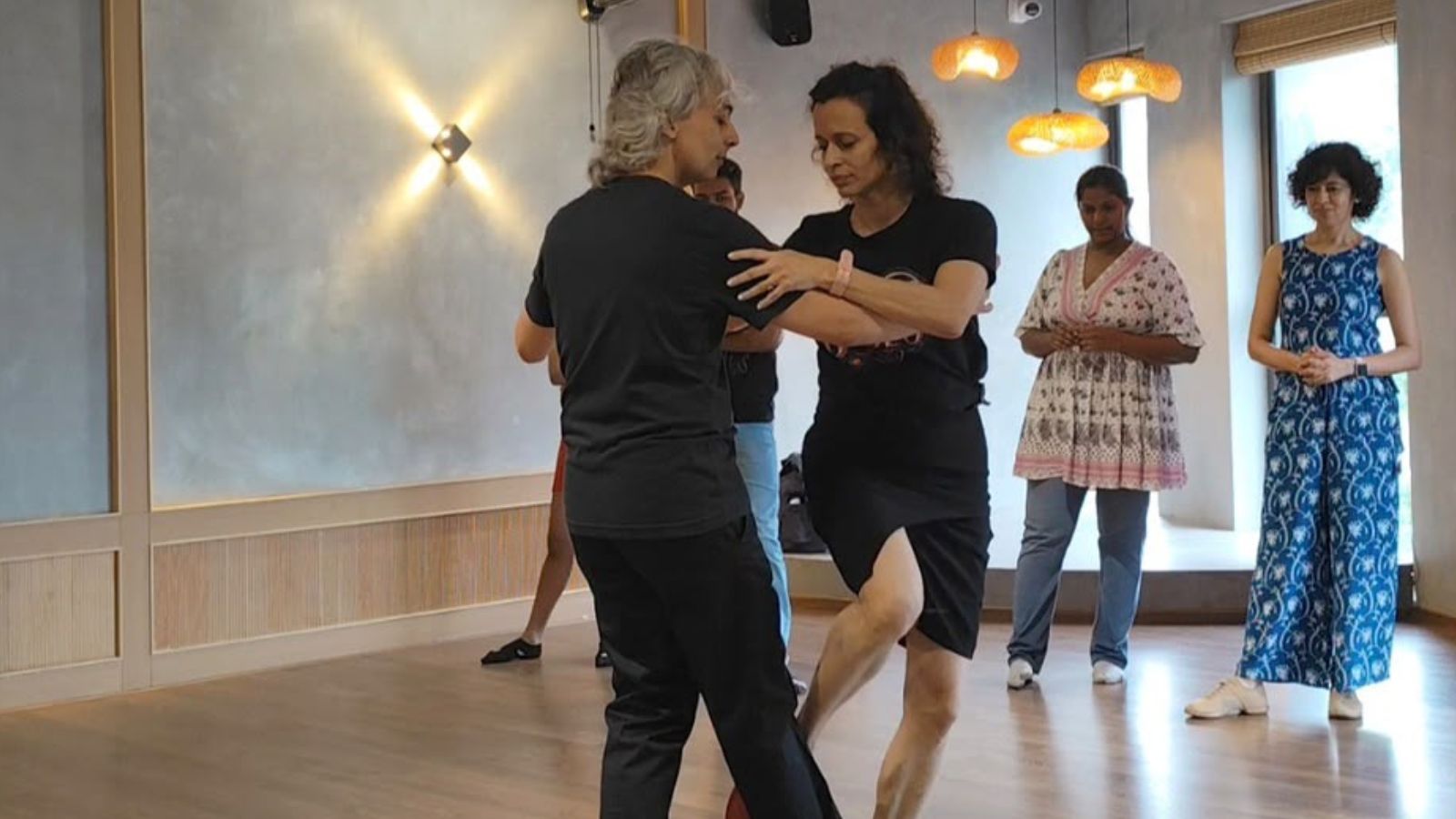
4 min readPuneJul 25, 2026 01:59 PM IST
By: Shrijita Acharyya

For Dr Emma Johnson, 43, Argentine tango was less about learning a new dance form and more about reconnecting with a part of herself she had left behind.
Growing up in an Anglo-Indian family, dance was a regular part of celebrations. “Every family gathering ended with people dancing to rock and roll,” she says. But as work, marriage and family responsibilities took over, dancing gradually disappeared from her life. Two years ago, tango brought it back.
Across Pune, people from different age groups and professions are turning to tango not just to learn steps, but to explore ideas of connection, trust and communication. The Argentine dance form, known for its close partnership, improvisation and reliance on non-verbal cues, has found a small but growing community in the city.
Unlike forms built around fixed choreography, tango requires two people to constantly respond to each other. The lead and the follow must listen through movement, making awareness and trust central to every interaction on the dance floor.
“Tango is not just about memorising steps. It is about listening to another person through movement,” says Mitali Chinmulgund, who has been teaching tango in Pune for nearly a decade.
Those who attend classes come with different motivations. Some are drawn by the curiosity of learning a new dance, while others find it a way to step away from increasingly digital and individualised lives.
Story continues below this ad
For Muntazir, 28, tango offered lessons that extended beyond dance. “I learnt something from tango about life. It taught me that what matters is committing to a step. It does not have to be the right step or the wrong step,” he says.
The social aspect of tango has also been a draw for many participants. Sonal Mankar, 38, says the dance provides a space for human connection at a time when personal interactions are increasingly limited.
“In our culture there are many taboos around sharing personal space and energy. Tango allows you to be in another person’s space without emotional pressure. It is not just movement but a connection through music and rhythm,” she says.
For her, the experience can also be calming. “Today everyone is independent and busy. We often say people need a hug, but simple human touch is becoming rare. Tango creates that connection respectfully and helps the mind relax.”
Story continues below this ad
Beyond the social experience, some participants are drawn to tango for its physical demands. The dance involves continuous walking, changes in direction and constant adjustment to a partner’s movements, which can improve coordination and body awareness.
Chinmulgund says she has had students with conditions such as Parkinson’s disease, ADHD and social anxiety attend her regular classes. Some joined after doctors suggested tango as a complementary activity, though she emphasises that it is not a substitute for medical treatment.
“Tango is recognised worldwide for helping with mobility and balance, but it is important to understand that it is not therapy,” she says.
For CS Shankar, 32, the process of learning tango resembles learning a new language. “In the beginning every step feels awkward, just like learning to speak a new language. Slowly you learn to communicate, first with one person and then with many others. Tango taught me that trust and vulnerability do not always need words,” he says.
Story continues below this ad
As one of the learners put it, the most meaningful part of tango is not mastering the steps, but discovering what those steps teach them about themselves.