Prateek Tanmay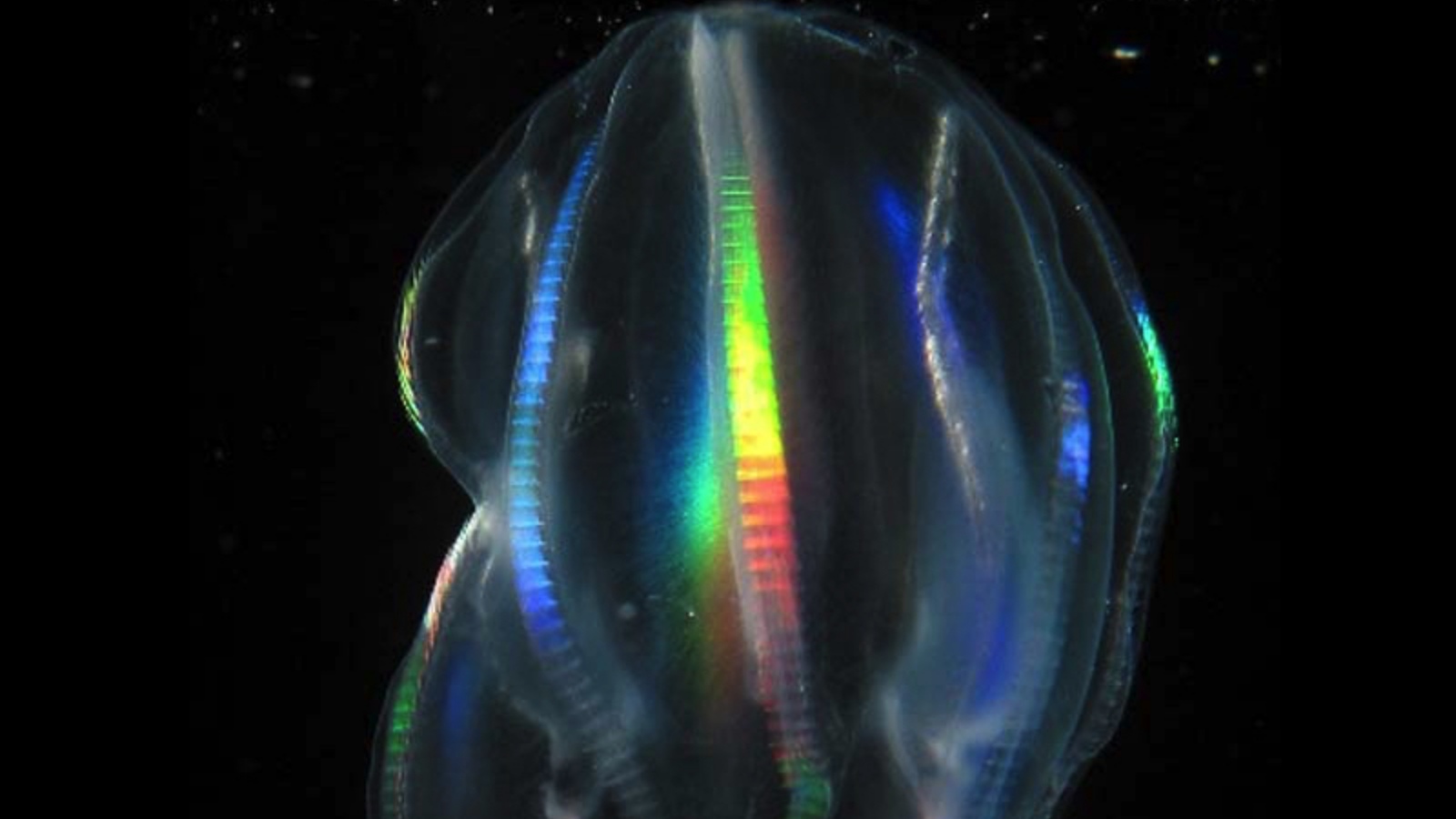
5 min readNew DelhiJul 21, 2026 11:00 AM IST
A scraped knee or a paper cut can take days—or even weeks—to heal in humans, often leaving behind a scar. But a tiny transparent jellyfish is challenging scientists’ understanding of wound repair. According to a report by Discover Wildlife, NASA sent more than 2,000 baby jellyfish aboard Space Shuttle Columbia in 1991 to investigate how microgravity affects the development of gravity-sensing organs. Decades later, another study on the transparent jellyfish Clytia hemisphaerica has revealed an equally fascinating ability: it can heal small wounds within minutes and larger ones in under an hour—without leaving a scar.
“In 1991, NASA sent baby jellyfish into space to study human development in zero gravity, and the so-called ‘immortal jellyfish’ is being studied for the way its cells can regenerate into an earlier life stage,” states the report.

Could this tiny marine animal hold clues to improving wound healing in humans? Heris Patel, Assistant Professor, Department of Zoology, Hemchandracharya North Gujarat University (HNGU), explains what makes the discovery remarkable and why it should be viewed as an important step in basic biology rather than an imminent medical breakthrough.
DISCLAIMER: This article is based on information from the public domain and/or the experts we spoke to.
How does the jellyfish heal so quickly?
According to Patel, what makes Clytia hemisphaerica extraordinary is not just that it heals—but how it heals. “What’s remarkable about Clytia hemisphaerica is the speed and the silence of it. A small wound closes within minutes, a larger one in under an hour, and there’s no scar left behind at all,” Patel says.
He explains that the healing process unfolds in two coordinated stages. “Cells at the wound’s edge send out tiny finger-like extensions that essentially crawl across the injury and pull the rest of the cell along behind them, stretching living tissue back over the gap. Once that crawling front has covered the wound, a second structure kicks in—a ring of contractile fibres that tightens like a drawstring and pulls everything neatly shut. It’s a two-step process: crawl first, then cinch closed,” he says.
Why don’t humans heal the same way?
Humans and jellyfish respond to injuries very differently because their biological priorities are different. “When we’re cut, the body’s priority is to stop bleeding and fight infection, so it floods the area with inflammatory cells and lays down tough, disorganised collagen fibres—that’s the scar. Jellyfish skip that fibrotic step altogether,” Patel explains.
Story continues below this ad
Interestingly, he notes that the closest comparison isn’t adult human skin but how wounds heal before birth. “Early-stage human foetal wounds also close without scarring, largely because there’s minimal inflammation and the tissue repairs itself rather than patching itself,” Patel says.
Could this lead to scar-free treatments for people?
“It is tempting to picture a jellyfish-inspired cream in a pharmacy someday, but that’s further off than it sounds. What this research really offers is a much cleaner look at machinery our own cells already use,” he says.
According to Patel, humans already possess similar cellular mechanisms. “The same crawling and cinching motions show up in wound healing across the animal kingdom, humans included. The barrier to scar-free healing in people isn’t that we’re missing this mechanism; it’s that our wounds get overwhelmed by inflammation and heavy scar-tissue production before that cleaner repair process can do its work,” he explains.
Studying Clytia, where this inflammatory “noise” is absent, allows researchers to isolate and better understand the fundamental processes involved in tissue repair.
Story continues below this ad
“That understanding could eventually shape how researchers approach scar-reduction therapies, even if a direct ‘jellyfish treatment’ isn’t really how the science translates,” Patel adds.
Why is Clytia hemisphaerica such a valuable research model?
According to Patel, the jellyfish offers researchers two major advantages. “It’s completely see-through, so scientists can watch individual cells respond to an injury in real time under a microscope—you simply can’t do that with a mouse or a person,” he says.
Its evolutionary history also makes it scientifically valuable. “Because jellyfish sit so far back on the evolutionary tree, finding shared repair strategies between them and animals like us hints that these healing tools are ancient—older than we might have assumed,” Patel explains.
DISCLAIMER: This article is based on information from the public domain and/or the experts we spoke to.