Prateek Tanmay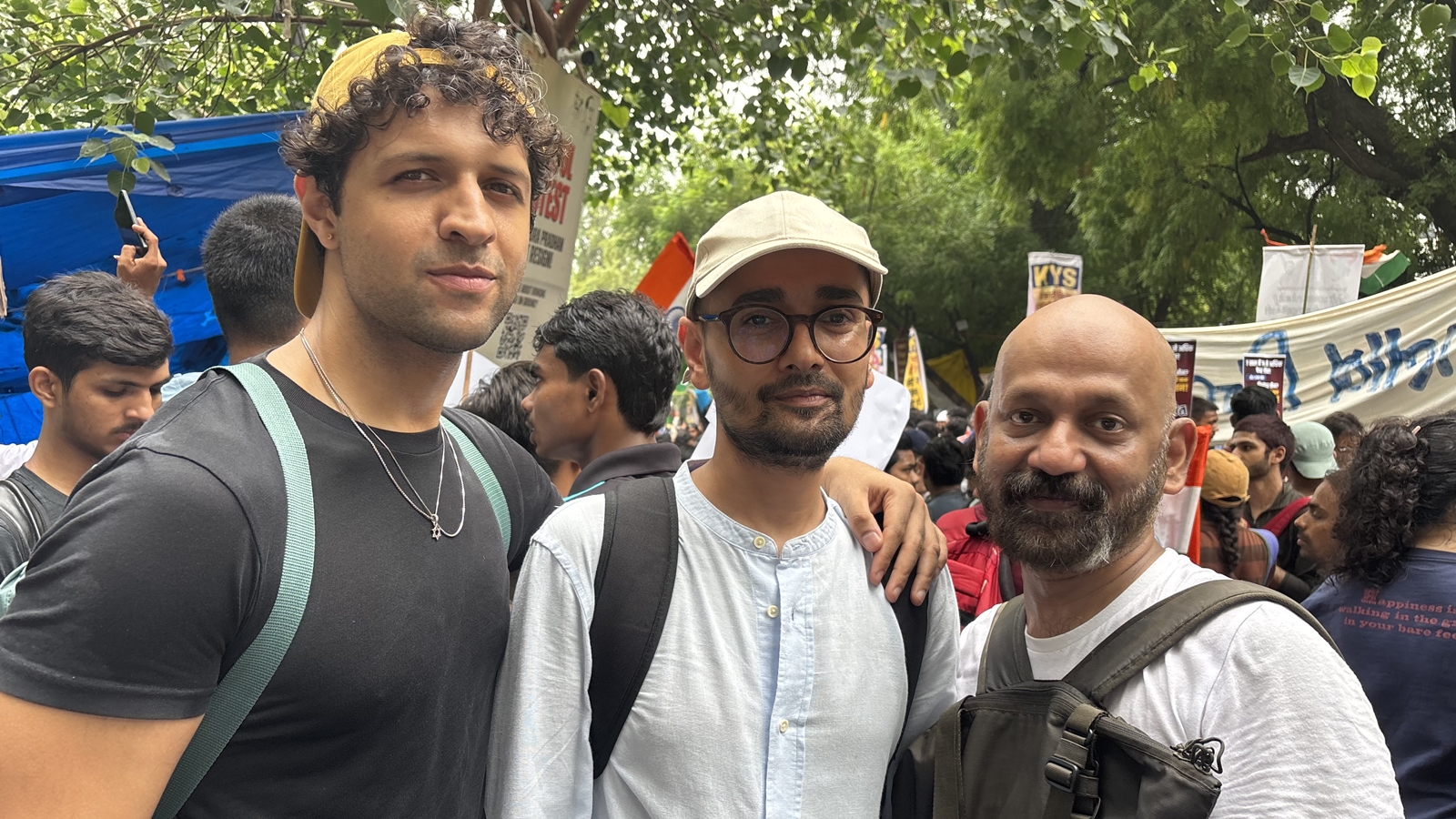
5 min readNew DelhiJul 21, 2026 04:10 AM IST
Long before the first police barricade was pushed by a protester or the first tear gas shell was fired by a security personnel, Jantar Mantar saw people from various walks of life – students, parents, teachers and young professionals — gathering to take part in the march towards the Parliament.
By 9 am, many from across the country had arrived for the Cockroach Janata Party’s march, seeking Union Education Minister Dharmendra Pradhan’s resignation. Around them, Delhi Police personnel stood guard, with barricades sealing off the roads leading out of Jantar Mantar.

The core team of CJP was still in talks with the police near the stage to be allowed to hold the march..
The permission never came.
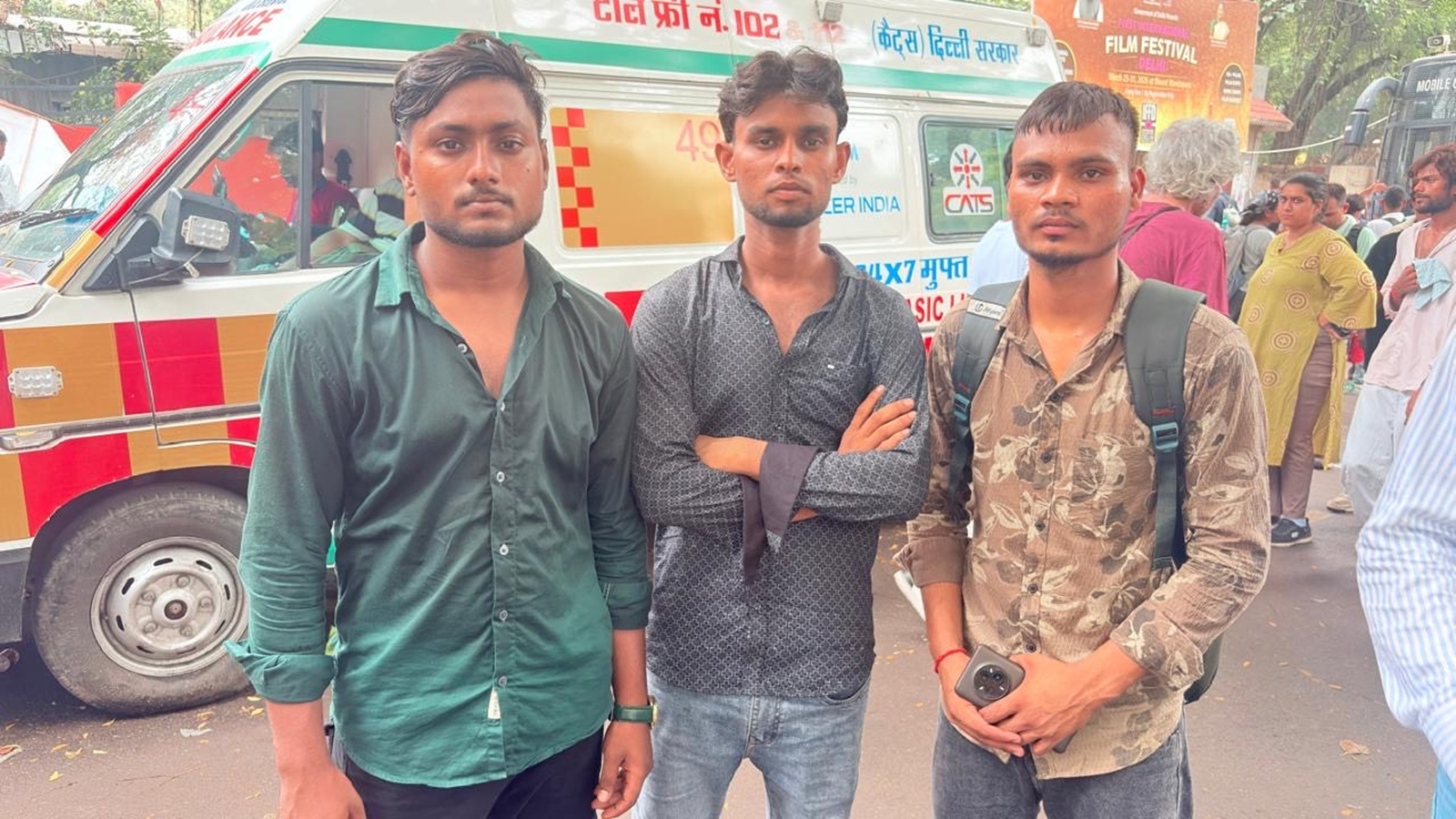 (From left) Ranjan, Amit, Nitin. (Express photo)
On Sunday only, the Delhi Police had said that CJP had neither received permission to continue their protest at Jantar Mantar nor sought approval to hold a march to the Parliament.
However, this did not deter the protesters who came from all over the country.
Among the first to arrive was Deepa (42) from Delhi’s Shahdara. She reached Jantar Mantar with her husband and three children around 6.30 am.
Story continues below this ad
“I have two children studying in classes 10 and 12 in government schools. Their future is also at stake. We want a change in the education system so that both rich and poor children get equal opportunity to study, with the same resources… Only then there can be a change,” she said.
Her husband Prahlad (46) added, “We are ready to even wait until evening for the police permission… If we were afraid, why would we have come here.”
Their son, who is preparing for the IIT-JEE examination, said his elder sister is volunteering at the Jantar Mantar protest site. “She tells us how the crowd has been increasing every night.”
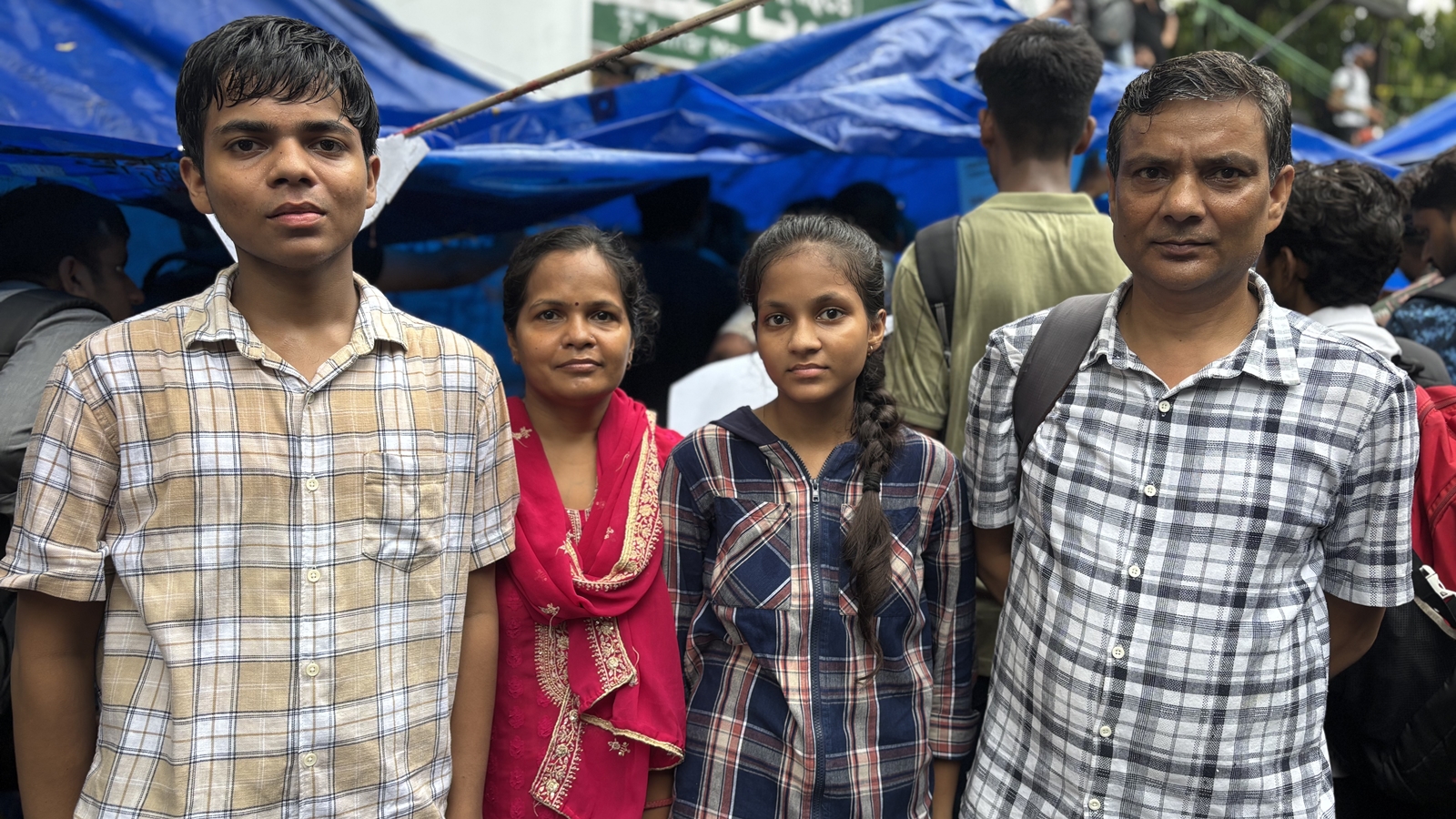 Deepa’s family from Delhi’s Shahdara. (Express photo)
Nearby, three strangers – an actor from Mumbai and architects from Jaipur and Delhi – who had met only that morning waited for the march to begin.
Story continues below this ad
Ujay, an actor and teacher from Mumbai, said he had first come across the protest on Instagram. “I wasn’t fully aware of the issue initially but then I spoke to my friends… They were not in favour of asking a minister to resign. But I think it is actually a good idea to take responsibility if something has happened under your nose. Otherwise, such things will keep happening,” he said.
The heavy police deployment, however, made him uneasy. “It is really nice that so many people have turned up, but also it is scary to see such heavy security. Their primary duty is to ensure the security of the people…”
Standing next to him, the architect from Delhi wondered why police permission was needed in the first place to march to the Parliament. “Why do we need permission to protest and that too from the ones we are protesting against. It is our basic right to protest.”
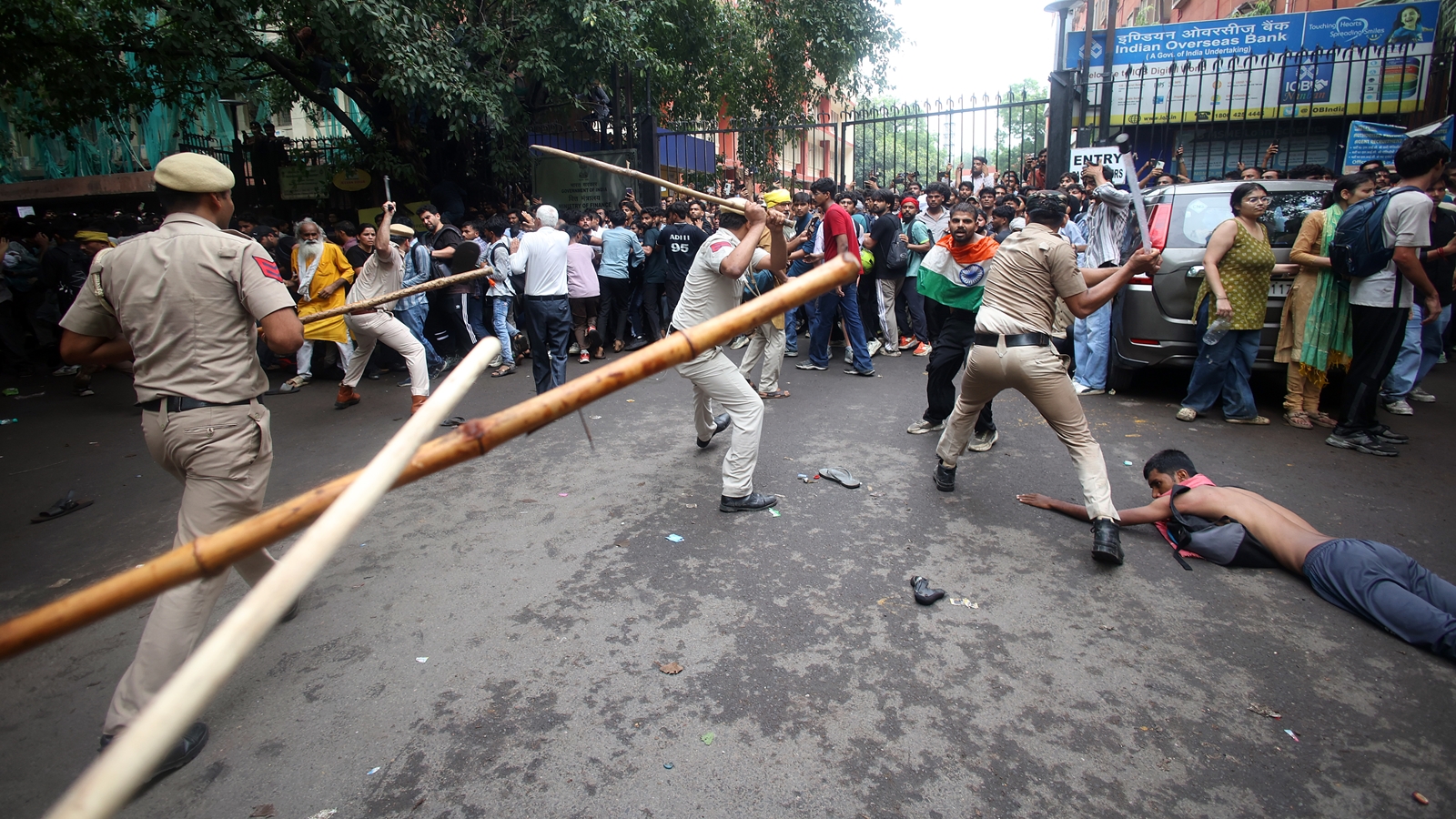 Delhi Police personnel disperse the protesters as they attempt to march towards the House, at Parliament Street, on Monday. (Express photo by Praveen Khanna)
Dushyant, a 40-year-old architect who had travelled from Jaipur, said he admired the young protesters. “They are asking questions my generation didn’t. They are questioning why we need permission to protest, which is our constitutional right. Even if permission isn’t granted, at least we should show up and be counted,” he said.
Story continues below this ad
Apprehending a police crackdown, Dushyant added, “Many of us have come here knowing that things might go wrong, but for how long we can sit quietly knowing that the system is rotten.”
Nineteen-year-old Blinkit delivery agents Nitin and Anil, along with their colleague Ranjan, had travelled from Bareilly in Uttar Pradesh. They had to leave school to earn a livelihood.
“We are here because 20 students have died because of the NEET paper leak. We are demanding the resignation of the education minister so that this is not repeated in the future… Our lives are very uncertain because we drive the whole day, delivering goods to people… we know how important a person’s life is,” Ranjan said.