Prateek Tanmay

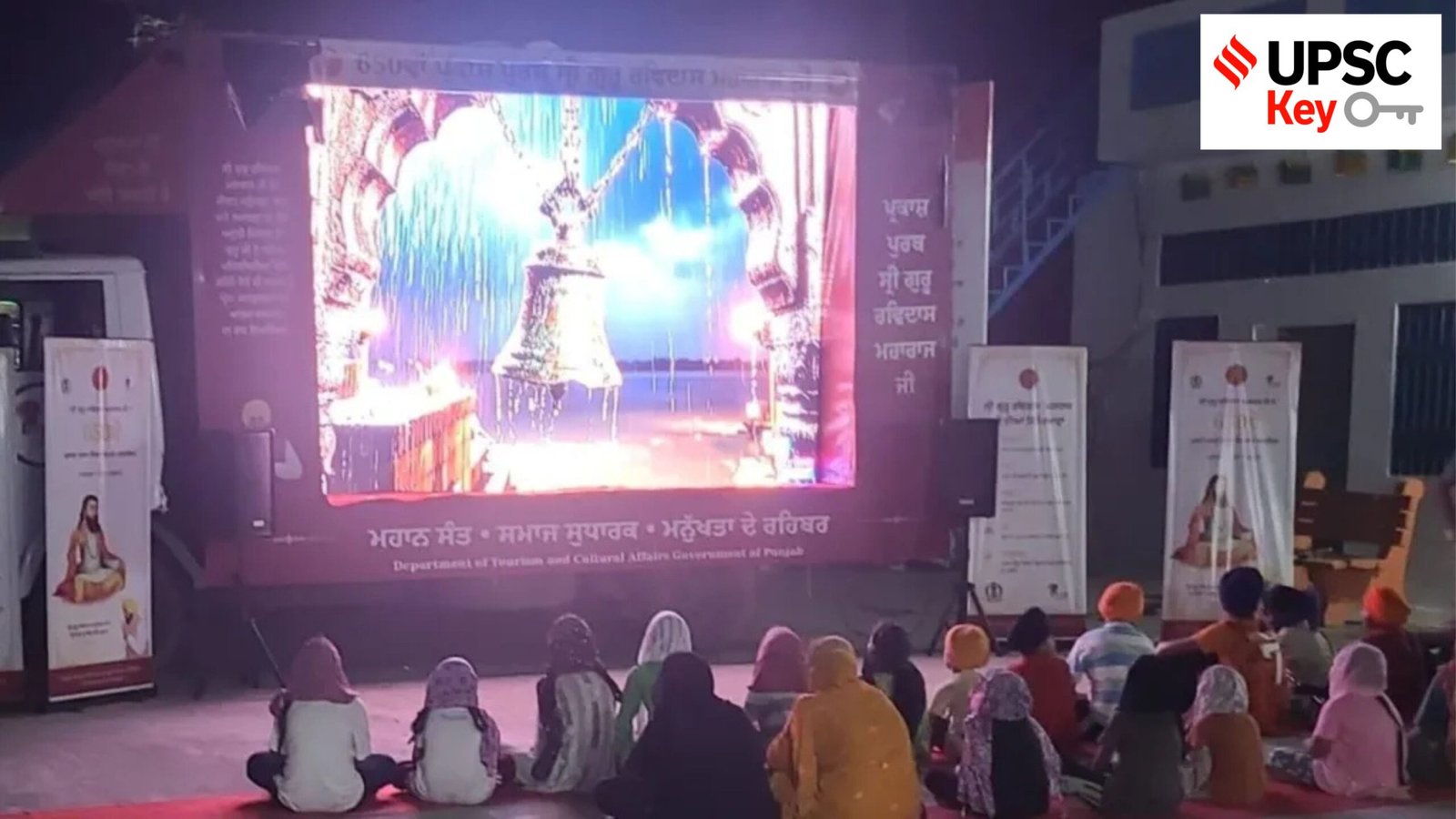
Govt set to bring Bill to criminalise insult to Vande Mataram
Syllabus:
Preliminary Examination: Indian Polity and Governance-Constitution, Political System, Panchayati Raj, Public Policy, Rights Issues, etc.
Mains Examination: General Studies II: Government policies and interventions for development in various sectors and issues arising out of their design and implementation.
What’s the ongoing story: The Government is all set to bring a Bill in the Rajya Sabha on the first day of the Monsoon Session that will make any obstruction or insult to the national song “Vande Mataram” a criminal offence — at par with the national anthem “Jana Gana Mana”.
Key Points to Ponder:
• The Prevention of Insults to National Honour (Amendment) Bill, 2026-what are the key highlights of this bill?
• What is ‘Vande Mataram’?
• What are the important facts about Vande Mataram?
• What is national song?
• What is National Anthem?
• The National Anthem and National Song-know the difference
• Why Bankim Chandra Chattopadhyay’s Ananda Math (1882) is considered a foundational text for understanding Indian nationalism?
• What was the contribution of Vande Mataram song in the Indian freedom struggle?
• Why the song Vande Mataram holds historic importance in India?
• Why Vande Mataram not chosen as National Anthem?
Key Takeaways:
• According to the List of Business for the Rajya Sabha for Monday, “The Prevention of Insults to National Honour (Amendment) Bill, 2026” is likely to be introduced by Union Home Minister Amit Shah.
• The Bill proposes to amend the Prevention of Insults to National Honour Act, 1971, which makes desecration of or disrespect toward the country’s national symbols, including the national flag, the Constitution and the national anthem, a criminal offence, with a punishment of up to three years’ imprisonment as well as provisions for a fine.
• The proposed move drew a sharp reaction from the CPM, with Rajya Sabha MP John Brittas calling for the Bill’s withdrawal, stating in a letter to Shah that it “risks unsettling a delicate constitutional balance founded upon pluralism, liberty of conscience and voluntary patriotism”.
• According to a copy of the proposed legislation circulated among MPs, the Bill seeks to substitute the existing Section 3 of the 1971 Act to effectively bring “Vande Mataram” at par with “Jana Gana Mana” with regard to alleged acts of prevention or disturbance against singing them, with the same penal provisions — three years, a fine, or both.
• “Whoever, intentionally — (a) prevents the singing of the National Anthem or the National Song; or (b) causes disturbance to any assembly engaged in such singing, shall be punishable with imprisonment for a term which may extend to three years, or with fine, or with both,” the Bill states.
• Last year, a special discussion was held in both Houses in December to mark the 150th anniversary of the national song, with sittings taking place over four days — one day in the Lok Sabha and three in the Rajya Sabha — during the Winter Session.
• Prime Minister Narendra Modi had initiated the discussion in the Lok Sabha, which saw the participation of 65 MPs over 11 hours and 32 minutes. In the Rajya Sabha, Shah had initiated the discussion, which saw 81 members participate over 12 hours and 49 minutes.
Do You Know:
• Vande Mataram (Mother, I bow to thee) was composed in sanskritised Bengali by Bankim Chandra Chattopadhyay in 1875, and was first published in 1882 as part of his novel, Anandmath. Chatterjee had been inspired by freedom movements such as the 18th-century Sannyasi Rebellion and the 1857 revolt.
The song became popular during the freedom struggle and was adopted by the Indian National Congress in 1905 to rouse nationalist sentiment for the motherland.
• President Rajendra Prasad bestowed equal honour on Vande Mataram and Jana Gana Mana in the 1950 Constituent Assembly debate.
• “The composition consisting of the words and music known as Jana Gana Mana is the National Anthem of India, subject to such alterations in the words as the Government may authorise as occasion arises; and the song Vande Mataram, which has played a historic part in the struggle for Indian freedom, shall be honoured equally with Jana Gana Mana and shall have equal status with it,” he said.
• For one, the National Anthem enjoys constitutional privileges that the National Song does not. Article 51A(a) of the Constitution makes it a fundamental duty for every citizen to respect the National Anthem, while the decorum for playing or singing the National Anthem is regulated by ‘Orders relating to the National Anthem of India’ and ‘The Prevention of Insults to National Honour Act, 1971’.
• Jana Gana Mana was chosen as the national anthem for its secular, inclusive nature, celebrating the nation’s unity in diversity.
Other Important Articles Covering the same topic:
📍Vande Mataram at 150: How the National Song is different from the National Anthem
📍Vande Mataram 150 years: How Bankim Chandra Chattopadhyay imagined nation as motherland in Ananda Math
Previous year UPSC Prelims Question Covering similar theme:
1) With reference to Madanapalle of Andhra Pradesh, which one of the following statements is correct? (UPSC CSE, 2021)
(a) Pingali Venkayya designed the tricolor Indian National Flag here.
(b) Pattabhi Sitaramaiah led the Quit India Movement of Andhra region from here.
(c) Rabindranath Tagore translated the National Anthem from Bengali to English here.
(d) Madame Blavatsky and Colonel Olcott set up headquarters of Theosophical Society first here.
Coming soon in Gujarat: A life-size Harappan town with markets, dockyards
Syllabus:
Preliminary Examination: Current events of national and international importance.
Mains Examination: General Studies I: Indian culture will cover the salient aspects of Art Forms, literature and Architecture from ancient to modern times.
What’s the ongoing story: Very soon, visitors to Lothal, one of the most prominent outposts of the Indus Valley Civilisation, will be able to get a feel of walking through Harappan streets, dockyards, markets and civic spaces.
Key Points to Ponder:
• What is the National Maritime Heritage Complex (NMHC), in Lothal Gujarat?
• Map Work-Rakhigarhi, Khatiya, Dholavira, Lothal, Desalpar and Khirsara, Kotda Bhadli, Nadapa and other Harrapan Sites
• Indus Valley Civilization or Origin of Harappan Civilization-Know the date and Area and Areas of extension
• Harappan-Know the Urban infrastructure and architecture
• Harappan- Know about Harappan society and religion
• Know in detail-Harappan art, craft and pottery
• Know in detail-Harappan Language and Scripts
• Reasons for Decline-Various Debates (Perspective-Left, Marxists and Conservatives etc)
• Why Lothal is important place in Indus Valley Civilisation?
• What exactly Lothal tells about Indus Valley Civilisation?
Key Takeaways:
• Just a few minutes away from the archaeological site, about 80 km from Ahmedabad, architects are recreating parts of the historic town for a museum that will be part of the Rs 4,000-crore National Maritime Heritage Complex (NMHC), whose first phase will be inaugurated within weeks.
• According to officials, the first phase of the complex cost an estimated Rs 775 crore, and includes six museum galleries, a jetty walkway, and a display of maritime artefacts spanning ancient, medieval, colonial and modern times.
• But the centrepiece of the 375-acre project, cleared by the Union Cabinet in 2024, remains the recreation of Lothal town.
• “Rather than displaying history behind glass, we wanted people to physically walk through reconstructed Harappan streets, dockyards, markets, and civic spaces to understand how advanced these settlements were,” Karl Wadia, Principal Architect at Architect Hafeez Contractor, who is heading the project, told The Indian Express.
• The firm was signed on to design the project by the Union Ministry of Ports and Shipping, the nodal ministry involved, with the total project cost pegged at around Rs 4,000 crore, officials said. “The idea was to create a world-class cultural and educational destination where visitors can experience India’s 4,500-year maritime history in an immersive, engaging way,” Wadia said.
• The museum comprises monumental stone-clad forms raised on elevated plinths, reinterpreting the flood-resistant citadels of Harappan settlements. Two inclined forms at the top resemble ship hulls, inspired by the righting-lever principle used in naval engineering, according to the concept.
• India has already signed MoUs with over a dozen countries, including the Netherlands, Denmark, Germany, South Korea, UAE, Portugal, Vietnam, Oman, Israel and Thailand, for collaboration in developing NMHC as a global centre of maritime history, according to the Union Shipping and Ports Ministry.
Do You Know:
• Lothal is believed to have existed around 4,500 years ago, with excavations at the site revealing the world’s oldest known artificial dock, connected to an old course of the Sabarmati river.
• Lothal is a prominent Harappan port city located in Gujarat, along the Bhogava River in the Gulf of Khambhat. Discovered by archaeologist S.R. Rao in 1954, it was a thriving trade center dating from 2400 BCE to 1600 BCE. It is most famous for housing the world’s earliest known tidal dockyard.
• Lothal is currently the site for developing the National Maritime Heritage Complex (NMHC). Led by the Ministry of Ports, Shipping, and Waterways in collaboration with the Netherlands, this flagship project aims to showcase India’s rich 5,000-year-old maritime legacy.
Other Important Articles Covering the same topic:
📍New study suggests existence of a dockyard at Lothal, Gujarat, during Harappan Civilisation: What are the findings?
Previous year UPSC Prelims Question Covering similar theme:
2) Consider the following statements about the archaeological findings in Harappan towns: (UPSC CSE, 2026)
There is wide occurrence of spindle-whorls in the houses but absence of spinning wheels.
I. Weights and measurement scales, complete with graduations have been discovered.
II. There are houses built in large part with baked bricks, around relatively spacious courtyards, with their own wells, bathing platforms, and large rooms.
Which of the following inferences can be drawn from the above statements?
1. Statement I suggests that spinning was a laborious activity done at home.
2. Statement II suggests the extent of the scientific knowledge that the Harappans possessed.
3. Statement III suggests the emergence of a common property system.
Select the answer using the code given below:
(a) 1 and 2 only
(b) 2 and 3 only
(c) 1 and 3 only
(d) 1, 2 and 3
Nation
J&K: 18 dies as flash floods, landslides wreak havoc
Syllabus:
Preliminary Examination: Indian and World Geography-Physical, Social, Economic Geography of India and the World.
Mains Examination:
• General Studies I: Important Geophysical phenomena such as earthquakes, Tsunami, Volcanic activity, cyclone etc., geographical features and their location-changes in critical geographical features (including water-bodies and ice-caps) and in flora and fauna and the effects of such changes.
• General Studies III: Disaster and disaster management.
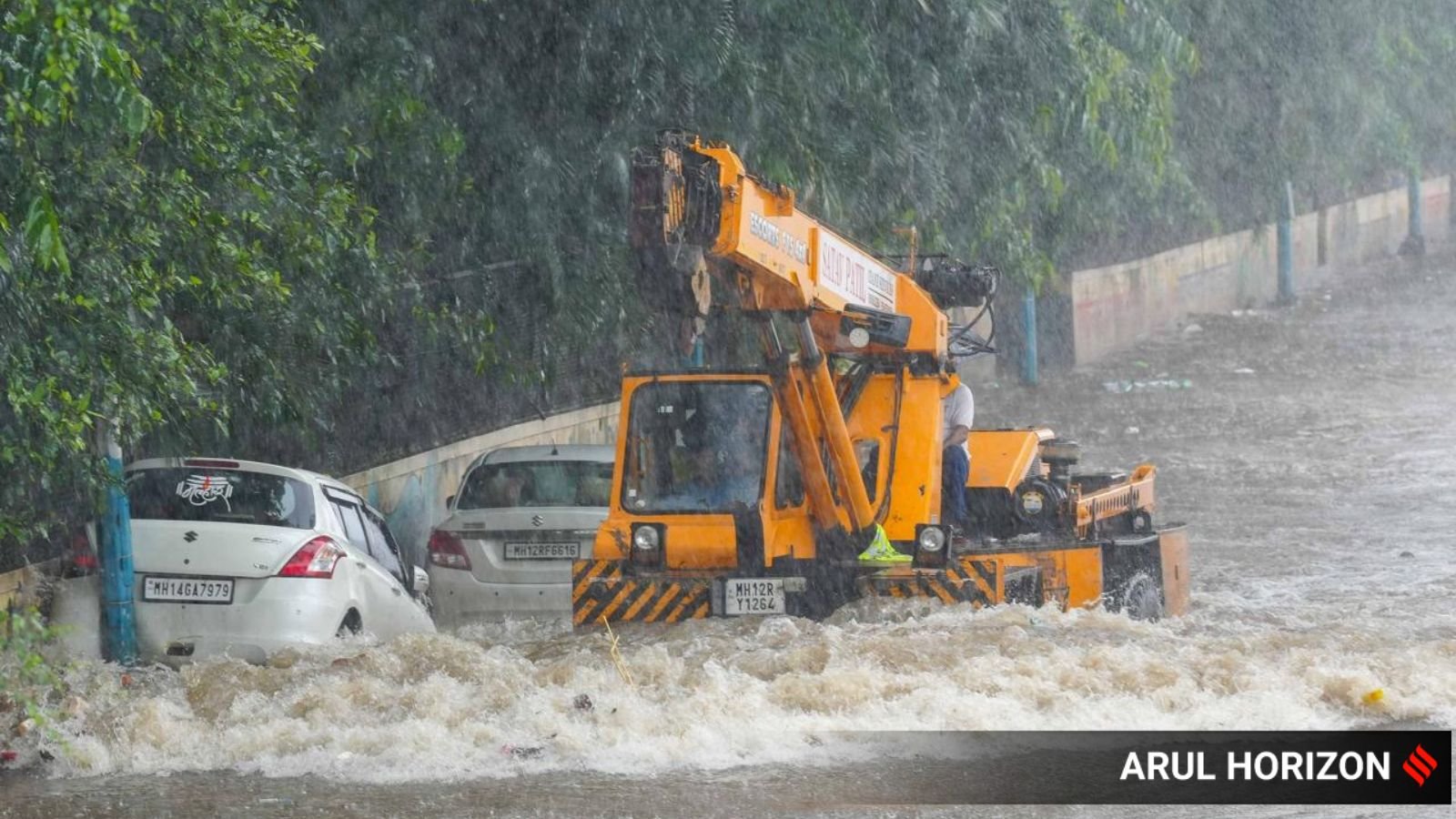
What’s the ongoing story: Floods at least 18 people, including several children, were killed, a large number of vehicles were swept away, and several residential and commercial buildings were damaged after overnight heavy rain led to flash floods and landslides in the early hours of Sunday in Jammu and Kashmir’s border districts of Poonch and Rajouri.
Key Points to Ponder:
• What is flash flooding?
• What is the reason for flash floods?
• What is difference between Cloudburst and flash floods?
• How common are flash floods and floods?
• What according to Ministry of Environment, Forest and Climate Change are the causes of landslides?
• What is Landslide?
• What causes Landslides?
• What are the types of landslides?
• Know the Landslide-Prone Areas in India and mark them on Map
• The Geological Survey of India (GSI) and national landslide susceptibility mapping-connect the dots
• How disaster management is done in the landslide and subsidence-hit zone?
Key Takeaways:
• Sixteen people died in Poonch district alone, and Rajouri town saw large-scale property damage. In Poonch, 15 of the 16 deaths took place in the Surankote area — eight in Murrah, four in Sangla, and one each at Sanglani, Marhote and Dogrian Buffliaz.
• J&K Chief Minister Omar Abdullah, who had gone to New Delhi to sit on dharna at Jantar Mantar on Monday demanding the restortaration of statehood for Jammu and Kashmir, said he would return to Jammu in view of the disaster.
Do You Know:
• Excessive or continuous rainfall over a period of days, or during particular seasons, can lead to stagnation of water and cause flooding. Flash floods refer to such a situation, but occurring in a much shorter span of time, and are highly localised. For instance, the US’s meteorological agency, the National Weather Service, says flash floods are caused when rainfall creates flooding in less than 6 hours. It adds that flash floods can also be caused by factors apart from rainfall, like when water goes beyond the levels of a dam.
• In India, flash floods are often associated with cloudbursts – sudden, intense rainfall in a short period of time. Himalayan states further face the challenge of overflowing glacial lakes, formed due to the melting of glaciers, and their numbers have been increasing in the last few years.
• Frequently, flash floods are accompanied by landslides, which are sudden movements of rock, boulders, earth or debris down a slope. It is common in mountainous terrains, where there are conditions created for it in terms of the soil, rock, geology and slope. Natural causes that trigger landslides include heavy rainfall, earthquakes, snowmelting and undercutting of slopes due to flooding. Landslides can also be caused by human activities, such as excavation, cutting of hills and trees, excessive infrastructure development, and overgrazing by cattle.
• Flash flooding commonly happens more where rivers are narrow and steep, so they flow more quickly. They can occur in urban areas located near small rivers, since hard surfaces such as roads and concrete do not allow the water to absorb into the ground.
Other Important Articles Covering the same topic:
📍UPSC Issue at a Glance | Landslides : 5 Key Questions You Must Know for Prelims and Mains
Previous year UPSC Mains Question Covering similar theme:
📍Describe the various causes and the effects of landslides. Mention the important components of the National Landslide Risk Management Strategy. (2021)
📍Discuss the recent measures initiated in disaster management by the Government of India departing from the earlier reactive approach. (2020)
Economy
Why domestic reserves are not enough to fuel India’s nuclear ambitions
Syllabus:
Preliminary Examination: Current events of national and international importance.
Mains Examination: General Studies II: Bilateral, regional and global groupings and agreements involving India and/or affecting India’s interests.
What’s the ongoing story: Earlier this month, India secured a long-term uranium supply deal with Australia, marking a key step towards operationalisation of the pact for its civil nuclear programme. The development comes nearly 12 years after the India-Australia Civil Nuclear Cooperation Agreement was signed.
Key Points to Ponder:
• What is the India-Australia uranium deal?
• What is India’s status on Uranium reserve?
• Why India needs more uranium supply?
• The third India-Australia Annual Summit at Melbourne-what are the key outcomes?
• Australia’s policy of exporting uranium-know in brief
• Australia’s current change of heart in exporting Uranium to India-know in detail
• What is Uranium?
• What are the different isotopes of uranium?
• What is uranium enrichment?
• How is uranium mined?
• How is uranium made into nuclear fuel?
• What is reprocessed uranium (RepU)?
• What are the process of uranium enrichment and discuss its strategic significance in the global nuclear order?
• What is the role of enriched uranium in civilian nuclear energy generation?
• Know the geopolitics surrounding uranium enrichment technologies.
Key Takeaways:
• While the volume of uranium oxide, or yellowcake, to be supplied and the duration of the agreement have not been disclosed, the deal follows similar long-term uranium supply agreements signed with Canada and Kazakhstan earlier this year, underscoring New Delhi’s efforts to diversify and secure fuel supplies for its planned expansion of nuclear power generation.
• The agreement comes as India pursues an ambitious target of expanding its civil nuclear power capacity to 100 gigawatt-electric (GWe) by 2047 and, last year, opened the tightly regulated civil nuclear sector to greater private participation.
• According to the Ministry of Power committee, mining and processing domestic uranium into uranium ore concentrate costs three to four times more than procuring it from international markets. The higher cost is mainly due to the poor grade of uranium ore found in India. However, the committee cautioned that the ongoing global push towards nuclear power could drive up international uranium prices in the coming years.
Do You Know:
• Uranium, a common element found worldwide, must undergo several processing stages before it can be used as nuclear fuel. These include mining and milling, conversion, enrichment (where required), and fuel fabrication.
• For the country’s indigenous pressurised heavy water reactors (PHWRs), which run on natural uranium, fuel requirements are met through a combination of production from state-owned Uranium Corporation of India Ltd (UCIL) mines and imports. Enriched uranium used in the two light water reactor (LWR) variants — Tarapur Nuclear Power Plant and Kudankulam Nuclear Power Plant — is entirely imported.
• The domestic uranium oxide reserves currently stand at around 4.3 lakh tonnes, spread across 47 uranium deposits located in Andhra Pradesh, Telangana, Jharkhand, Meghalaya, Rajasthan, Karnataka, Chhattisgarh, Uttar Pradesh, Uttarakhand, Himachal Pradesh and Maharashtra. UCIL has the mandate to mine and process uranium ore in the country and operates major mines in Jaduguda and Turamdih in Jharkhand and Tummalapalle in Andhra Pradesh.
• However, the uranium requirement for only 2.4 GWe out of the country’s total 8.7 GWe capacity is currently met from domestic sources while the rest is met through imports, a committee constituted by the Ministry of Power to prepare a roadmap for 100 GW nuclear capacity by 2047 noted in June 2025.
• The country’s ability to import uranium for its civil nuclear reactors was unlocked in 2008, when the Nuclear Suppliers Group (NSG) granted it a ‘clean’ waiver, making it the only non-signatory to the Nuclear Non-Proliferation Treaty (NPT) to enjoy such trading privileges.
Government data shows that between 2008-09 and 2024-25, India imported a total of 18,842.60 metric tonnes (mt) of uranium in the form of uranium ore concentrate, natural uranium dioxide pellets and enriched uranium dioxide pellets for reactors operating under International Atomic Energy Agency (IAEA) safeguards.
• India currently imports uranium from Russia and Uzbekistan. Shipments from Canadian mining company Cameco Corp., under the $2.6-billion supply agreement signed in March, are expected to begin next year. Kazakhstan is also expected to emerge as one of India’s most significant uranium suppliers after Kazatomprom, the world’s largest uranium producer, agreed in February to sell a substantial volume of uranium to India. Both Cameco and Kazatomprom were among India’s major uranium suppliers until 2020-21.
Other Important Articles Covering the same topic:
📍PM Modi in Melbourne finalises deal to import Uranium from Australia
Previous year UPSC Prelims Question Covering similar theme:
3) In India, why are some nuclear reactors kept under “IAEA safeguards” while others are not? (UPSC CSE, 2020)
(a) Some use uranium and others use thorium
(b) Some use imported uranium and others use domestic supplies
(c) Some are operated by foreign enterprises and others are operated by domestic enterprises
(d) Some are State-owned and others are privately-owned
4) To meet its rapidly growing energy demand, some opine that India should pursue research and development on thorium as the future fuel of nuclear energy. In this context, what advantage does thorium hold over uranium? (UPSC CSE, 2012)
1. Thorium is far more abundant in nature than uranium.
2. On the basis of unit mass of mined mineral, thorium can generate more energy compared to natural uranium
3. Thorium produces less harmful waster compared to uranium.
Which of the statement(s) given above is/are correct?
(a) 1 only
(b) 2 and 3 only
(c) 1 and 3 only
(d) 1, 2 and 3
Explained
US, Iran trade lethal strikes again: Their motives, lessons
Syllabus:
Preliminary Examination: Current events of national and international importance.
Mains Examination: General Studies II: Effect of policies and politics of developed and developing countries on India’s interests
What’s the ongoing story: The US and Iran have attacked each other viciously in the last one week, blowing multiple holes into the already tattered Memorandum of Understanding (MoU) they signed on June 17.
Key Points to Ponder:
• Why are the USA at war with Iran again?
• What is the major reason for the Iran war?
• What happened to the Iran-US peace deal?
• What is the future of the Strait of Hormuz?
• Which country has jurisdiction over Strait of Hormuz?
• Is it legal to blockade international waters?
• How has Iran blockaded the Strait of Hormuz?
• What is Exclusive Economic Zone?
• What United Nations Convention on the Law of the Sea (UNCLOS) says?
Key Takeaways:
• On Saturday, two US military personnel were killed in Jordan. The US has retaliated, raising the spectre of an all-out war once again.
• The MoU had hinged on the capability Iran had demonstrated to control the Strait of Hormuz. The recent tensions hinge on the US attempting to demonstrate that it can loosen Tehran’s chokehold on the strategic international waterway, through which 20 per cent of the world’s energy supply flows.
• Iran has said that that US strikes have killed at least 50 people and wounded more than 500 in the post-MoU round of hostilities. The MoU had promised major economic relief to a country crippled by sanctions. Yet, Iran’s unwillingness to back down is because of two factors — the conviction that the US cannot be trusted, and the imperative to maintain control over the Strait of Hormuz, its biggest leverage.
• Thus, Iran has continued to escalate wherever it sees the need, attacking US military bases in its neighbouring countries. On July 18, the new Ayatollah, Mojtaba Khamenei, posted on X that the “repeated breaches of the agreement” show that the “signature of the US President is utterly worthless and devoid of credibility.”
• Parallelly, it has refused to let go of the idea of charging some sort of transit fee and formalising its control over the Strait of Hormuz. According to the American think tank Institute for the Study of War (ISW), an Iranian Environmental Protection Agency official announced on July 18 that the body had asked the government to charge fees for “environmental services” from ships transiting the strait, citing the UN Convention on the Law of the Sea (UNCLOS).
• Iran’s actions have also shown that it is adapting to US defences. It has fired high-speed, manoeuvrable missiles at US bases in the region, highlighting the threat that the advancement of Iran’s ballistic missile programme poses to US security interests, according to ISW.
• The ISW said Iranian leaders focused on missile accuracy after the 12-day war in June 2025. Iran had struggled with relatively poor missile accuracy in its strikes against Israeli military targets in March and April 2026 too, which likely pushed it to deploy cluster munitions at a greater scale in order to maximise damage.
• For the US, the experience has been a re-hammering of the lessons it learnt after the wars in Afghanistan and Iraq —that too much firepower, poorly applied, only produces more enemies. A major goal for the US now is to ensure Hormuz remains free for movement, like it was before it, along with Israel, attacked Iran on February 28.
Do You Know:
• For Delhi, a return to open war means more lives at risk, as many Indians live and work in West Asia, apart from the large population of Indians that make up ship crews. Fourteen Indians have died since the war began on February 28, while two more are missing. New Delhi has protested with both Iranians and Americans over the loss of lives — mostly of seafarers and some Indians living and working in the Gulf.
• War will also bring serious economic challenges. The Indian economic situation is facing headwinds with the rise in energy prices, which has had a debilitating impact on its markets. The inflationary impact of West Asian developments is already visible.
• In this context, New Delhi is urging both warring parties to return to dialogue and diplomacy, and not put the global economy on a slowdown in which the Global South suffers.
Other Important Articles Covering the same topic:
📍Expert Explains: ‘The Strait of Hormuz is simply too vital an artery to remain closed for too long’
Previous year UPSC Prelims Question Covering similar theme:
5) With reference to the United Nations Convention on the Law of Sea, consider the following statements: (UPSC CSE, 2022)
1. A coastal state has the right to establish the breadth of its territorial sea up to a limit not exceeding 12 nautical miles, measured from baseline determined in accordance with the convention.
2. Ships of all states, whether coastal or land-locked, enjoy the right of innocent passage through the territorial sea.
3. The Exclusive Economic Zone shall not extend beyond 200 nautical miles from the baseline from which the breadth of the territorial sea is measured.
Which of the statements given above are correct?
(a) 1 and 2 only
(b) 2 and 3 only
(c) 1 and 3 only
(d) 1, 2 and 3
Race for Low Earth orbit: What Vikram-1 launch means for India
Syllabus:
Preliminary Examination: Current events of national and international importance.
Main Examination: General Studies-III: Science and Technology, Awareness in the fields of IT, Space.
What’s the ongoing story: India’s first privately developed launch vehicle, Vikram-1, placed several technology demonstration satellites in Low Earth orbit (LEO) on Saturday (July 18) morning.
Key Points to Ponder:
• What is Low Earth orbit?
• Why is it such a crucial region of space?
• What are other countries doing in that region,
• Where is India in that race?
• Why is Low Earth orbit important?
• Do you know about Low Earth Orbit (LEO), Medium Earth Orbit (MEO), and Geostationary Earth Orbit (GEO) (also known as High Earth Orbit)?
• Know about the Vikram-1 launcher in detail.
• What is the significance of the Vikram-1 rocket?
• What was ‘Vikram-S’ (Mission Prarambh)?
Key Takeaways:
• The textbook launch from Sriharikota by Hyderabad-based Skyroot Aerospace — the country’s first space unicorn — makes India only the third country in the world to have private launch capability after the US and China. It comes after the government opened up the space sector to private companies in 2020 and formalised the framework under the Indian Space Policy of 2023.
• The launch of the Vikram-1 — which can carry a payload of up to 350 kg to LEO — is significant for more than the fact that a private company has now entered the Indian aerospace ecosystem. It’s true significance lies in the region of space it aims for — where more and more countries are now looking to reserve their place.
Do You Know:
• In 2020, the government created IN-SPACe (Indian National Space Promotion and Authorisation Centre) and formulated the Indian Space Policy 2023 with the intent to facilitate greater participation of private industry in the space sector.
• An orbit is the curved path that an object in space (like a star, planet, moon, asteroid or spacecraft) follows around another object due to gravity.
• An object in motion will stay in motion unless something pushes or pulls on it. This statement is called Newton’s first law of motion. Without gravity, an Earth-orbiting satellite would go off into space along a straight line. With gravity, it is pulled back toward Earth. A constant tug-of-war takes place between the satellite’s tendency to move in a straight line, or momentum, and the tug of gravity pulling the satellite back.
• The International Space Station is in low Earth orbit, or LEO. LEO is the first 100 to 200 miles of space. LEO is the easiest orbit to get to and stay in. One complete orbit in LEO takes about 90 minutes.
• Satellites that stay above a location on Earth are in geosynchronous Earth orbit, or GEO. These satellites orbit about 23,000 miles above the equator and complete one revolution around Earth precisely every 24 hours. Geosynchronous orbits are also called geostationary.
• Polar orbits are a type of low Earth orbit, typically between 200 to 1000 km in altitude. Satellites in polar orbits usually travel around Earth from, roughly, one pole to the other, rather than from west to east. They do not need to pass exactly over the North and South Poles; a deviation of 10 degrees is still classed as a polar orbit.
• Polar orbits are particularly useful for global Earth coverage, as satellites orbiting ‘up’ and ‘down’ Earth’s surface can see every inch of the planet over time as it also rotates below.
Other Important Articles Covering the same topic:
📍SpaceX’s next big mission to explore polar orbit, a first for spaceflight
Previous year UPSC Prelims Question Covering similar theme:
6) An artificial satellite orbiting around the Earth does not fall down. This is so because the attraction of Earth (UPSC CSE, 2011)
(a) does not exist at such distance
(b) is neutralized by the attraction of the moon
(c) provides the necessary speed for its steady motion
(d) provides the necessary acceleration for its motion
7) Satellites used for telecommunication relay are kept in a geostationary orbit. A satellite is said to be in such as orbit when: (UPSC CSE, 2011)
1. The orbit is geosynchronous.
2. The orbit is circular.
3. The orbit lies in the plane of the earth’s equator.
4. The orbit is at an altitude of 22,236 km.
Select the correct answer using the codes given below:
(a) 1, 2 and 3 only
(b) 1, 3 and 4 only
(c) 2 and 4 only
(d) 1, 2, 3 and 4
|
PRELIMS ANSWER KEY |
|
1.(c) 2.(c) 3.(b) 4.(d) 5.(d) 6.(d) 7.(a) |
For any queries and feedback, contact priya.shukla@indianexpress.com
Subscribe to our UPSC newsletter. Stay updated with the latest UPSC articles by joining our Telegram channel – IndianExpress UPSC Hub, and follow us on Instagram and X.