Prateek Tanmay
Don’t miss what matters—UPSC Current Affairs Pointers brings you the past week’s key news every Monday to power your Prelims and Mains preparation for UPSC, State PCS, and other government exams.
— The Preliminary Report of the Independent International Scientific Panel on AI is the first scientific assessment of AI commissioned by the United Nations. It is intended to serve as the first in a series of periodic assessments, with a more comprehensive report expected next year.
— Co-chaired by Turing Award laureate Yoshua Bengio and Nobel laureate Maria Ressa, the 40-member panel’s preliminary report warns that the breakneck pace of AI development has completely outstripped existing safety guardrails, and global governance mechanisms are currently failing to keep up.
— The report argues that AI capabilities are progressing faster than scientific understanding and public oversight. Policymakers, it says, increasingly face a difficult dilemma: waiting for complete scientific certainty before acting may mean responding only after serious harms have already materialised.
— One of the panel’s biggest concerns is the emergence of increasingly capable frontier AI models and autonomous AI agents that can perform complex tasks with limited human intervention.
— The report argues that the global AI race is no longer just about talent or innovation, but increasingly about who controls the computing infrastructure needed to build and run advanced AI models.
Story continues below this ad
Economy
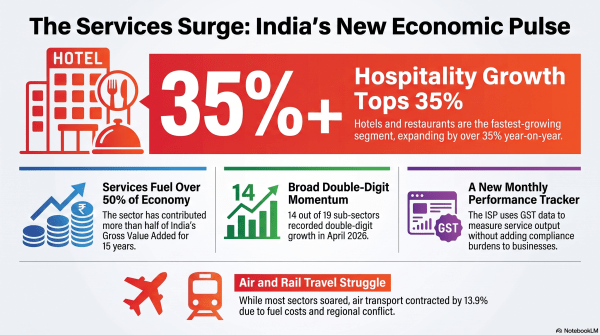 Infographics by NotebookLM
— The Ministry of Statistics and Programme Implementation (MoSPI) has released the country’s first trial Index of Services Production (ISP) for 19 sub-sectors, providing, for the first time, a monthly measure of short-term activity in the formal services sector.
— The inaugural index, with 2024-25 as the base year, covers April 2026 and accounts for nearly 60 per cent of India’s services sector.
— ISP is a short-term indicator designed to measure changes over time in the volume of output produced by the services sector relative to a specified base period. It measures changes in the real output of service-producing industries over time.
— As counterpart of the Index of Industrial Production (IIP) which measures the economic growth of the industrial sector, ISP will cover the formal services sector and will be released on a monthly basis.
Story continues below this ad
— The ISP fills a key gap in India’s official statistics; until now, there was no official monthly measure of the services sector’s performance, with private sector firm S&P Global’s services Purchasing Managers’ Index (PMI) being the only one.
— The ISP is not directly compiled as the output of the services produced by various companies; instead, Goods and Services Tax (GST) and administrative data for sub-sectors like air and railway transport and banking are used.
— Sub-sectors for which data is available in value terms are ‘deflated’ by the appropriate measure, be it Wholesale Price Index or Consumer Price Index, to arrive at the output.
— Health and education are two key segments not covered by the ISP as they are exempt from GST. However, MoSPI officials said the ministry is working on using administrative data to compile the index for health, education, and ownership of dwellings. Once this exercise is concluded, the overall ISP will cover 80% of the services sector.
Story continues below this ad
Polity
— With an aim to phase out old trucks and buses in the Capital to curb air pollution, the Delhi government has started the process to implement the Centre’s ‘Naya Safar Yojana’.
— The ‘Naya Safar Yojana’ aims to address the issue of vehicular pollution in Delhi-NCR through a combination of financial incentives, tax concessions and scrappage-linked benefits.
— It targets owners of BS-IV (emission norms enforced across India from April 2017 to March 2020) vehicles and older trucks and buses, encouraging voluntary fleet modernisation while strengthening the region’s efforts towards cleaner and more sustainable transport.
— Under the scheme, the Delhi government will extend 100% Motor Vehicle Tax concession for eligible new vehicles, and 50% concession for eligible used vehicles for 10 years. It also offers discounts on registration fees, and waiver of pending road tax and fitness penalty liabilities for eligible vehicles.
Story continues below this ad
— The total outlay of the scheme is Rs 9,585 crore, with the Central government contributing Rs 5,041 crore through National Capital Region Planning Board (NCRPB) under the Ministry of Housing and Urban Affairs.
— The scheme will be implemented through a fully digital Naya Safar Portal, enabling real-time eligibility verification, automated benefit disbursal and end-to-end monitoring. It will remain open for eligible beneficiaries for a period of two years, said the Minister.
— The Directorate General of Foreign Trade (DGFT), in an order dated July 13, has inserted a new paragraph in the Foreign Trade Policy (FTP) regarding “forced labour”, stating that the import of goods produced or manufactured, “wholly or in part”, through the use of forced labour is “prohibited”.
— This comes after the United States Trade Representative (USTR) proposed 12.5 per cent tariffs on India linked to the issue.
Story continues below this ad
— The US launched two Section 301 investigations against several countries, including India in March. While one cites structural excess capacity and overproduction in certain manufacturing sectors, the other cites failure to prohibit imports of goods produced using “forced” labour.
— Section 301 authorizes the U.S. Trade Representative (USTR) to investigate whether foreign governments are engaging in “unfair” acts, policies, or practices that burden or restrict U.S. commerce.
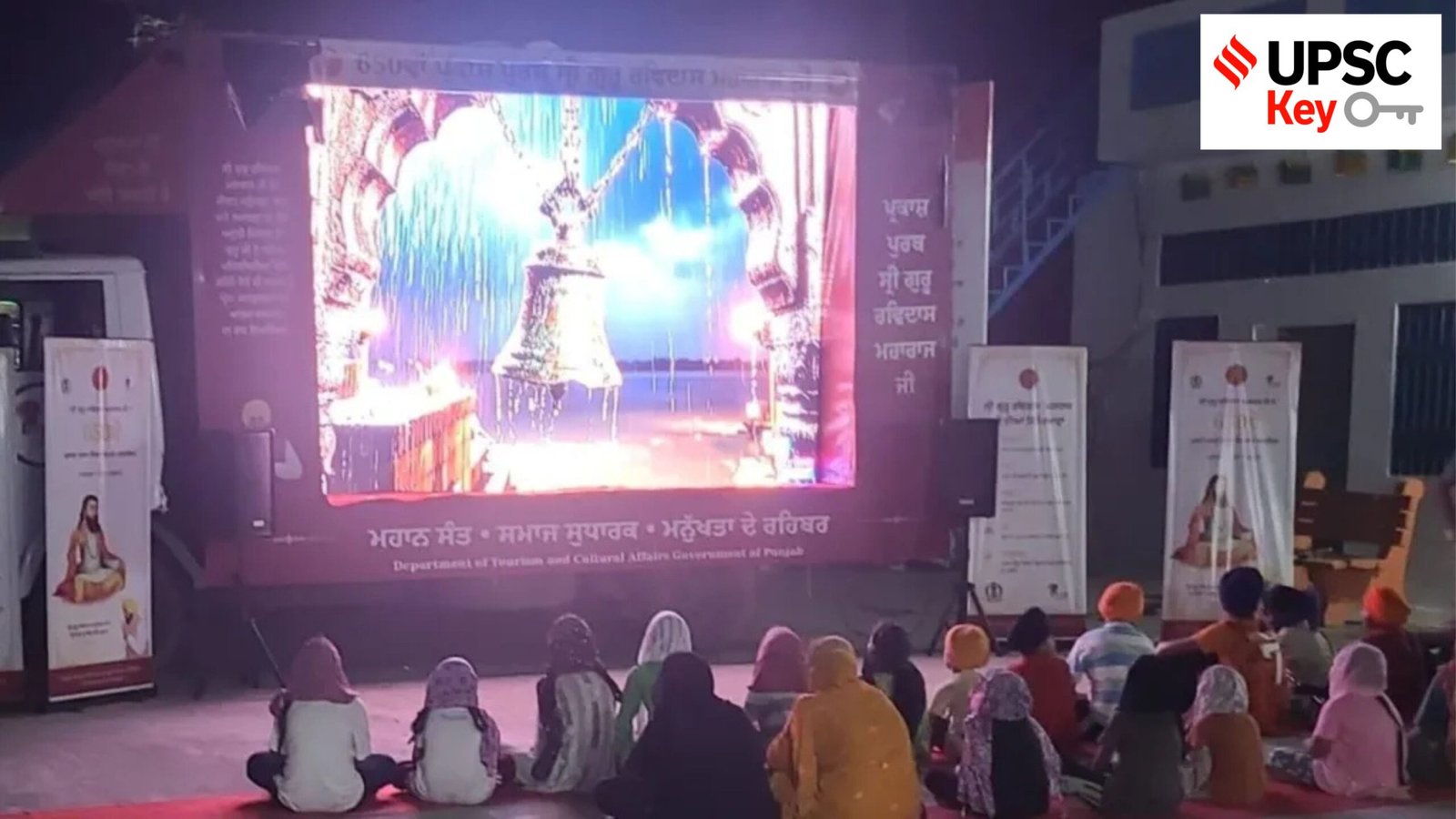
— Thousands of members of the Ravidassia community gathered in Punjab’s Phagwara on 12th July for a religious programme and to renew calls for a longstanding demand: the creation of a separate “Ravidassia religion” category in the Census.
— Guru Ravidas, a mystic poet-saint of the Bhakti Movement from the 15th and 16th centuries, created the concept of Begampura — an egalitarian society and a spiritual vision of a city without sorrow, fear or discrimination.
Story continues below this ad
— His followers, the Ravidassias, are a Dalit community of whom the bulk — nearly 12 lakh — live in the Doaba region of Punjab, which includes districts such as Kapurthala, Hoshiarpur, Nawanshar and Jalandhar.
Perhaps the most influential organisation within the community, the Dera Sachkhand Ballan was founded in the early 20th century by Baba Sant Pipal Das. Once closely connected with Sikhism, the dera severed these decades-old ties in 2010 and formally declared a Ravidassia religion.
— The Union Cabinet on 15th July approved the second iteration of India’s ambitious Semiconductor Mission, with an outlay of Rs Rs 1.27 lakh crore.
Story continues below this ad
— The fresh scheme will carry a key focus on subsidising the supply chain around chip manufacturing to attract companies producing commodities like gases, and chemicals used in the production process. The duration of the scheme is six years.
— The India Semiconductor Mission (ISM) 1.0 carried a uniform capex subsidy of 50% for fabs and assembly plants. However, under ISM 2.0, silicon fabs will receive a subsidy of 40%, and other fabs will get 35%. Similarly, the incentive for advanced packaging has been kept at 35%, and 25% for conventional packaging.
— By 2029, India expects to achieve the capability to design and manufacture chips required for nearly 70-75% of domestic applications, and by 2035, the country aims to be among the top semiconductor nations globally.
— ISM 1.0, launched in 2021, was conceived as a state-backed push to build a full-stack chip ecosystem, from fabrication and packaging to design and display manufacturing. Under ISM 1.0, the government has approved a total of 12 chip plants.
| Semiconductor Plant | Location |
| Tata Electronics semiconductor foundry | Gujarat |
| Micron Technology | Gujarat |
| Kaynes Semicon | Gujarat |
| CG Semi | Gujarat |
| Crystal Matrix | Gujarat |
| Suchi Semicon | Gujarat |
| Tata Electronics assembly unit | Assam |
| HCL-Foxconn | Uttar Pradesh |
| SiCSem | Odisha |
| 3D Glass Solutions | Odisha |
| Advanced System in Package Technologies | Andhra Pradesh |
| Continental Device | Punjab |
— The Union Cabinet on 15th July approved the National Investment Policy for Urea-2026 (NIPU-2026), a new framework to encourage investment in gas-based urea manufacturing units and increase domestic production.
— The policy aims to achieve the goal of self-sufficiency under the Atmanirbhar Bharat initiative. The new policy introduces several changes over the earlier New Investment Policy (NIP)-2012., whose investment window ended in October 2019.
— The new policy separates fixed and variable costs in the pricing framework. It introduces a return on equity (RoE) band with a minimum of 12% and a maximum of 16%. It also addresses foreign exchange risk by converting fixed costs into rupees after four years based on the prevailing exchange rate.
— The Department of Fertilizers will cover new gas-based urea manufacturing units under NIPU-2026. The government said the policy will support new investments and help increase domestic urea production to narrow the gap between demand and supply.
— India currently has 33 operational urea manufacturing units with a reassessed installed capacity of 269.42 lakh metric tonnes (LMT). The country continues to import urea to meet domestic demand.
International Cooperation
— The historic India-UK Free Trade Agreement officially came into force on July 15, 2026. The deal, negotiated over four years and marked by major political volatility in London, is India’s first comprehensive deal with a developed country.
— With the deal, India’s labour-intensive goods exports, such as textiles, footwear and gems and jewellery, could get a boost. Indian consumers can access British cars, scotch, and chocolates at lower prices. India has reduced tariffs on around 90% of products and the UK has eliminated tariffs on 99% of Indian exports.
— For the first time, India has given major concessions to imported cars and alcoholic beverages in an FTA, reducing tariffs for British cars from up to 110% to 30% in year one. The duty will go down to 10% by year five of the deal coming into effect. The annual quota for British cars starts at 20,000 vehicles and peaks at 37,000 by year five.
— India has also given major concessions to British alcoholic beverages by reducing tariff from 150% to 75% initially and then to 40% by year 10.
— For the first time in an FTA, India has allowed a system of self-declaration of origin by exporters or producers in the United Kingdom, replacing the conventional system of certificates issued by designated authorities, which often causes delays and hurdles.
- India’s campaign for election as a non-permanent member of UNSC
— India has officially launched its campaign for election as a non-permanent member of the United Nations Security Council (UNSC) for the 2028-29 term.
— Launching India’s candidature at the UN Headquarters in New York, External Affairs Minister Dr S. Jaishankar unveiled India’s SHANTI vision-Securing Holistic Advancement through Norms, Trust and Integrity-as the country’s guiding approach to promoting global peace, security and equitable development.
— If elected, India will serve a two-year term beginning in 2028. India has previously served eight terms as a non-permanent member of the Security Council, most recently in 2021-22.
Environment
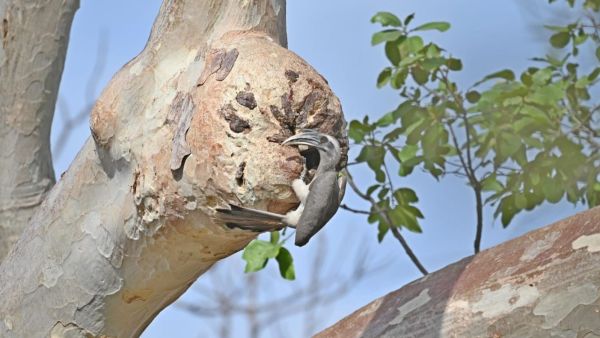 Satellite tracking revealed that newly released hornbills initially travelled widely while exploring unfamiliar surroundings before settling into relatively small home ranges.
— The Indian Grey Hornbill, which went extinct in Gujarat’s Gir forests during the 1950s and 60s and was reintroduced under a government initiative, has now successfully established territories and produced offspring.
— Forest and Environment Minister Arjun Modhwadia made the announcement on 14th July, referring to a research study conducted in the region after the reintroduction of the Indian Grey Hornbill in 2021.
— The study found that the hornbills preferred Gir’s dry mixed deciduous and teak forests over other habitat types.
— It was also observed that hornbills selected mature trees with large trunk girths for nesting, particularly Sterculia urens and Terminalia bellirica, highlighting the importance of conserving old-growth trees within the landscape.
— The Indian grey hornbill (scientific name: Ocyceros birostris) name refers to the unique horn-like beak of this species of birds. Additionally, the male has a noticeable pointed blackish casque at the upper mandible, whereas the female has a less prominent casque. The beak is brownish-black and ivory-white.
— They usually sit on the topmost branches of the trees, so it is difficult to spot while being under the tree. They are categorised as Least Concern on the IUCN Red List. Indian grey hornbill has also achieved an honour to be the state bird of Chandigarh.
— Out of 54 species of hornbills globally, nine are found in India Interestingly, India is home to nine hornbill species, with the northeastern region exhibiting the highest diversity of these species in the country.
Science and Technology
— Scientists at IIT Bombay have found a novel and efficient way to convert simple, abundantly-available, straight-chain carbon compounds into complex ring-shaped molecules that can be building blocks for medicinal or other valuable chemicals.
— Conversion of long, straight-chain carbon molecules into ring-shaped molecules at present involves a multi-step process that is time-consuming and expensive. The research, led by Professor Debabrata Maiti of IIT Bombay, said the newly developed method could make drug discovery faster, cheaper and more sustainable.
— In fatty acids, which are commonly available chemicals in nature, several carbon compounds are linked in a straight chain. On the other hand, many of the biologically relevant organic compounds, including several drugs, have ring-shaped molecular structures. Scientists often go through a multi-step process to convert the easily available fatty acids into more useful molecules with a variety of applications.
— Researchers used this new method on a molecule called muricatacin, which is naturally found in Laxman phal (soursop) and is believed to have anti-cancer properties. Extracting muricatacin from naturally occurring substances is considered extremely difficult and inefficient. Only about 15 mg of muricatacin is obtained from about 15 kg of plant material, and that too is mixed with other substances, Maiti said.
— The researchers were able to synthesize muricatacin in the laboratory in an easy and more efficient manner by converting other fatty acids. They were then able to modify this compound in such a manner that it exhibited anti-cancer properties comparable to muricatacin obtained from natural plants.
— China has successfully landed a reusable rocket for the first time — a milestone for the country’s space programme that will challenge American companies’ dominance in the technology.
— The Long March 10B rocket — which can carry a payload of up to 16 metric tons to low Earth orbit — lifted off from the Wenchang Commercial Space Launch Site in Hainan, Southern China around noon (local time). Low Earth orbit is a region between 160 km and 2,000 km above the Earth.
— Before China, only Elon Musk’s SpaceX and Jeff Bezos’s Blue Origin demonstrated the ability to launch and land rockets.
— A reusable rocket is one that can land on Earth after lifting off, thus allowing its valuable booster to be used again. This substantially reduces the cost of a launch and, by extension, space exploration.
- Ultra-sensitive wearable ammonia sensor
— Scientists at the Centre for Nano and Soft Matter Sciences (CeNS), Bengaluru, an autonomous institute under the Department of Science and Technology (DST), have developed an advanced ammonia sensor capable of detecting toxic gas at extremely low concentrations while operating efficiently at room temperature.
— Ammonia is generally used in the manufacturing of fertilisers, plastics, explosives, and other chemicals such as corrosion inhibitors. It is used for water purification, it is present in household cleaners, and is required in industries such as rubber, textile and leather. It is also used as a refrigerant gas, which is likely the case in Tamil Nadu.
— Accidental exposure to ammonia can cause irritation and hurt the skin, eyes, throat, and lungs. It can lead to abdominal pain, nausea and vomiting. It can cause painful blisters on the skin.
— There is no specific treatment for exposure to ammonia. Doctors and health professionals usually try to remove the ammonia from the body after an exposure and then provide supportive care for any symptoms a person develops.
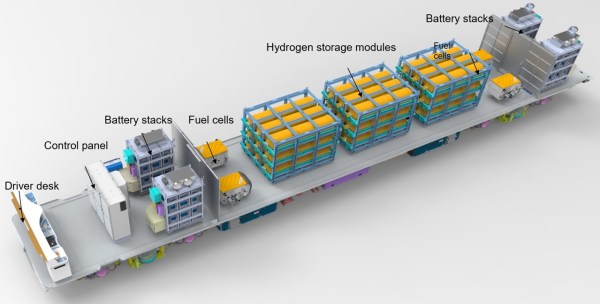 The layout of the power car of a hydrogen train
— Prime Minister Narendra Modi flagged off India’s first hydrogen-powered train in Jind, Haryana on July 17. This marks a major milestone for the Indian Railways in green technology, where few countries have ventured so far. between Jind and Sonipat in Haryana. It is developed by Chennai-based Integral Coach Factory (ICF).
— Hydrogen trains are electric trains with an onboard power source, unlike conventional electric trains that are powered via overhead wires. They use HFC (Hydrogen Fuel Cell) technology, which generates energy through the electrochemical reaction of compressed hydrogen with atmospheric oxygen, emitting water vapour as the sole byproduct. This makes the system a zero-emission mechanism at the point of use.
— The electricity generated by the fuel cell powers traction systems directly, while onboard batteries store excess energy and provide additional power during acceleration and regenerative braking. Hydrogen trains also employ regenerative braking technology, which captures the kinetic energy (motion energy) generated during braking and converts it into electricity to recharge onboard batteries.
— HFCs generate high-quality electric power that is clean, quiet, and consistently reliable by converting the chemical energy stored in Hydrogen into electrical energy. The primary components of an HFC are the Membrane Electrode Assembly (MEA) and the bipolar plates.
Diseases
— Health authorities in the United States are investigating a growing outbreak of cyclosporiasis, a parasitic infection caused by the microscopic parasite Cyclospora, after the US Centers for Disease Control and Prevention (CDC) reported a rise in cases across multiple states.
— The infection, which is often referred to as the ‘explosive diarrhea parasite’ because of its hallmark symptom, usually begins within seven days of exposure.
— Cyclosporiasis is an intestinal infection caused by the parasite Cyclospora cayetanensis. People become infected by consuming food or water contaminated with parasite eggs that have matured in the environment.
— Fresh fruits, leafy vegetables, herbs, and salad ingredients are commonly implicated because they are often eaten raw and may come into contact with contaminated irrigation water or soil during cultivation.
— Unlike many common foodborne infections, the parasite is not usually transmitted directly from one infected person to another. After being excreted, it takes days to weeks in the environment before it becomes infectious. This means contamination typically occurs at the farm level through unsafe water sources or poor sanitation rather than during cooking at home.
Persons in News
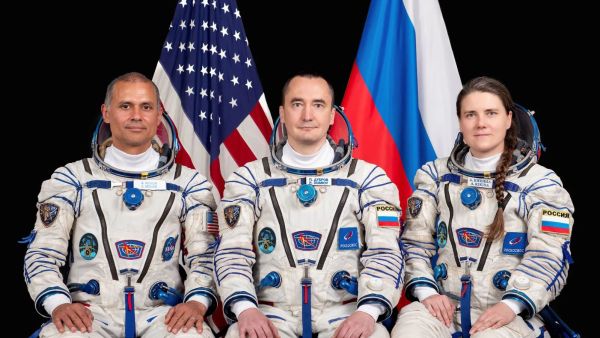 NASA astronaut Anil Menon and Roscosmos cosmonauts Pyotr Dubrov and Anna Kikina, Soyuz MS-29 prime crew members, pose for a portrait at the Gagarin Cosmonaut Training Center in Russia.
Credit: GCTC
— Indian-origin NASA astronaut Anil Menon is set to embark on his first mission to the International Space Station (ISS) on July 14, beginning an eight-month expedition focused on medical, technological, and spaceflight research.
— NASA astronaut Anil Menon, along with Roscosmos cosmonauts Pyotr Dubrov and Anna Kikina, launch aboard the Roscosmos Soyuz MS-29 spacecraft from the Baikonur Cosmodrome in Kazakhstan.
— During his stay aboard the ISS, Menon will conduct experiments examining the physiological effects of long-duration spaceflight, including how microgravity alters blood flow, vein structure, and blood composition.
— He will also help test technologies to produce intravenous fluids using the station’s potable water system — a capability considered critical for future deep-space missions where medical supplies will be limited.
Award
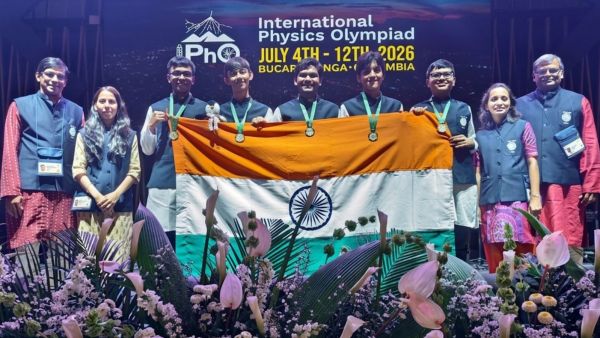 Winners Kanishk Jain (Pune), Shresth Suraiya (Mumbai), Riddhesh Bendale (Indore), Rishit Garg (New Delhi), Svarit Joshi (Ahmedabad) at the International Physics Olympiad in Colombia. (Image via HBCSE)
— India secured a joint first rank at the 56th International Physics Olympiad (IPhO) 2026 after all five members of its team won gold medals at the competition held in Bucaramanga, Colombia.
— The country shared the top position with China, Kazakhstan, Russia, South Korea, and Taiwan among 381 students from 87 participating countries, according to the Homi Bhabha Centre for Science Education (HBCSE).
— According to the HBCSE, part of the Tata Institute of Fundamental Research (TIFR), this was India’s 27th participation in the International Physics Olympiad.
— This is only the second time after 2018 when all five Indian students returned with gold medals since India started participating in the Physics Olympiad in 1998.
— The International Physics Olympiad is one of the world’s leading competitions for secondary school students. It brings together top-performing students from across the globe to compete in theoretical and experimental physics.
Sports
— Spain ended a 16-year wait as they stunned Argentina with an all-timer performance to win the 2026 FIFA World Cup with a 1-0 win in the final at the MetLife Stadium in New Jersey on Sunday afternoon.
— Lionel Messi’s Argentina failed to record a single shot in regulation time, making them the first team in World Cup history to fail to do so. The winner eventually came at the start of the second half in extra-time with a goal from forward Ferran Torres.
— Messi’s Argentina failed to become the first team in 64 years to defend the title since Brazil clinched their first two World Cup wins in 1958 and 1962.
→ FIFA World Cup 2026 Golden Boots winner: Kylian Mbappe
→ FIFA World Cup 2026 Golden Glove winner: Unai Simon (Spain)
→ FIFA World Cup 2026 Golden Ball winner: Rodri (Spain)
→ FIFA World Cup 2026 Young Player of the tournament: Pau Cubarsí (Spain)
Most FIFA World Cup titles won
5: Brazil (1958, ’62, ’70, ’94, 2002)
4: Germany (1954, ’74, ’90, 2014)
4: Italy (1934, ’38, ’82, 2006)
3: Argentina (1978, ’86, 2022)
 PV Sindhu at podium after winning Japan Open 2026. (BadmintonPhoto)
— Indian shuttler PV Sindhu won the Japan Open 2026 title, becoming the first Indian to achieve this historic feat. This was Sindhu’s biggest Tour title after the World Tour Finals and China Open she won back in 2018 and 2016 respectively.
— She became the first Indian shuttler to win the prestigious tournament title. She defeated local favourite and three-time world champion Akane Yamaguchi in straight games, 21-17, 21-17.
— The 31-year-old won the Super 750 tournament, ending a title drought of more than two years. Sindhu’s previous title came at the Syed Modi International in 2024. The triumph is her biggest title since winning the World Championships in 2019.
Test Your Knowledge
(Note: The best way to remember facts for UPSC and other competitive exams is to recall them through MCQs. Try to solve the following questions on your own.)
(1) Which one of the following pairs of semiconductor plants in India and their locations is not correctly matched? (UPSC CSE 2026)
(a) CG Power and Industrial Solutions Pvt. Ltd. in partnership with Renesas Electronics and STARS Microelectronics: Gujarat
(b) Tata Semiconductor Assembly and Test Pvt. Ltd.: Assam
(c) HCL-Foxconn Joint Venture India Chip Ltd.: Madhya Pradesh
(d) SicSem Pvt. Ltd.: Odisha
(2) Which of the following statements with regard to Green Hydrogen is/are correct? (UPSC CSE 2026)
1. It is decarbonized hydrogen obtained from natural gas reforming combined with carbon capture and storage (CCS).
2. It is produced using electrolysis of water with electricity generated by renewable energy.
3. The National Green Hydrogen Mission of India aims for an abatement of nearly 50 MMT of annual greenhouse gas emissions by 2030.
Select the answer using the code given below:
(a) 1 only
(b) 2 and 3 only
(c) 2 only
(d) 1, 2 and 3
| Prelims Answer Key |
| 1. (c) 2. (b) |
For your suggestions and feedback, write to khushboo.kumari@indianexpress.com
Subscribe to our UPSC newsletter. Stay updated with the latest UPSC articles by joining our Telegram channel – IndianExpress UPSC Hub, and follow us on Instagram and X.
🚨 Click Here to read the UPSC Essentials magazine for July 2026. Share your views and suggestions in the comment box or at manas.srivastava@indianexpress.com🚨