Prateek Tanmay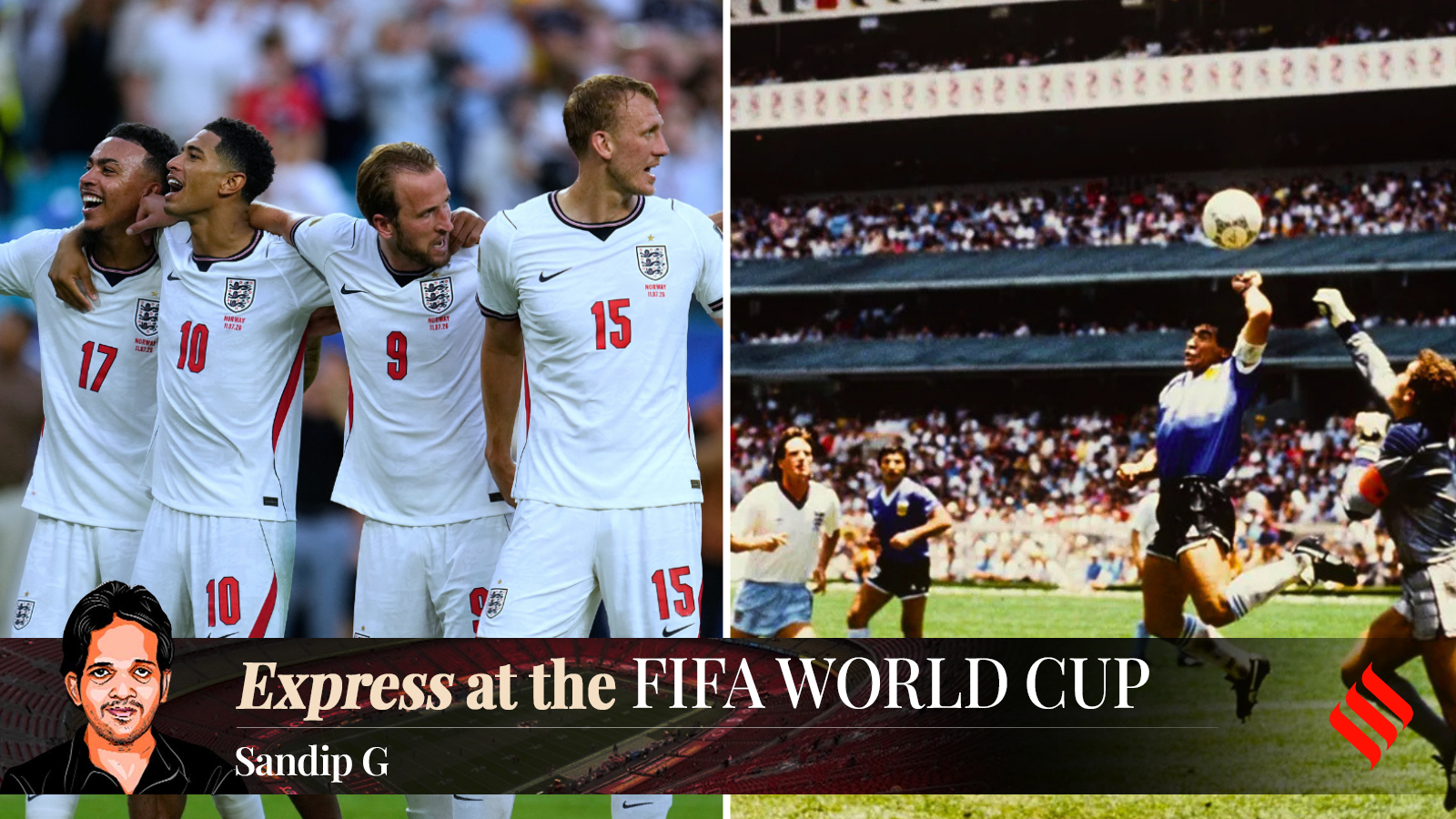
The missing piece. Harry Kane muttered the words with a forced smile. He was talking at the mixed zone, after defeating Norway, about England’s quest to be crowned World Champions. Then the memories rolled in, his eyes shirked away from the cameras and wandered aimlessly. If he had shut his eyes, he would have relived the worst moment of his life again. The howling silence of the Al Bayt Stadium when he blazed his penalty in regulation time against France in last edition’s quarterfinal. His eyes were hollow, he didn’t cry, he recovered fast enough to string chances that his colleagues couldn’t convert.
But forgetfulness is long. In the press conference that night, he confided he will “probably remember it for the rest of my life.”

Sportsmen don’t have the mind of robots to put aside tragedies. In the next four years, on countless instances, he had detailed about how he had harnessed the bitterness from the episode to fuel him. But heartbreaks wouldn’t forsake England. Two defeats in the European Championship finals followed. Those two words “missing piece” assumed personal significance for Kane, his colleagues and the country. A generation of English footballers could relate to the hurt Kane suffered, and perhaps still torments .
There is an English tragedy in most World Cups they have featured in since lifting the trophy in 1966. Images that are metaphors of England’s inherent tragicness (or karma for 1966 refereeing benefits or ineptitude or nervousness in clutch moments, as their adversaries describe). These get dutifully revisited, as though the country derives a sense of catharsis from reliving the agony.
The Hand of God, Tears of Gazza; the Beckham Brain-fade; the Ronaldinho Worldie; the Harry Howler; the Rooney Petulance, the Lampard Line-trimmer. Those are haunting memories trapped in the nation’s collective consciousness, waiting for a release that only a triumph could liberate.
So much so that a new version is sought, a fresh revelation is brought. There are teammates of Paul Gascoigne that believe that he acted selfishly, after copping a yellow card in the semi-final against Germany (1990) that ruled him out of the final if England qualified. He was so anguished that he refused to take the penalty in the shootout that England lost and was detached from the game since receiving the yellow card in the 100th minute. Sensing his fragility, his manager Bobby Robson told him: “Look, I know you can’t play in the final but what you can do is make sure all the other lads can. Just concentrate on that.” But he was so devastated, or self-absorbed, he couldn’t see beyond his misfortune. The nation fell in love with him at that moment, and he fell in love with the bottle too. His career spiralled, he fought depression and alcoholism, before resurrecting himself.
A sense of fatalism, thus, looms every time England are in a knockout fixture, an eerie feeling that someone would end the night as a tragic hero, or a slice of irreversible misfortune would shatter them, or a split-second of indiscretion, or a rival’s deceit gone unnoticed, or a referee’s injudiciousness would end their dreams. England certainly had been unfortunate, wronged by referees, sunk by the grey lines of referee’s manuals, cheated by the opponents, but often they have let themselves down too, in tactics, mentality, and discipline. The media hype was overbearing, and the pressure insufferable. Episodic iterations of golden generations fought and failed.
Story continues below this ad
Thankfully for England, Thomas Tuchel’s batch arrived without those heavy appellations, even though they had left behind a glittering array of riches back home. There are no superstars in the group, just stars. Even their most decorated player, Harry Kane is not deified as Beckham or Frank Lampard or Steven Gerrard. Jude Bellingham, the pin-up boy and a Real Madrid galactico has not yet acquired the aura of Wayne Rooney. Perhaps, it has helped that the toxic superstar culture had waned, or that both of them play club football outside the country.
In the course of the tournament, they have exuded a steeliness and flexibility the preceding brigades had not, a streak of doggedness to force their way, to find a solution, and to win the game, even if they had functioned at their optimal capacity.
| Olise, Yamal, Cubarsi and a semi-final that previews football’s next decade
The red card to Jarell Quansah against Mexico seemed one of those classic freezing points, another metaphor of tragicness. They flapped momentarily, shipped in goals, but produced a stirring rearguard that reflected their doggedness, their endurance and the resolve to win. Exorcising Azteca devils, was a relief.
Story continues below this ad
Maybe, the fight came from the pain. This generation, more than any, knows the pain of losing finals. Six of the starters against Norway had started against Spain in the Euro finals two years ago; eight of them were in the squad that lost to Italy in 2021. John Stones, Jordan Pickford and Kane would remember the agony of Moscow.
But tragedies have toughened them. “There’s going to be moments where it doesn’t quite go your way. But [it’s] the way I learned from that the way that motivated me to get even better and improve. For the team as well, we have suffered heartbreaks together,” Kane said.
There would be no better match to unburden the past than against Argentina in a semifinal. The curse that began with Maradona’s men could end with defeating Messi, denying him of a final and title defence. It could make the Hand of God feel more tolerable, a human folly after all, and all the tragedies more sufferable.
“Argentina went on and won it, so we are still a few games away from righting that wrong,” Bellingham would say after Azteca, an astute observation that both downplayed the new Argentina and showed clarity about the ultimate target – winning the World Cup.
Story continues below this ad
The missing piece though, is not merely a trophy, but a release of a tragic fate, some self-inflicted. Two steps now to the missing piece. The first is the most symbolic of all.