Prateek Tanmay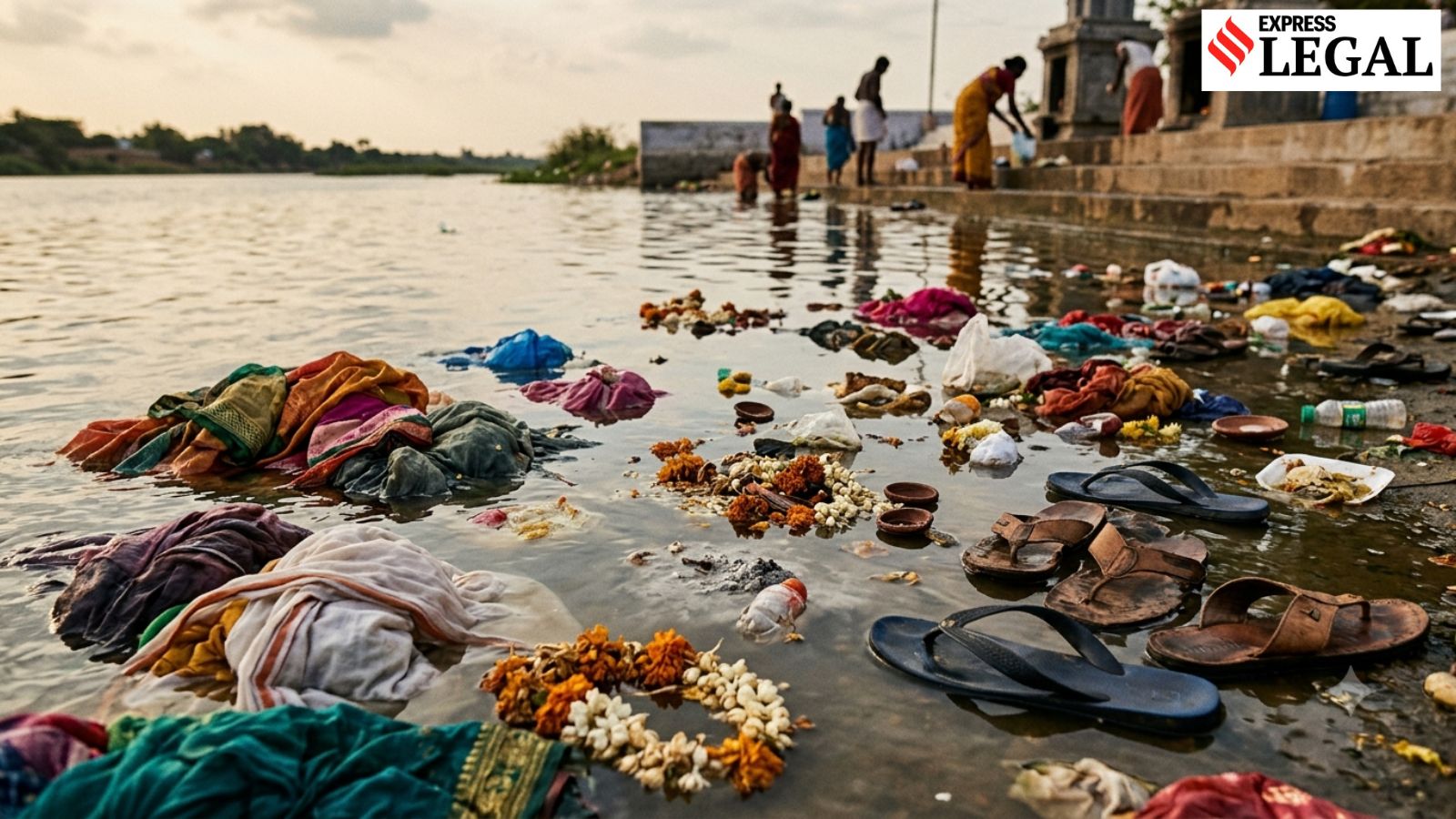
5 min readNew DelhiJul 13, 2026 06:00 PM IST
Moving to curb the practice of devotees throwing clothes, slippers and other ritual items into the Tamirabarani river after performing last rites and ancestral rituals, the Madras High Court has held that “no one has the right to pollute a water body even in the name of religion”, stating the perennial river that supplies drinking water to crores cannot be allowed to be contaminated.
A bench of Justices G R Swaminathan and B Pugalendhi was hearing a petition filed by one Sivanupandian challenging proceedings related to his occupation of Anandha Vilas Mandapam near Papanasam in Tirunelveli district. Although the case arose from an eviction dispute, the hearing shifted focus after the court was informed about widespread pollution caused by ritual practices along the riverbanks.

“No one has the right to pollute a water body even in the name of religion. This can be taken as an axiomatic proposition,” the court said on July 9. The matter has been posted for further hearing on July 16.
The observations come amid increasing concern over pollution in the Tamirabarani, one of Tamil Nadu’s few perennial rivers and a major source of drinking water. Every year, especially during Aadi Amavasai and similar occasions, thousands of devotees gather at Papanasam and other bathing ghats to perform rites for their ancestors, leaving behind clothes, towels, slippers and other ritual materials in the river.
 Justices G R Swaminathan and B Pugalendhi said Tamirabarani has been a perennial river catering to the drinking water needs of crores. It cannot be allowed to be polluted. (Image enhanced using AI)
‘Alarming’
“The statistics are alarming. The administration has to necessarily educate the masses on a war footing,” the court said.
Referring to data collected between May 7 and May 28, showing that 86-90 tonnes of clothes, 2.2 tonnes of holy ash, 1,385 kg of plastic waste, 374 kg of sanitary waste and large quantities of glass, slippers and other materials were removed from the river, the judges acknowledged that the issue involves “the beliefs and sentiments of millions of Hindus” and Article 25 guarantees religious freedom subject to public health.
“Believers can do what is spiritually beneficial to them provided it has no adverse implication for ecology and does not violate the rights of the other members of the society,” it said. The court directed the administration to intensify public awareness campaigns and reminded citizens of their constitutional duty under Article 51A(g) to protect rivers and the environment.
Story continues below this ad
During the hearing, the bench interacted with environmental activist Thiru Moorthy, who has been leading efforts to clean the river with the help of local authorities, temple officials and members of the Aripukarargal community.
Recording its appreciation for his work, the court noted that Moorthy informed it that at least one tonne of discarded clothes and other materials are dumped into the Tamirabarani every day. He also said that whenever temple authorities tried preventing dumping at one location, devotees simply shifted to another stretch of the riverbank.
Health, ecological concerns
- The high court observed that while cotton clothes are biodegradable, synthetic fabrics become trapped in the riverbed, creating breeding grounds for harmful bacteria such as E coli.
- Tamirabarani has been a perennial river catering to the drinking water needs of crores of people. It cannot be allowed to be polluted, said the court.
- The bench also noted that Indian black turtles and Indian flapshell turtles get entangled in clothes discarded in the river and die of suffocation.
- Broken glass from photo frames thrown into the river poses risks to both aquatic life and those engaged in cleaning operations, it added.
- Citing Section 36 of the Tamil Nadu Public Health Act, 1939, and Section 24 of the Water (Prevention and Control of Pollution) Act, 1974, the court said polluting rivers is prohibited by law.
- Referring to Supreme Court rulings, it reiterated that the right to pollution-free water is part of the fundamental right to life under Article 21 and that no religion encourages practices that create pollution.
Collector directed to issue notice
The bench said it would not pass final directions without hearing religious organisations and other stakeholders. It noted that a large tank being built near the riverbank could be used for performing rituals without polluting the river.
The Tirunelveli district collector has been directed to issue a public notice inviting stakeholders to make submissions and place before the court a comprehensive proposal to address the issue.