Prateek Tanmay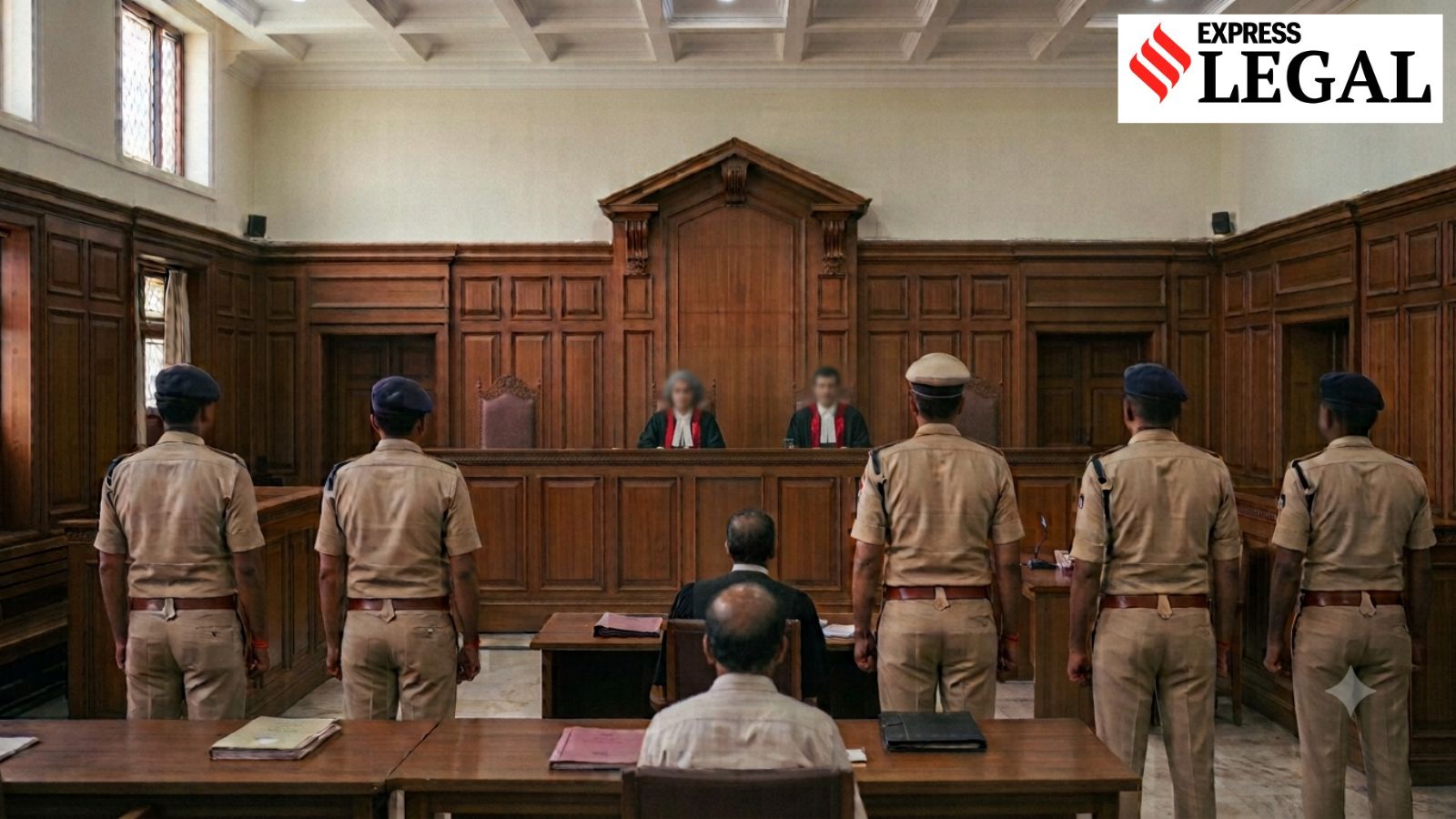
The Madhya Pradesh High Court has pulled up the state police for showing a “hostile attitude” in cases that involve minor girls and asked its police chief whether such officers should be allowed to “go scot free”. The director general of police (DGP) was accordingly ordered to decide within a month the action to be taken against such an officer and a school principal who allegedly suppressed crucial information about a girl’s age in a criminal trial.
Justices G S Ahluwalia and Anuradha Shukla were hearing a habeas corpus petition filed by one Ravi Prajapati, who sought the release of a teenage girl from a ‘One Stop Centre’, claiming she had already been declared an adult in an earlier criminal case.

“The Director General of Police must not forget that in the State of Madhya Pradesh, the Government is making every effort to protect the respect, dignity and pride of a girl and if the Police Officers are showing such a hostile attitude even in the case of minor girls, then whether such Police Officers should be allowed to go scot free or not?” the high court said, directing the DGP to submit a report before the principal registrar by August 12.
The observations came after the high court examined original school admission registers and several government records and concluded that the girl’s date of birth was February 10, 2009, which meant her age is currently 17 years. It found that documents proving she was a minor had allegedly not been placed before the trial court, which had acquitted the petitioner after holding that the prosecution failed to prove she was a minor at the time of the alleged offence.
 Justices G S Ahluwalia and Anuradha Shukla said the trial court was compelled to hold that the prosecution had failed to prove the girl was a minor. (Image enhanced using AI)
Earlier acquittal
According to the petition, Prajapati had earlier eloped with the girl, resulting in criminal proceedings because she was alleged to be a minor. He was prosecuted again after another incident involving the same girl.
The trial, however, ended in his acquittal. The trial court had held on February 2 that the prosecution had failed to establish beyond reasonable doubt that the girl was a minor on the date of the offence. Relying on that judgment, Prajapati approached the high court, arguing that her continued stay in the ‘One Stop Centre’ was illegal because she was an adult.
When the girl appeared before the high court, she expressed her wish to live with the petitioner. Her parents, however, insisted that she was still a minor and produced several official documents recording her date of birth.
Story continues below this ad
Faced with contradictory claims, the high court directed the state to produce the original case diary and the original admission registers maintained by the school.
The girl’s mother told the court that educational records and other documents proving her daughter’s age had been handed over to the police during the investigation but were never produced before the trial court. Acting on these submissions, the bench ordered that the original school records be seized and placed before it.
School registers exposed discrepancy
Records produced before the court revealed two separate admission registers. The first register, prepared in July 2015, mentioned the girl’s date of birth as May 10, 2008. However, another register created in September 2015 specifically to record corrections showed that her date of birth had been amended to February 10, 2009, on the basis of her Aadhaar card and birth certificate submitted by the parents.
Despite the correction, the principal issued a certificate based only on the earlier entry and did not disclose the amended register, the court noted.
Story continues below this ad
The bench further found that every other official document, including the birth certificate issued by the Department of Planning, Economics and Statistics, the municipal council birth certificate and records under the Ladli Laxmi Yojana also recorded the girl’s date of birth as February 10, 2009.
It observed that there was nothing in the case diary to show that the investigating officer had attempted to collect educational records from the girl’s parents. The court said it appeared that the investigating officer and the school principal had “played fraud” on it by suppressing material documents “with a solitary intention to facilitate the accused” by raising doubts regarding the girl’s age.
It further observed that the suppression of information created a situation where the trial court was compelled to hold that the prosecution had failed to prove the girl was a minor beyond reasonable doubt.
HC’s directions
The high court directed the DGP to examine whether action should be initiated against the principal, noting that under the Juvenile Justice law, a school certificate is one of the recognised documents for determining a child’s age. It also asked the DGP to consider whether disciplinary action should be taken against the investigating officer for allegedly creating a situation that benefited the accused in the case.
Story continues below this ad
The DGP was directed to take a decision within one month and submit a report before the principal registrar of the high court by August 12, 2026.
The bench noted that the state’s appeal against the acquittal is pending before the Indore bench of the high court. Without commenting on its merits, it directed that a copy of the present order be placed on the appellate record. The court added that the state may consider moving an application to bring on record additional evidence regarding the girl’s age.
After evaluating all the material, the high court held that the girl’s correct date of birth is February 10, 2009. Since she is still a minor, the bench ruled that she cannot be handed over to the petitioner. It directed that she could continue staying at the ‘One Stop Centre’ until adulthood, after which she would be free to live according to her own wishes.