Prateek Tanmay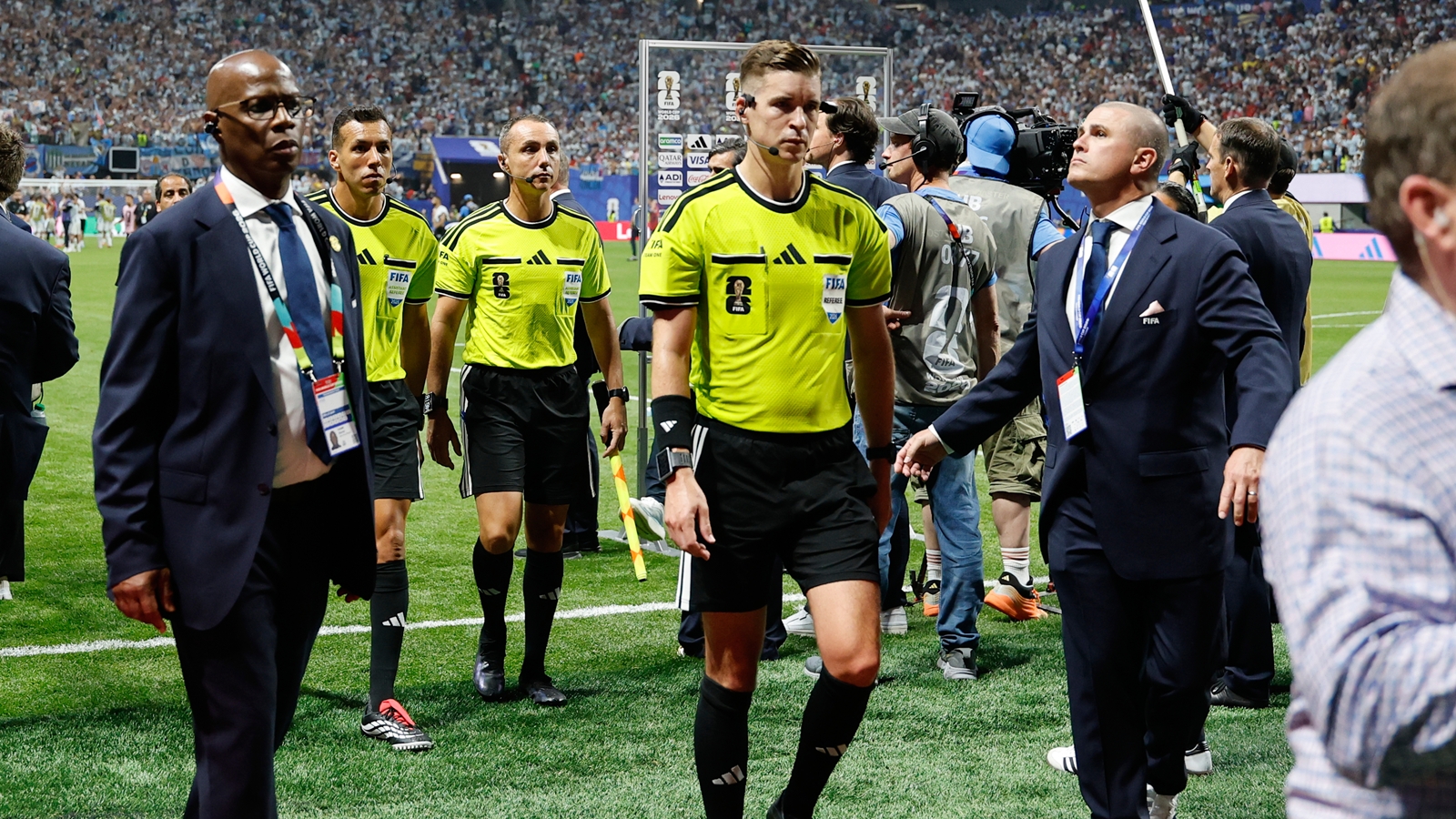
For a few moments, Egypt thought they had one foot in the quarterfinals.
Mostafa Ziko wheeled away in celebration, shirt off, after putting Egypt 2-0 ahead against Argentina, only for play to be halted. Seventeen seconds before the goal was scored, Marwan Attia appeared to stand on Lisandro Martínez’s foot while contesting possession. The incident took place on the other end of the pitch. But VAR sent the referee to the pitch-side monitor.
Seconds later, the goal was ruled out. It was deemed that Egypt had illegally won possession, even though there was a considerable passage of play before the finish.
The decision immediately reignited debate over the scope of VAR reviews. The protocol permits officials to examine offences committed in the immediate attacking phase leading to a goal. However, many questioned whether an incident remained sufficiently connected to the finish to justify overturning it, given the time elapsed since the tackle and the fact that it happened almost 100 yards away. The controversial decision is not the first time at the World Cup, a VAR-triggered decision or inaction on the part of VAR officials has created a furore. Inconsistent VAR calls have marred the tournament.
Ghana 0-0 England, 79th min
Incident: England’s Ezri Konsa catches Prince Kwabena Adu inside the box.
Decision: No penalty. VAR does not intervene.
“VAR went for a coffee,” coach Carlo Queiroz fumed after Ghana were denied what they believed was a match-winning penalty. Adu appeared to be clipped by Konsa while attempting to reach a loose ball, but the referee waved play on, and VAR found no “clear and obvious” error. Under protocol, VAR is meant to correct only obvious mistakes rather than re-referee subjective calls. To Ghana, however, the challenge looked obvious enough.
Brazil 3-0 Scotland, 22nd min
Incident: Vinicius Jr scores after dispossessing Jack Hendry.
Story continues below this ad
Decision: Goal disallowed after VAR review for a foul in the build-up.
Vinicius thought he had doubled Brazil’s lead after nicking the ball from Hendry and finishing clinically. Instead, VAR recommended an on-field review, with the referee ruling that Hendry had been fouled moments earlier. Replays showed only slight contact, prompting Brazil to argue that similar physical duels had gone unpunished elsewhere in the tournament. The debate centred less on the foul itself than on the threshold for intervention.
Ecuador 2-1 Germany, 2nd min
Incident: Germany’s Aleksandar Pavlovic catches Pedro Vite with a high boot before Leroy Sané scores.
Decision: No foul. Goal stands.
If Brazil felt punished for minimal contact, Ecuador believed Germany escaped punishment for something more serious. Pavlovic’s raised boot appeared to catch Vite before Germany’s opening goal, but VAR saw no reason to intervene. Viewed alongside Brazil’s disallowed goal days earlier, the incident fuelled criticism that similar challenges in the attacking phase were being judged differently.
Story continues below this ad
USA 2-0 Bosnia and Herzegovina, 64th min
Incident: USA’s Folarin Balogun steps on Tarik Muharemovic’s calf while both players fall.
Decision: Straight red card after VAR review.
Referee Raphael Claus had not even awarded a foul in real time before VAR advised an on-field review. After watching the replay, he dismissed Balogun for serious foul play. Slow-motion footage showed studs landing on Muharemovic’s calf, although Balogun appeared to lose his balance rather than lunge deliberately. Law 12 focuses on the danger of the challenge rather than intent, and FIFA deemed the contact sufficient for a red card. The decision, however, would later become the benchmark against which other incidents were judged.
Argentina 3-0 Algeria, 32nd min
Incident: Lionel Messi catches Aissa Mandi on the calf with his studs.
Decision: No card. No VAR review.
Overshadowed by Messi’s hat-trick at the time, the challenge took on greater significance after Balogun’s dismissal. Replays showed Messi’s studs making contact with the back of Mandi’s calf, yet neither the referee nor VAR intervened. Algeria’s federation later lodged a complaint, while former referees argued the challenge met a similar threshold to Balogun’s. Together, the two incidents became the tournament’s defining example in debates over consistency.
Story continues below this ad
Belgium 3-2 Senegal, 118th min – 125th min
Incident: Belgium’s Youri Tielemans goes down under Lamine Camara’s challenge in extra time.
Decision: Penalty awarded after a seven-minute VAR review.
Having surrendered a 2-0 lead late in normal time, Senegal’s misery deepened when play was halted for the tournament’s longest VAR review with penalties looming. After studying multiple angles, the referee awarded Belgium a penalty, which Tielemans converted to complete the comeback. Supporters argued the process worked exactly as intended, with VAR alerting the referee to a possible error. Critics countered that a seven-minute review over such a marginal incident suggested the decision had drifted beyond correcting a “clear and obvious” mistake into re-refereeing the game.
How the VAR operates
Unlike the referee on the pitch, the Video Assistant Referee (VAR) operates from a dedicated video operations room, where a team of officials monitors every angle of the match in real time.
What is their scope, and how do they communicate with the referee?
If they identify a potential “clear and obvious error” or a serious missed incident in one of VAR’s four reviewable categories – goals, penalties, direct red cards and mistaken identity – they communicate with the referee through an earpiece. Depending on the nature of the incident, the referee may either accept the information directly or be advised to conduct an on-field review by watching replays on the pitchside monitor.
Story continues below this ad
Who takes the final decision?
The final decision always rests with the referee. The VAR, in theory, is intended to correct only clear mistakes rather than re-referee subjective decisions.