Prateek Tanmay
Headlines tell you what happened, but UPSC asks why. The UPSC Civil Services Examination, whether at the Prelims or Mains stage, increasingly rewards conceptual clarity and the ability to apply core ideas. That is especially true in the most dynamic areas of the syllabus: Science, Economy and Environment.
The UPSC Weekly Concepts Snapshot, every Wednesday, simplifies three important current themes from these subjects through an exam-oriented lens, focusing on concepts and clarity.
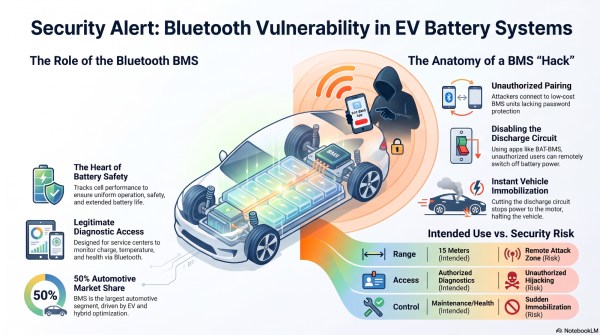
— A battery management system essentially tracks the state of a battery, with the primary aim of eliminating variations in performance of individual battery cells to allow them to work uniformly inside a battery pack.
— This system is incorporated in an electric vehicle (EV) powered with a large-capacity lithium ion battery, and plays a key role in extending the battery’s service life and ensuring its safe use.
— Automotive is the largest segment for BMS with a 50% market share that is primarily driven by EV battery management and hybrid vehicle energy optimisation.
How does the BAT-BMS ‘hack’ work?
— The BAT-BMS app was originally developed by China’s Shenzhen Grenergy Technology as a legitimate battery management tool for Bluetooth-enabled lithium-ion batteries. The idea of having a Bluetooth connection point is to enable vehicles with these batteries to connect to the device remotely through an app and monitor the parameters of the battery on a real time basis.
Story continues below this ad
— The app allows users to monitor a battery’s state of charge, voltage, current, temperature, charging cycles, and overall health. The application also enables compatible users to control charging and discharging functions, making it useful for battery diagnostics and maintenance.
— According to its Play Store listing, the app can connect wirelessly to batteries over Bluetooth Low Energy within an operating range of around 15 metres. Such apps are typically designed to be used at service centres for battery-related diagnostics.
 (Graphic: Google NotebookLM generated)
— The primary concern, however, lies with the security configuration of some BMS used in low-cost EVs. The apps in question could connect to the BMS within a limited range, and be used to cut battery power, bringing the vehicle to a sudden halt.
— This was primarily a problem in electric e-rickshaws, which use low-cost Chinese-made BMS without adequate password protection or default credentials. As a result, anyone standing within Bluetooth range may be able to pair with the battery using compatible applications such as BAT-BMS and disable the battery’s discharge function. Since the discharge circuit supplies power to the motor, switching it off can immediately immobilise the vehicle.
Story continues below this ad
📍UPSC Twist Points: Battery energy storage system (BESS)
— Energy storage refers to systems that can store excess renewable electricity during periods of high generation and discharge it when demand rises but power generation remains low. A range of energy storage technologies are being deployed globally. Among them, battery energy storage systems (BESS) are among the most widely used.
— BESS technology stores electricity chemically and discharges it when needed. Lithium-ion batteries, particularly lithium iron phosphate (LFP) batteries, are currently the dominant technology for grid-scale storage because of their falling costs, high efficiency, and long operational life.
ECONOMY
Credit-Deposit Gap
Core Concept:
— CASA deposits are low-cost for banks and are used to fund loans, the major source of revenue. They are considered a reliable and “sticky” source of funds for banks due to low churn, as such depositors aren’t likely to shift this money to other banks easily.
— The greater the CASA book, the higher their net interest margins tend to be. However, the shift away from low cost deposits makes banks more sensitive to interest rate movements.
Story continues below this ad
— Due to this mismatch in growth, the gap between credit and deposit growth has widened from 1.8 percentage points in December to 5.4 percentage points as of June 15, according to data from the RBI. This has led to the credit-to-deposit ratio of banks — which is the percentage of a bank’s deposits deployed as loans — widening to 82.5% as of June 15 from around 75% in mid-2025.
— As CASA deposits have slowed, banks have shifted to other sources of funds such as term deposits and CDs.
Do you Know?Term deposits refer to financial instruments where one locks in their money for a particular tenure to earn interest in return. This includes retail options such as fixed and recurring deposits. A CD is a type of term deposit used by corporates and institutions to raise money through the money markets. |
— High credit-to-deposit ratio of banks is a matter of concern because CASA deposits have always been a reliable funding source for banks due to their low cost (around 3-4% interest rate) and “stickiness”. Term deposits and CDs, on the other hand, are much higher-cost (7-8% interest rate) options that ultimately squeeze the margins of banks.
— Thus, while banks have found shorter-term funding solutions as CASA growth has dried up, the over-reliance on such temporary fixes is a double-edged sword.
Story continues below this ad
— Although it helps manage liquidity and fund the booming credit growth for now, a hike in interest rates by the RBI or an external crisis may hit the sector hard if CASA growth is not rejuvenated.
📍UPSC Twist Points: Debt-to-GDP ratio
— The debt-to-GDP ratio is a metric that compares a country’s public debt to its gross domestic product (GDP).
— The Centre has projected the debt-to-GDP ratio to decline to 50±1% by March 2031 from an estimated 56.1% in March 2026.
ENVIRONMENT
Greenhouse gas emission intensity (GEI) targets
Core Concept:
— GHGs are gases that trap heat in the atmosphere and contribute to the “greenhouse effect” that raises surface temperature on Earth.
Story continues below this ad
— The five most abundant GHGs in the atmosphere are water vapour, carbon dioxide, methane, nitrous oxide, and ozone. Other GHGs include synthetic fluorinated gases such as chlorofluorocarbons (CFCs) and hydrochlorofluorocarbons (HCFCs).
— GEI is the amount of greenhouse gases (GHG) emitted per unit of product output, such as the quantum of gases released while producing cement.
Why is it important to have the GEI targets?
— The introduction of industry-specific targets is crucial to meet India’s climate goals. The ultimate objective is to push industries towards a low-carbon growth trajectory through reduction, removal or avoidance of GHG emissions.
India’s climate targets for the year 2035On March 25, India revealed its revised nationally-determined contributions (NDCs) for 2035. India said it would ensure that at least 60% of its electricity installed capacity in 2035 was based on non-fossil fuel sources, up from the 50% target it had set for 2030. Story continues below this ad It has promised to attain at least a 47% reduction in emissions intensity, or emissions per unit of GDP, on 2005 levels, which is two percentage points more than its current target of 45% for 2030. It has also promised to create a carbon sink that is at least 3.5 to 4 billion tonnes of CO2-equivalent larger than what existed in 2005. |
📍UPSC Twist Points: Carbon Credit Trading Scheme
— GEI Target puts in place a compliance mechanism for the Carbon Credit Trading Scheme, 2023 (CCTS). The CCTS was launched to create a framework for the trading of carbon credits, to facilitate the reduction of emissions in energy intensive industries, and to support India’s climate commitments under the Paris Climate Agreement of 2015.
— The CCTS established a framework for generating, trading, and using carbon credit certificates. With the introduction of the GEI targets, industries will know what exactly to achieve in order to earn carbon credits.
— Industries will be issued carbon credits for cutting emissions intensity, which they can trade on India’s carbon market. Industries that fail to meet their obligations under the carbon trading scheme would have to buy credits to meet their compliance shortfall, or be penalised by the Central Pollution Control Board, as per the Rules.
— Carbon credits are traded through the Indian Carbon Market platform, with oversight of the Bureau of Energy Efficiency under the Union Ministry of Power. Similar carbon credit markets have been operational elsewhere in the world — in Europe and China since 2005 and 2021 respectively.
Story continues below this ad
Prelims Practice MCQ
Let’s see how much can you recall
Consider the following statements:
1. Greenhouse Gas Emission Intensity measures emissions per unit of output.
2. Battery Management System ensures the safe and efficient operation of battery packs.
3. The debt-to-GDP ratio is a metric that compares a country’s public debt to its gross domestic product.
How many of the above statements are correct?
(a) Only one
(b) Only two
(c) All three
(d) None
ANSWER KEY
(c)
🚨 Click Here to read the UPSC Essentials magazine for June 2026. Share your views and suggestions in the comment box or at manas.srivastava@indianexpress.com🚨
Subscribe to our UPSC newsletter. Stay updated with the latest UPSC articles by joining our Telegram channel – Indian Express UPSC Hub, and follow us on Instagram and X