Prateek Tanmay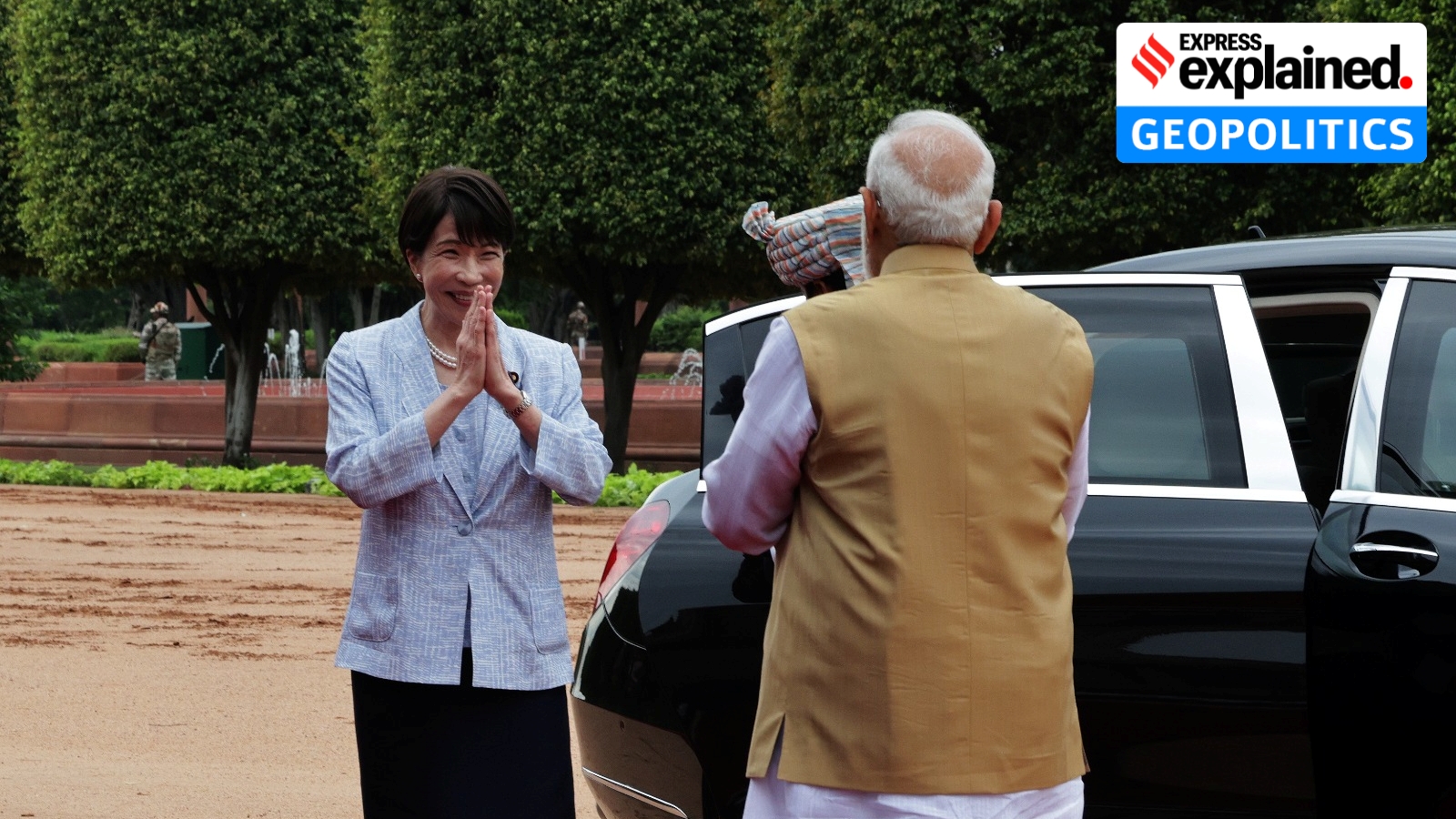
This is Prime Minister Takaichi’s first visit to India. It comes a year after India and Japan expanded cooperation in areas such as economic security and digital partnership and takes place amid growing geopolitical uncertainty in the Indo-Pacific. Regional security and economic resilience also figured prominently in Takaichi’s statement before the visit.
Why is the visit significant?
Before departing for India, Takaichi said the visit was taking place “at a time when the international situation is becoming increasingly uncertain” and that “cooperation with India, which shares fundamental values and strategic interests with Japan, is becoming more important than ever”. Her statement places the visit in the context of the shifting regional dynamics, underscoring the emerging challenges and importance of the India-Japan partnership for regional stability and security.
This visit follows a series of overseas engagements in the last few months before coming to India. Takaichi had travelled to regional countries, such as Australia, Vietnam and South Korea, strengthening Japan’s relations and reiterating its Free and Open Indo-Pacific (FOIP) vision, which completes ten years this year. In her message, she reiterated Japan’s leadership role, saying: “To fulfill Japan’s responsibilities, and indeed, to play an even more proactive role than ever before in building an international order based on freedom, openness, diversity, inclusiveness, and the rule of law.”
What is driving Japan’s regional outreach?
Japan’s recent diplomatic engagement has been shaped by two developments: the perceived reduction in the US’s regional role and China’s intensifying economic coercion and growing military activities, particularly in the South China Sea and the Sea of Japan.
India occupies a central place in Japan’s Indo-Pacific strategy. The Indo-Pacific concept was first articulated by former Japanese Prime Minister Shinzo Abe in his address to the Indian Parliament in 2007, and the New Plan on FOIP was again unveiled by former prime minister Kishida Fumio in 2023 in India.
Story continues below this ad
Takaichi’s visit to India follows the announcement of Japan’s FOIP vision during her visit to Vietnam in May. The updated framework of the FOIP underscores Japan’s focus on three priority areas in the region: “building economic infrastructure for the age of AI and data, including strengthening supply chain resilience for energy and critical materials”, “co-creation of economic growth opportunities through public-private collaboration and rule sharing”, and “enhancing cooperation in the field of security to ensure regional peace and stability”.
What role does economic security play?
Economic security has emerged as a major pillar of Japan’s Indo-Pacific policy. During the energy crisis stemming from the conflict in West Asia, Japan showed leadership by supporting the Southeast Asian countries. It announced $10 billion in financial aid under the POWERR (Partnership on Wide Energy and Resource Resilience) Asia initiative to help countries in the region procure and stockpile energy resources. It also released 50 days’ worth of oil reserves to ease the supply chain disruption.
Japan has worked towards enhancing regional supply chain resilience for energy and resource security. During Prime Minister Takaichi’s trip to Australia, Japan signed a joint declaration and statement on economic and energy security, and finalised deals to cooperate on critical mineral supply chains. Similarly, her shuttle diplomacy with South Korea strengthened cooperation in areas such as energy security and critical minerals, including exploring mechanisms such as joint stockpiling, mutual swaps and the supply of petroleum products, crude oil and LNG.
How is Japan expanding defence cooperation?
Story continues below this ad
Alongside economic initiatives, Japan has increased defence cooperation with Indo-Pacific partners. To enhance maritime deterrence capabilities, Japan is assisting with the military modernisation and upgradation of the Indo-Pacific countries, particularly those in Southeast Asia. Japan’s Prime Minister and Defence Minister, in their visit to the region, have signed several agreements and deals.
During the Japanese PM’s visit to Australia, both countries elevated their defence ties, issuing a Joint Statement on Enhanced Defence and Security Cooperation, including the finalisation of a $7-billion deal to deliver 11 Mogami-class frigates. Japan has also deepened its defence cooperation with the Philippines and Indonesia. It has recently revived the search-and-rescue drills, with Korea nudging the security cooperation. Additionally, last year, the country also increased the Official Security Assistance (OSA), its military aid, hiking the budget by 125% to $116 million. Under the new OSA policy, Japan aims to increase the number of recipient countries from eight to 12.
Japan is also promoting capacity building and technical cooperation in the region. In February, the Japanese Defence Minister held the 3rd Japan-Pacific Defence Dialogue with defence ministers from 14 Pacific nations, including seven partner and seven observer countries from Southeast Asia and the Indo-Pacific region, respectively. During the dialogue, they focused on improving interconnectivity across three areas: people-to-people ties, crisis response and resilience. Similarly, during his visit to Singapore for the Shangri-La Dialogue, the minister announced a slew of new initiatives to promote regional defence cooperation, such as the inaugural Japan-New Zealand-Australia Defence Ministers’ meeting.
What domestic changes complement Japan’s regional strategy?
Story continues below this ad
Japan’s diplomatic engagement with the Indo-Pacific countries is not taking place in isolation. Rather, diplomacy is walking in lockstep with domestic reforms and developments. These reforms are part of internal balancing, efforts to bolster the country’s economic security and deterrence posture. This year Japan passed its largest-ever defence budget of 122.3 trillion yen, getting closer to its target of taking it to 2% of the GDP.
Further, after Takaichi’s election in February many reforms have been undertaken. Foremost among all is the relaxation of export controls on critical defence systems and equipment. In April, Japan relaxed its arms export restrictions, allowing the sale of equipment to 17 countries with which it has defence agreements, including India. Intelligence and cybersecurity reforms are among those underway.
The author is a Junior Fellow, Indo-Pacific, with the Strategic Studies Programme at the Observer Research Foundation.